



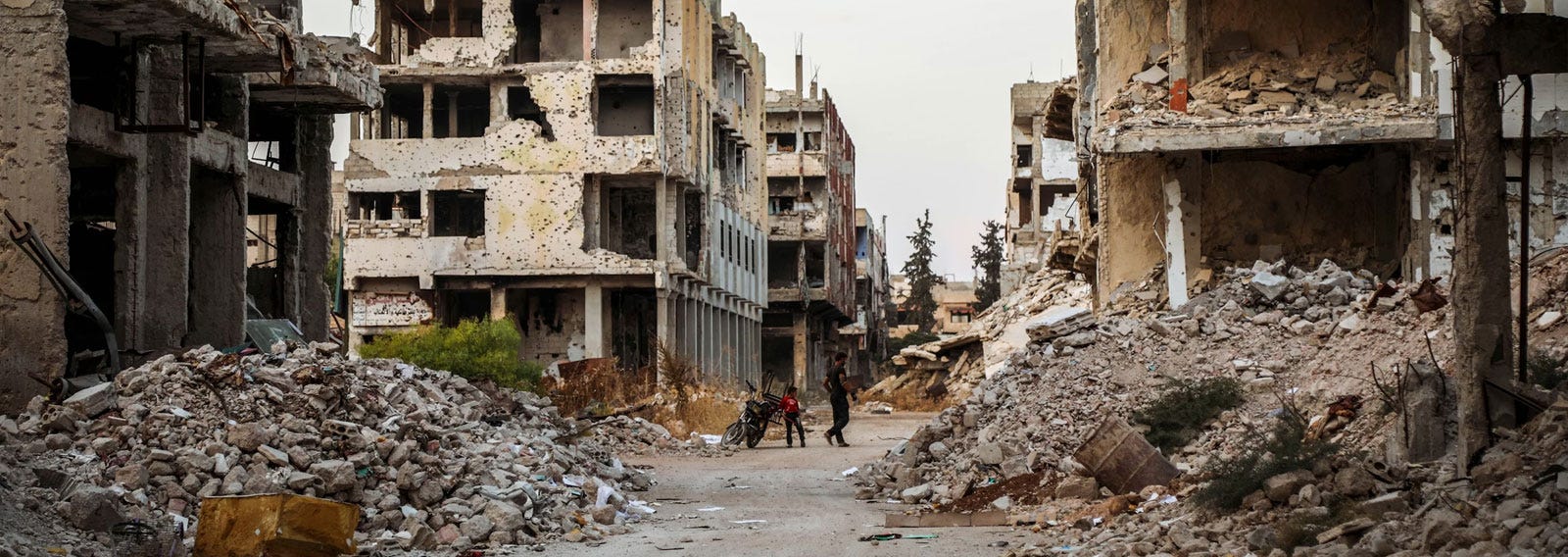
What is the goal of war? A war of defence is designed to defend the homeland and to punish the evil doer who would seek to take your lands, wealth and women. You could argue that the goal of a defensive war is to conserve or preserve the nation, its people and their way of life. A defensive war is an inherently just war because self-defence is a justified reason to use force against another nation.
A war of aggression, on the other hand, is about attacking and changing the status quo, or the way of the world, especially in the region or nation under attack. A war of aggression, therefore, is inherently transformative and therefore not conservative. It is also much less likely to be a just war, because one nation is not given inherent authority over another nation. Therefore, a war of aggression is both the antithesis of conservatism and very likely, you might even be able to argue inherently unjust.
While I am not a conservative, this topic is interesting because right now America is engaged in a war of aggression, and many conservatives are publicly supporting it. In fact, the predominant support for this war is coming from the conservative camp. Which is just another reason why I don’t consider myself a conservative; it is really a meaningless posture rather than a coherent ideology or philosophy of life. What is the purpose of saying, “I am a conservative?” Why would you do that? There are things we should preserve or conserve, and there are things we should progress and change, and there are things we should transform and restore. Nailing yourself to only one of these options, ideologically, is irrational, and the significant number of ways that conservatives often display they are not really seeking to conserve illustrates this.
This is important to understand: a war of aggression, which is what the US has engaged in, is inherently progressive or transformational. The type of change that is being sought is different depending on the war. For some, it is regime change, for others it is outright subjugation, for others it is annihilation and chaos. But the goal of a war of aggression is to change, not to conserve. In this case, the justification for this war has changed from moment to moment. It was claimed at one point that it was to stop Iran from getting nuclear weapons, at another it was claimed it was because Israel was going to attack, so the US had to attack first to protect its assets in the region, and at another point it was claimed that Iran was about to attack and so the US got in first. So, the story has changed, as is often the case in these sorts of wars, but whatever the justification offered, this war was an act of aggression, and the decapitation strikes show that the US wanted to change the Iranian regime.
Jereth Kok has some interesting things to say about this,
“Violently overthrowing the government of a foreign country has got to be one of the least conservative things that someone can do.
Let’s work this through. What does it mean to be “conservative”?
To be “conservative” means to prefer stability. To act with caution. To take things slowly. To be wary of quick fixes. To distrust shiny new objects. To reject radical change.
Russell Kirk (1918 – 1994) was a noted American conservative thinker who wrote a piece called Ten Conservative Principles. I think this is a pretty useful summary of what it means to be politically “conservative”.
Kirk argued that “conservatives are champions of custom, convention and continuity because they prefer the devil they know to the devil they don’t know.” “The continuity, the lifeblood, of a society must not be interrupted.” If things must change in a society, this change “ought to be gradual and discriminatory, never unfixing old interests at once.”
In other words, don’t go upsetting the apple cart. A system may be flawed; it may even have very serious, deeply embedded injustices. But rushing in and trying to fix everything at once in a society is almost guaranteed to make things even worse. Better the devil you know than the devil you don’t know—a new devil that you will create in your grand attempt to kill the old devil. Flawed systems should be worked on gradually and with great care; it is reckless to dive in with a jackhammer and blowtorch.
Kirk criticises “liberals and radicals” as “imprudent” men who “dash at their objectives without giving much heed to the risk of new abuses worse than the evils they hope to sweep away … Providence moves slowly, but the devil always hurries. Human society being complex, remedies cannot be simple if they are to be efficacious. The conservative declares that he acts only after sufficient reflection, having weighed the consequences. Sudden and slashing reforms are as perilous as sudden and slashing surgery.”
Social and political systems that serve millions of people aren’t created overnight; they cannot be created overnight. They are not like Ikea flatpack furniture that you can put together in an afternoon with an Allen key. According to Kirk, establishing working institutions is a process that is invariably “painful and slow”.
The polar opposite of conservatism is revolution. Revolution is the complete overthrow of a governing system, with the aim of replacing it with something wholly different. The problem with revolution is that it seeks to achieve the impossible—creating a healthy, functioning polity and society in an instant.
In other words, Kok is correctly arguing that regime change is a form of revolution, and revolution is the bread and butter of the progressive worldview. He gives examples of progressive revolutions in his article that demonstrate this. Progressives believe in overturning and changing society. They want to transform and change, and if they can do so radically, they will; no institution or element of society is safe from their transformative gaze. From marriage to government, to the church, to education, to every aspect of society, you will observe that progressives are on an endless journey to change things as much as possible.
When you recognise this, then you can see that regime change is simply the progressive worldview applied to foreign policy. Regime change wars show this in every way: the goal is to replace one regime with another, the goal is to stir up the people to turn on their own government to bring change, often colour revolutions (that is revolutions equipped and aided by foreign agencies) are an integral part of the process, usually instability is fostered, and sanctions are used to break the economy and build in people a desire for change. In every way, regime-change wars are a version of the progressive passion project. This is fascinating because it shows how conservatives have been overcome by progressive impulses, even if it is mainly in relation to foreign policy.
What it also shows, though, is that the conservative worldview, at least as maintained by many of its proponents, is not a coherent and consistent perspective. They are conservatives in some ways, but they will throw those principles out the door when their favoured political leader decides to go to war with their preferred enemy. Trump, who I would argue is not a conservative and never was, is the head of the nominal conservative party in the US, and so many conservatives will reflexively support his efforts, and many progressives will reflexively oppose them. This is just the way of things.
Now, a sophisticated response that some might give to my piece here is that they know that this war is not meant to conserve anything; it is meant to bring change. In fact, I would agree with them. This war is an example of the process of creative destruction. Creative destruction is when systems are shaken by new events or new technology which forces rapid change, and which benefits those who are ready for that change. Whether or not this leads to a better world is a moot point; it will lead to a better world for some and not for others. And it will bring change overall.
Creative destruction is an economic term,
“Creative destruction is a concept introduced by the Austrian economist Joseph Schumpeter in the early 20th century. It refers to the process by which innovation and technological progress lead to the continual transformation of the economic structure, resulting in the destruction of old industries and the creation of new ones. This dynamic process is considered a key driver of economic growth and development.
Innovation serves as the spark that ignites change, whether through the introduction of cutting-edge technologies, the creation of novel products and services, or the daring initiatives of entrepreneurs challenging conventional norms. This constant pursuit of improvement and adaptation creates a competitive environment where the old must yield to the new, a phenomenon encapsulated by Joseph Schumpeter’s concept of creative destruction.”
In other words, the point of creative destruction is to shake things up so that you have an opportunity to bring some of the changes that you want to bring in any given system. In a stable system from which many benefit, the desire for change is relatively low; however, if you can create instability, you can create the motivation for change in many people in that system.
Therefore, I concur with those who argue that President Trump is seeking to not conserve, but to actively bring change through this war. In fact, his real goals and the level of change he really wants might not have even been publicly stated. That being said, this does not justify a war of aggression, nor does it mean that his choice was a wise one. When you unleash a war of this magnitude on the world, you risk creating a situation that you cannot control, that can escalate very quickly. I would argue we have already seen this happen. This would explain why the President has made many claims about the war ending quickly that have not come to pass, because even though he was intending to bring about change, that rate of change is now out of his hands, and hence the war is dragging on.
This is a useful opportunity to again observe that conservatism is not a coherent perspective. Nor is it really being progressive. Rather, you need an objective marker for your reality, for instance, being a Christian that holds to the teachings of Jesus and the Church throughout history, and you need to evaluate things in society on a case-by-case basis to determine what should progress, what should be conserved, and what needs to be restored.
Hence, Kok is right that regime change wars are not conservative. However, we should not be surprised that conservatives are not holding their ideology coherently or consistently, because it is not a coherent or consistent ideology in the first place. This is why I do not call myself a conservative and have not for some time.
Some of us think that an act of war initiated against an enemy that attacks us and our allies on other fronts and in devious ways is *obviously* defensive. Just another reason to to filter out Matthew when reading Caldron Pool.