



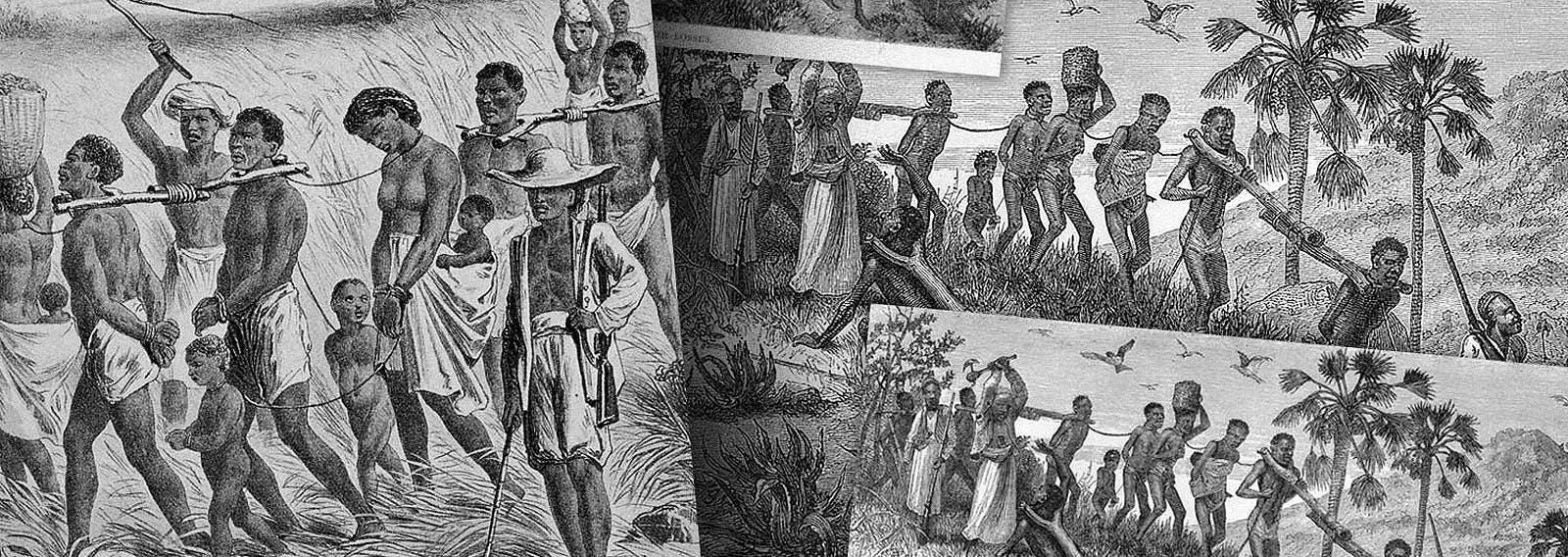
In light of the United Nations’ recent vote urging Britain and other former colonial powers to pay reparations for slavery, it is worth considering the role Africa itself played in the slave trade. Was the continent simply raped and pillaged by the white man, as is often portrayed in popular media, or is there more to the story that is often left untold?
“There is a willful amnesia about the roles Africans played in the slave trade,” according to Nat Nunoo-Amarteifio, historian, author and former mayor of Accra, Ghana’s capital.
Amarteifio explained that when Europeans came to Africa in search of gold, they encountered an already established slave system that they later adopted for the New World.
Initially, most slaves traded by West African rulers were criminals or prisoners of war. Frequent intertribal conflicts created a steady supply of captives, and it soon became more profitable to sell one’s enemies rather than simply kill them.
As demand for slaves grew, slavery began to replace traditional criminal punishments, while African rulers, traders, and military elites amassed immense wealth from the trade.
Over time, African chiefs launched wars and raids purely to capture slaves. People were often falsely accused of crimes to justify their sale, and, as activist and filmmaker S. Pearl Sharp observed, some families even sold their own children to settle debts.
But Amarteifio stressed that Europeans were not the ones capturing Africans. “They couldn’t enter the interior without succumbing to diseases like malaria,” he said. “African groups seized the opportunity, waging wars to capture prisoners and sell them.”
Millions of men, women, and children from inland villages were kidnapped by African slave traders and raiders, forced to march to coastal trading centers, and sold into the Jewish, European, and Arab slave trades.
“The organisation of the slave trade was structured to have the [traders] stay along the coastlines, relying on African middlemen and merchants to bring the slaves to them,” said Toyin Falola, a Nigerian professor of African studies at the University of Texas.
“The Europeans couldn’t have gone into the interior to get the slaves themselves.”
Amarteifio explained:
“To pursue slavery successfully, you need a highly organised group because somebody has to go out there — somebody has to locate the victims; somebody has to lead an army there; somebody has to capture them, transport them to the selling centres; all the time, keeping an eye on them to make sure they don’t revolt. And then sell them, and move on.”
In 1788, Dr Alexander Falconbridge, a surgeon who served aboard a number of slave ships, said he had “great reason” to believe that most of the slaves purchased by the Europeans were kidnapped and sold by their own people:
The extreme care taken by the black traders to prevent the Europeans from gaining any intelligence of their modes of proceeding; the great distance insland from whence the Negroes are brought; and our ignorance of their language (with which, very frequently, the black traders themselves are equally unacquainted), prevent our obtaining such information on this head as we could wish…
I was told by a negroe woman that she was on her return home one evening from some neighbours… she was kidnapped and [even though] she was big with child, sold for a slave.
This was also the experience of Ottobah Cugoano, a former slave who in 1787 wrote:
I must own, to the shame of my own countrymen, that I was first kidnapped and betrayed by some of my own complexion, who were the first cause of my exile and slavery.
The process of carrying out raids in order to capture slaves was explained in 1789 in the memoirs of former-slave, Olaudah Equiano:
When a trader wants slaves, he applies to a chief for them, and tempts him with his wares. It is not extraordinary, if on this occasion he yields to the temptation with a little firmness, and accepts the price of his fellow creature’s liberty with as little reluctance, as the enlightened merchant. Accordingly, he falls upon his neighbours, and a desperate battle ensues. If he prevails, and takes prisoners, he gratifies his avarice by selling them.
As Anthony Hazard, assistant professor in the Ethnic Studies Department at Santa Clara University, explained, African rulers and merchants didn’t view their captives as fellow Africans, but as criminals, debtors, or prisoners of war from rival tribes:
By selling them, kings enriched their own realms and strengthened them against neighbouring enemies. African kingdoms prospered from the slave trade… Capturing slaves became a motivation for war rather than its result.
To defend themselves from slave raids neighbouring kingdoms needed European firearms, which they also bought with slaves. The slave trade had become an arms race.
When the British finally abolished the slave trade, they faced fierce opposition—not only from European traders but also from African rulers who had grown immensely wealthy from selling captives to Jews, Europeans, and Arabs.
The British began patrolling the coastlines to stop illegal slave ships and signed protection treaties with African chiefs. Yet, despite these efforts, the slave trade persisted in many parts of Africa.
According to Amarteifio, the African role in the slave trade was deliberately erased and replaced with a distorted version of history.
“The chiefs and peoples decided, ‘All right, we will not talk about it.’” he said. “They created a mythology that we were innocent bystanders whose land was raped by Europeans.”
In 2019, Nigerian author Adaobi Tricia Nwaubani wrote an essay that was published in the Wall Street Journal on the African role in the slave trade. Nwaubani notes that despite the fact that Africans were deeply involved, the debate about guilt and responsibility is largely absent in Africa.
In her essay, Donald Duke, former governor of Calabar, Nigeria, stated that he does not feel ashamed of his ancestors’ involvement in the slave trade.
“I’m not ashamed of it because I personally wasn’t directly involved,” he said.
Yet Duke insists that Africa’s dark history should not be ignored. As governor, he established a museum documenting Calabar’s role as a slave-exporting hub.
Today, slavery is often portrayed as an injustice uniquely perpetrated by predominantly white nations—but this is a fundamentally misleading view of history.
As African-American economist and social theorist Thomas Sowell pointed out, slavery has been a universal institution for thousands of years, as far back as you can trace human history. And whites were not immune.
Sowell notes:
More whites were brought as slaves to North Africa than blacks brought as slaves to the United States or to the 13 colonies from which it was formed. White slaves were still being bought and sold in the Ottoman Empire, decades after blacks were freed in the United States.
Until its abolition by British Christians, slavery was a near-universal institution, practised across the world for millennia. Virtually all societies above the most primitive level were slave societies, making it impossible to single out any one group as solely responsible.
Yet, as historian Rodney Stark notes, it is amid this universal slavery that only one civilisation ever rejected human bondage: Christendom, and it did it twice!
Calls for reparations often function as a pretext for extracting wealth from modern Europeans under the guise of correcting historical injustices. This depends largely on a distorted and selective telling of history, one that conveniently omits Africa’s own active participation and complicity in the slave trade.
More telling still is that slavery persists in parts of Africa today, largely ignored by those most vocal about past injustices. As such, talk of slavery reparations is less about righting historical wrongs and more about legitimising present-day demands of wealth transfer. It’s the laziest way to justify the plundering of a nation while congratulating yourself for doing so.