

Who Gets the Credit for Western Civilisation: Christianity or Europeans?
"The Western world would not survive the loss of Christianity, nor would it survive the loss of the peoples among whom it historically took root."


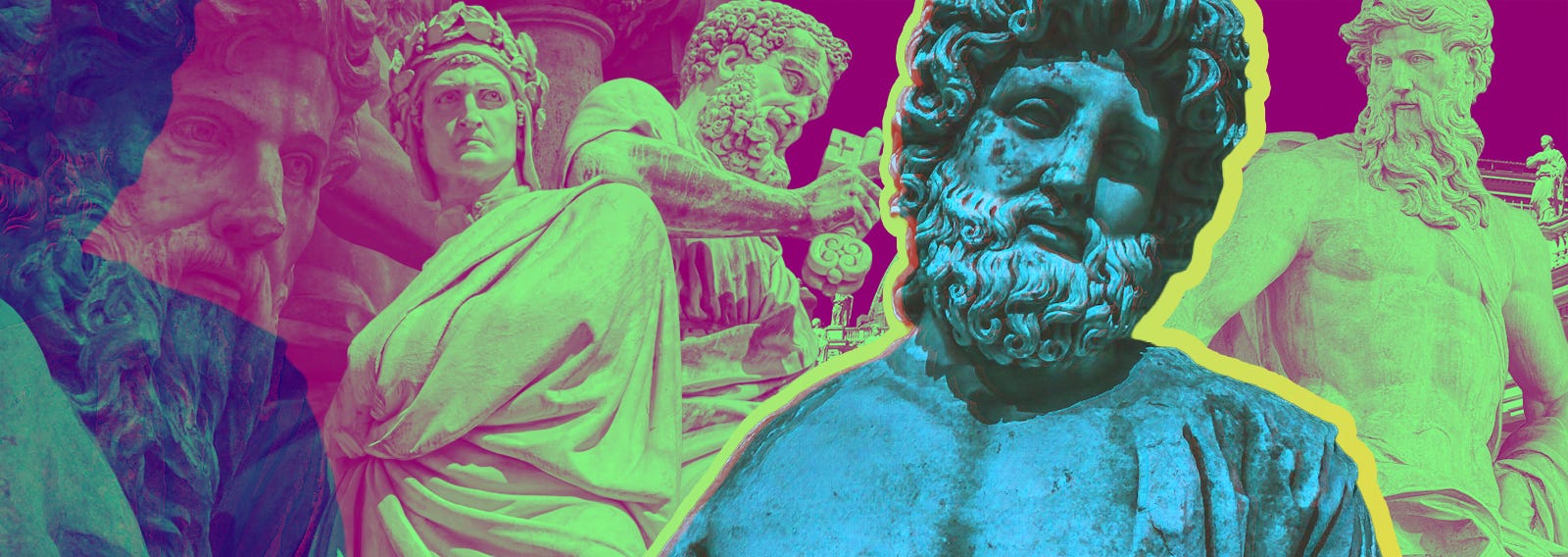
Western civilisation is often regarded as the greatest and most successful civilisation the world has ever known. It’s a claim that few would seriously dispute. Even today, its appeal is still evident in global migration patterns. There’s a reason why the flow only ever goes one way.
And yet, whenever the success of the Western world is discussed, there is, at times, a disagreement over who alone deserves the credit. Is the greatness of Western institutions, the justice in Western law, the beauty in Western art, and the appeal of Western culture, a product solely of the Native European mind, or is it the exclusive result of the Christian faith that the Europeans embraced?
I’d suggest that both options are wrong because neither the European nor the Christian religion can claim complete and total responsibility. Rather than either/or, it’s both/and. Western civilisation is the product of the Christian religion working on the European peoples for more than 1,500 years. As such, it is the accumulated work of successive Christian generations, labouring to reshape and sanctify their laws, institutions, and cultures in accordance with the faith they profess.
When Christianity was first introduced in Europe, it did not erase the European people and everything they were and loved. Instead, the Christian faith worked within and alongside them, refining their distinctive traits, customs, culture, and communities, and orienting them towards what is good and beautiful.
Christianity by itself does not make beautiful art, write moving music, or build grand cathedrals. Human beings, created in the image of our creative God, do all of these things. And Europeans, in particular, produced works of profound beauty, even prior to Christianisation. Consider the Parthenon (c. 447 BC), the Winged Victory of Samothrace (c. 190 BC), the Augustus of Prima Porta (c. 20 BC), the Villa of the Mysteries Frescoes (c. 60 BC), the Battersea Shield (c. 350 BC), the Gundestrup Cauldron (c. 200 BC), or the Nebra Sky Disc (c. 1600 BC), to give but a few examples.
Thus, Christianity does not erase a civilisation’s creativity; it redeems it. As the Christian faith transforms and sanctifies the individuals, so the individuals transform and sanctify the wider society. Sanctified societies work to sanctify the nation. And so, as we’ve seen throughout European history, Christianity has worked by progressively restraining sin’s distorting effects, reorienting what already exists towards a higher end. Where once ornate temples were constructed for the worship of demon gods, a Christianised Europe built in their stead awe-inspiring cathedrals for the worship of the True and living God. The beauty of European art was refined, rightly ordered, and perfected by Christianity—not replaced by it.
Of course, those who argue that Western civilisation is solely the product of Christianity will often portray any acknowledgment of Europe’s formative role as “supremacist.” But this is a far more problematic posture that’s not as humble as it first appears.
If Western civilisation is, indeed, the sole product of the Christian faith, and not a mixture of that faith working on a particular people, then one must assume that “Christian civilisation” completely replaced pre-Christian civilisations in Europe.
That might not seem objectionable until you realise that this position elevates the total of Western civilisation itself to Christianity’s cultural and civilisational standard. It is to assume that the Christianisation of China can be measured by the extent to which it conforms to Western norms. It is to say that if India were Christianised, its culture and customs would progressively mirror Westernisation. There would be some overlap in practices adopted, but that would be the moral point at which both civilisations met Christianity.
In each case, Christianity would take root among distinct peoples with their own cultural practices and customs, producing expressions of the faith that, while morally unified, would be expressed through differing cultural, artistic, and social forms.
The idea that the ethnic people group is irrelevant in determining the culture a Christian people produces is itself a form of supremacy, because it ultimately makes European Christianity, that is, Western civilisation, the standard of all Christian culture and social expression. But Christianity is far broader and far more diverse than the Western world. That’s diversity worth appreciating—including our own.
Ultimately, the beauty of Western civilisation is not reducible to Christianity alone, nor to Europeans alone, but to Christianity’s long-formative influence upon a particular people. As a civilisation that has undergone over a millennium of Christianisation, it’s no wonder that today, it is subject to militant defacement, shame, and every effort to reverse the effects of Christ working on that collective.
The Western world would not survive the loss of Christianity, nor would it survive the loss of the peoples among whom it historically took root. Western civilisation is the product of the former shaping and forming the latter. Lose one, and you lose the other.