


Life is precious, and the moral worth of those possessed of life must be upheld and honoured.
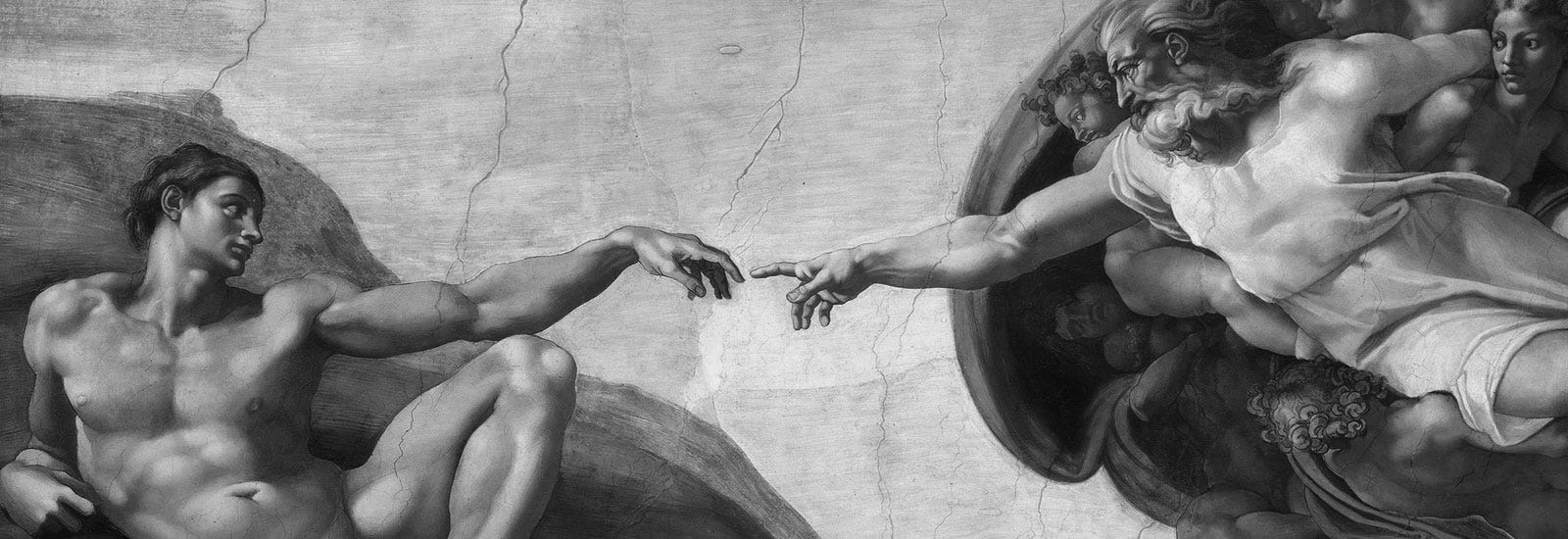
In May, the Full Court of the Federal Court of Australia handed down a decision and central to that decision was the question “What is a woman?” Behind that question lies a deeper existential question that the Western world is currently grappling with: What is man?
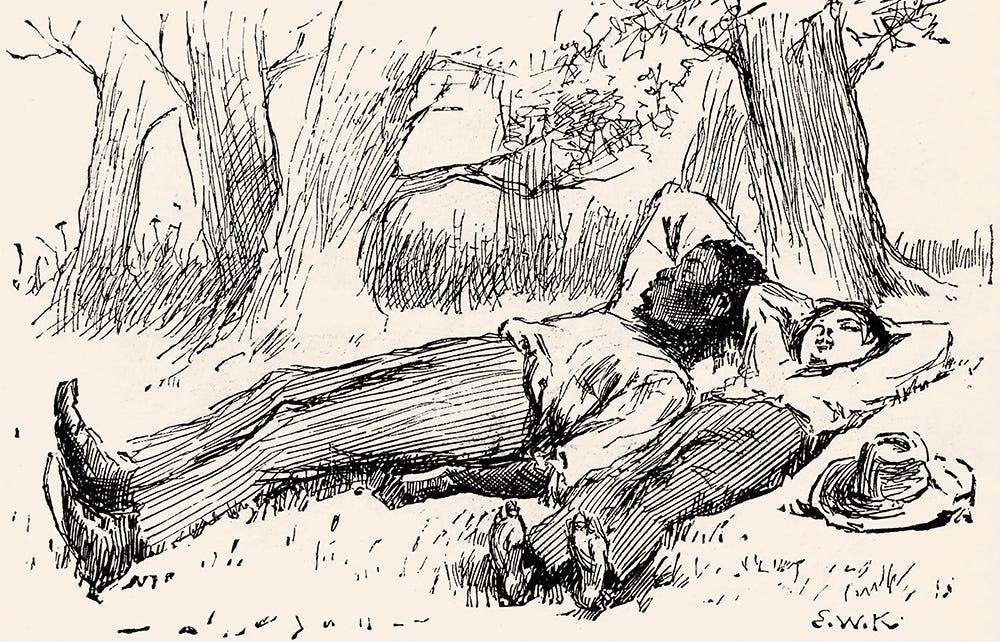
Huck Finn, in the timeless novel Huckleberry Finn, grappled with this question when faced with a dilemma about his friend Jim. Jim was an escaped slave, and Huck Finn, as a young boy, struggled with the question that society foisted on him: give Jim up and go to heaven or keep Jim hidden, and go to hell. Huckleberry Finn reaches his conclusion with these poignant words.
“It was a close place. I took it up and held it in my hand. I was a trembling, because I’d got to decide, forever, betwixt two things, and I knowed it. I studied a minute, sort of holding my breath, and then says to myself:
“All right, then, I’ll go to hell”- and tore it up.
It was awful thoughts, and awful words, but they was said. And I let them stay said; and never thought no more about reforming. I shoved the whole thing out of my head; and said I would take up wickedness again, which was in my line, being brung up to it, and the other warn’t. And for a starter, I would go to work and steal Jim out of slavery again; and if I could think up anything worse, I would do that, too; because as long as I was in, and in for good, I might as well go the whole hog.”
What is man? The value of man was such that Huck Finn decided the risk of purgatory was worth it. Mark Twain was unpacking something profound in this story. Twain was seeking to grapple with the notion of the fundamental worth and value of man.
In his essay What is Man, Twain presents man as an impersonal machine, a consequence of the circumstances within which he is surrounded.
“Yes. Man the machine—man the impersonal engine. Whatsoever a man is, is due to his MAKE, and to the INFLUENCES brought to bear upon it by his heredities, his habitat, his associations. He is moved, directed, COMMANDED, by EXTERIOR influences—SOLELY. He ORIGINATES nothing, not even a thought.”
But even Twain could not entirely support the notion of man as an amoral being, and in another essay, The Lowest Animal said as follows:
“Man is the only animal that deals in that atrocity of atrocities, War. He is the only one that gathers his brethren about him and goes forth in cold blood...to exterminate his kind. He is the only animal that, for sordid wages, will march out...and help to slaughter strangers of his own species who have done him no harm and with whom he has no quarrel...And in the intervals between campaigns, he washes the blood off his hands and works for “the universal brotherhood of man”—with his mouth.”
Despite the cynicism that Twain posed about man, even he acknowledged the concept of the universal brotherhood of man.
There is something wonderful about man, and the reality of man is that we are not impersonal machines. Man is imbued with moral agency, and the recognition of this moral agency is fundamental to dealing with the cultural apathy that pervades Western culture in relation to the treatment of fellow men across the globe and in dealing with the rising onslaught of transhumanism that is rising to the forefront of Western thought and consciousness.
Man has a capacity to distinguish right from wrong. Man is imbued with an inherent responsibility for the people of this world.
Right matters.
Wrong has consequences and the vacation of the teaching of moral agency within Western society is having real consequences on the core fabric of society. The moral culpability and responsibility of man create a limit on the exercise of human liberty.
This notion has been repeatedly emphasised within the annals of Australian and English common law. In 1943, the High Court of Australia in the case Adelaide Company of Jehovah’s Witnesses Incorporated v The Commonwealth (1943) 67 CLR 116 outlined that personal liberty was not absolute by reference to a case of the Supreme Court of the United States, Minersville School District v Gobitis:
“Concededly, the constitutional guarantees of personal liberty are not always absolutes. Government has a right to survive, and powers conferred upon it are not necessarily set at naught by the express prohibitions of the Bill of Rights. It may make war and raise armies. To that end it may compel citizens to give military service, . . . and subject them to military training despite their religious objections. . .. It may suppress religious practices dangerous to morals, and presumably those also which are inimical to public safety, health and good order.”
The Australian High Court outlined that limitations are placed on the exercise of human liberty as were “reasonably necessary for the protection of the community and in the interests of social order.” Looking to England and in the case of Airedale NHS Trust v Bland [1993] 1 All ER 821 (‘Airedale’), a case concerning the potential withdrawal of life support from a gentleman who was in a vegetative state, the Court stated,
“A profound respect for the sanctity of human life is embedded in our law and our moral philosophy, as it is in that of most civilised societies in the East and the West.”
The Court in Airedale stated,
“[the] fundamental principle is the principle of the sanctity of human life—a principle long recognised not only in our own society but also in most, if not all, civilised societies throughout the modern world, as is indeed evidenced by its recognition both in Article 2 of the European Convention on Human Rights.
“Human dignity and personal privacy belong to every person, whether living or dying.”
Human dignity belongs to every person. The fundamental respect that Australian and English common law (and, for that matter, US case law) ascribe to man is founded in the reality that man is not simply the sum of his parts but rather man has been made in the image of a holy and divine God. This fact has real and practical consequences. Because of that reality, man then is possessed of fundamental and eternal worth, and it is only because of that that the common law can bestow upon man the fundamental worth that it does.
Human dignity is a consequence of something; that something is that man is subservient to God, who has endowed man with human dignity or moral worth.
There are very real consequences for how we frame our viewpoint of man’s moral agency. Taken to its extreme, Twain’s nihilistic worldview forms the foundation for how atrocities such as the Holocaust occur.
Victor Frankl in Man’s Search for Meaning wrote,
“If we present a man with a concept of man which is not true, we may well corrupt him. When we present man as an automaton of reflexes, as a mind-machine, as a bundle of instincts, as a pawn of drives and reactions, as a mere product of instinct, heredity and environment, we feed the nihilism to which modern man is, in any case, prone.
“I became acquainted with the last stage of that corruption in my second concentration camp, Auschwitz. The gas chambers of Auschwitz were the ultimate consequence of the theory that man is nothing but the product of heredity and environment; or as the Nazi liked to say, ‘of Blood and Soil.’ I am absolutely convinced that the gas chambers of Auschwitz, Treblinka, and Maidanek were ultimately prepared not in some Ministry or other in Berlin, but rather at the desks and lecture halls of nihilistic scientists and philosophers.”
Is man an automaton of reflexes, a bundle of instincts? If yes, then as a society, we can define a woman in whatever terms we so desire. But if man is not Frankl’s automaton, and man is possessed of the moral agency that Australian Law once said it was, then objective truth will govern the decision on defining what a woman is.
But there is something deeper again. If we embrace the reality of man’s moral worth, we, as a culture, will be alive to the struggle that rages for the most basic of rights across the globe. We will not be blind to atrocities, and we will be very alive to realities where human dignity has not been upheld.
On 12 May 2026, The Australian Newspaper published an extended piece on three young men who had just been executed in Iran, and the paper published their last known recordings. It is graphic listening. These men left the recordings with three statements:
“Do not pass lightly by the word execution. Today it is my turn. Tomorrow it will be someone else’s.”
“Carry my voice to the whole world.”
“My dear compatriots, I love you… hoping for freedom.”
In the reality of this utter tragedy that has occurred through the brutal death of these three young men, who exactly are we in this world today? Will we, ensconced in comfort as we are, forget their lives, or will the reality that a great moral wrong has been wrought grip us and cause us to take action to ensure that the human dignity of these young men will never be forgotten?
Remember Yaghoub Karimpour
Remember Moharrab Abdollazadeh
Remember Naser Bekrzadeh
