


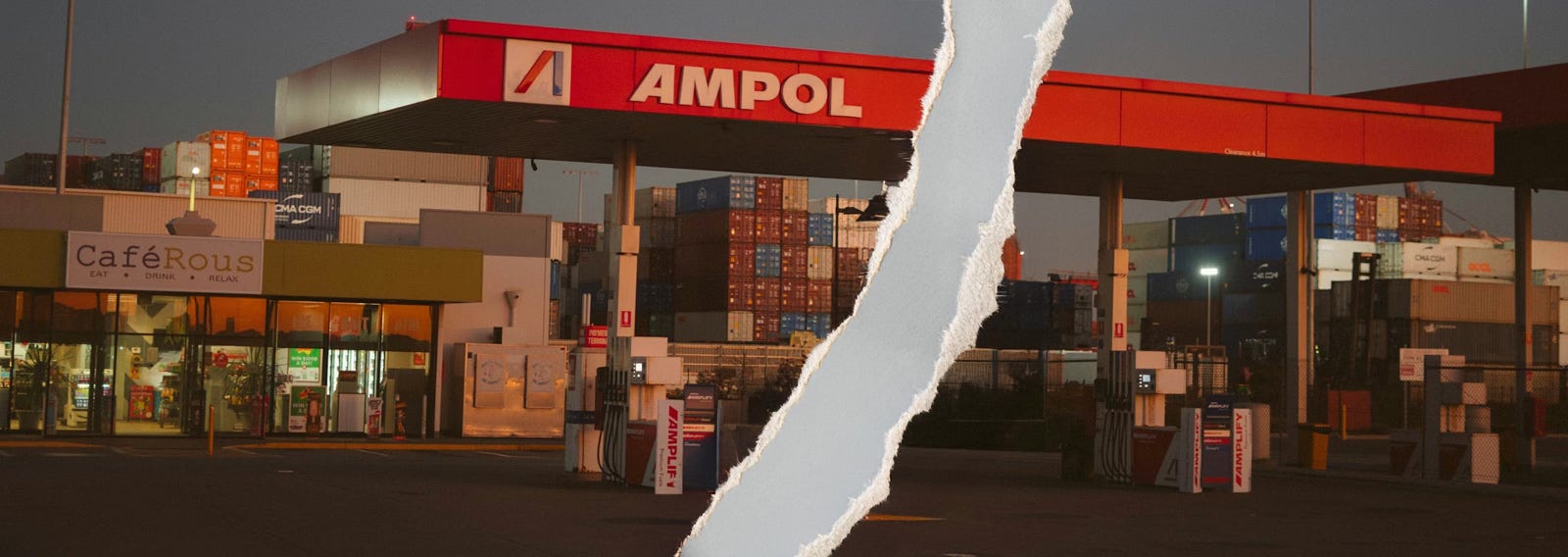
The war between Israel, the United States, and Iran isn’t just a geopolitical crisis — it’s already reshaping daily life in ways most Westerners haven’t experienced in their lifetimes.
The Strait of Hormuz, through which roughly a fifth of the world’s oil and liquefied natural gas normally flows, is now effectively choked. Fuel prices have spiked. In some parts, panic buying has hit; in others, governments are already rationing — weekly purchase limits, QR codes at the pump, emergency conservation orders. The International Energy Agency is urging people to stay home, cut travel, and prepare for the long haul.
Sound familiar? The language of “work from home,” empty roads, restricted movement, and QR-gated everything bears an eerie resemblance to early 2020. The cause is different, but the reshape of daily life could look somewhat similar.
And if the last few years taught us anything, it’s this: When governments decide what counts as “essential,” the Church doesn’t make the cut.
We’ve Been Here Before, So Let’s Not Make the Same Mistakes
Rather than waiting for restrictions to arrive and scrambling to respond, this is the moment to think clearly and prepare well. Christians have something the secular world doesn’t: a theology of suffering, a history of perseverance, and — let’s be honest — a lesson-filled recent past we’d be foolish to ignore.
So, here’s just a short list of things to consider, should we ever see a repeat of COVID-style “lockdowns.”
1. Start With Your Street
Think locally. Fuel shortages won’t hit everyone equally. The elderly woman three doors down, the single mother across the road, the family with one car — these people are in your congregation, or they’re your neighbours, and they may soon be cut off entirely.
Ask the obvious questions: Who near me normally attends church but might not be able to get there? Who would simply disappear from community life without someone checking on them?
Then act. Organise carpools. Consolidate trips. Prioritise the vulnerable.
2. Plan for the Possibility That Travel Simply Stops
If conditions deteriorate further, even carpooling might not be possible. At that point, the question is no longer “How do we get to church?” It’s “How does the Church actually function if the members cannot physically gather?”
Here’s where Christian men need to step up — and lead with the courage the moment demands. Pastors, elders, and deacons cannot be everywhere, especially if they don’t have the fuel to travel. Faithful men within congregations, men who know their Bibles, who are accountable to church authority, and who are trusted by their communities, must be ready to extend the Church’s presence into their own streets and neighbourhoods by taking the lead.
The early Christians didn’t gather in cathedrals. They met in homes. And if homes aren’t suitable, a public park for a public gathering works fine.
3. Keep It Simple. Keep It Faithful.
These local gatherings don’t need production value. They need substance. The essential elements have always been straightforward:
The public reading of Scripture.
Prayer.
A short message, if possible — if speaking feels daunting, just read the Word. God’s Word is enough.
Hymns and songs of praise.
Where a minister is available, the Lord’s Supper.
The goal isn’t to recreate your Sunday service in someone’s living room. It’s to preserve the means of grace — Word, prayer, fellowship — and keep believers spiritually anchored when everything around them is shifting.
It may look similar to what we’ve come to recognise as a weeknight Bible study.
4. Don’t Overlook the Evangelistic Moment
COVID showed us something important: disruptions in life lower barriers. Neighbours who would never walk into a church building might walk to the end of their street. People who dismiss Christianity in comfortable times start asking different questions when the world feels fragile.
A note in the letterbox. A personal conversation with someone you already know. An honest invitation framed around both worship and community support during a difficult season. These are not complicated. And they can go further than you’d expect.
5. Stop Waiting Until You Feel Ready
The most predictable response to all of this is paralysis. It’s the quiet conviction that you’re not qualified, not gifted, not prepared enough to lead anything.
Christians in restricted nations hold secret gatherings, knowing full well it could cost them their freedom or their lives. We are nervous about leading a prayer in someone’s lounge room. The contrast should embarrass us, and it should also free us. Competence grows with obedience, not the other way around.
God doesn’t wait for polished leaders before He moves; He has a long and well-documented history of using ordinary, frightened people to do extraordinary things.
As Paul wrote — not from a comfortable office but from a Roman prison — “My grace is sufficient for you, for my power is made perfect in weakness” (2 Cor. 12:9).
Are you too weak? Good, you’re a perfect candidate.
The Church Has Survived Worse
Restricted movement and economic pressure are not new to the people of God. What they have historically produced, stripped of excess, forced back to fundamentals, is a Church more genuinely alive than the one that existed before the crisis.
Word. Prayer. Fellowship. Witness. Not dependent on buildings, programs, or fuel pumps, but on Christ Himself.
The tanks may run dry, but if the Church does, it won’t be because of the crisis; it will be because we failed to prepare for it, yet again.
I'm particularly well off in that I live walking distance from my church. We've got a high-density micro-suburb just across the road from the church. I've been encouraging the elders to seriously consider going door to door there. In the current climate we might see less "no thanks, I'm right" than usual.
Thank you for this timely write up. Very helpful. To God be the glory.