




Free speech fighters have succeeded in booting “non-crime hate” acts from Britain’s “hate speech” legislation.
Free Speech Union (FSU) founder, Lord Toby Acton, initiated the move, which was co-sponsored by Lord Strasburger and Lord Hogan-Howe.
A revised Abolition of non-crime hate incidents (NCHI), also known as 387B, narrowly passed the Lords’ Chamber 227 – 221.
Acton’s amendment repeals the category of non-hate crime from policing in the UK.
A win for freedom of speech and social media, the repeal means that “no police authority or police officer may record, retain or otherwise process any personal data relating to an NCHI.”
This doesn’t deny law enforcement the ability to enforce “prevention of detection of crimes related to other policing purposes.”
What 387B does is hand back some key rights to British citizens.
The amendment, to some extent, also protects those rights.
For example, “Guidance in relation to incident recording must have due regard to the right to freedom of expression.”
Additionally, any current NCHI on file now must be kept secret, then, when found, deleted.
“Any historic records of NCHIs which do not meet the incident recording threshold as set out in guidance under the Crime and Policing Bill,” Acton’s amendment declared, “must not be disclosed and must be deleted upon discovery.”
Defining terms, “non-crime hate” acts are:
“Any incident or alleged incident which does not constitute a criminal offence, but is perceived, by any person, to be offensive.”
Offence here is based on the perception that an act was “motivated (wholly or partly) by hostility or prejudice towards a person or group on the grounds of race, religion, sexual orientation, disability, sex or transgender identity.”
The passing of 387B, as summarised by Acton, officially “ends investigating and recording of non-crime hate incidents.”
This also “ensures that any future incident recording guidance has due regard to the right to freedom of expression.”

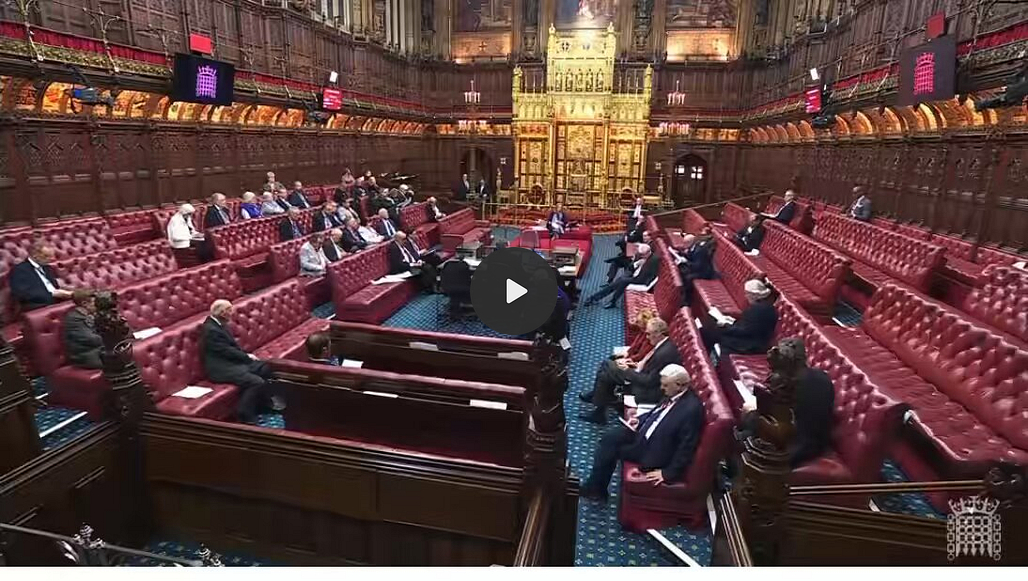
Acton told the chamber that he considered “the investigation and recording of non-crime hate incidents to be a huge waste of policing resources.”
The law, he added, was also having “a chilling effect on free speech.”
“Police in England and Wales are spending an estimated 60,000 hours a year investigating and recording NCHIs—non-crimes. That is time that could be spent solving actual crimes.”
“The Free Speech Union estimates that over a quarter of a million NCHIs have been recorded since they were first introduced in 2014.”
This averages, Acton explained, to around “65 investigations per day.”
In effect, he argued, the law is flawed.
“If a hate incident is reported to the police by a member of the public, they have little choice but to record it as an NCHI.”
Hurt feelings are enough to force a response.
“No additional evidence is required.”
The law is also unjust.
“For the people who have had NCHIs recorded against them, it is no laughing matter.”
An NCHI follows people, Action remarked.
“If you apply for a position or a voluntary role that requires you to carry out an enhanced Disclosure and Barring Service check, an NCHI can show up on your record.”
“That is why,” he stated, “NCHIs are having a chilling effect on free speech.”
“People are rightly concerned that, if they say something that another person takes offence at, it can permanently impact their ability to work.”
“There is also the broader concern that the amount of time the police are spending on investigating and recording non-crimes is undermining public confidence in the police.”
These assertions appear to be backed by the police.
I picked up on this here for a Nation First article in January.
UK law enforcement apparently considers NCHIs to be nonsense. It’s safe to say police will be happy to see the end of them.
Months before he and FSU pushed to abolish this thought-crime section of the UK’s hate speech legislation, police had already begun rolling back enforcement of that section of the law.
This happened in the latter part of 2025, was under the radar and went on barely noticed.
The most important layer to take note of here is what this quiet retreat communicates.
Quietly ending the enforcement of policing thoughts to coddle people’s feelings proves Acton is right!