


When Netflix first announced it was adapting C.S. Lewis’ The Chronicles of Narnia, everyone asked the same question: “Who are they going to make gay?”
Well, we may have our answer.
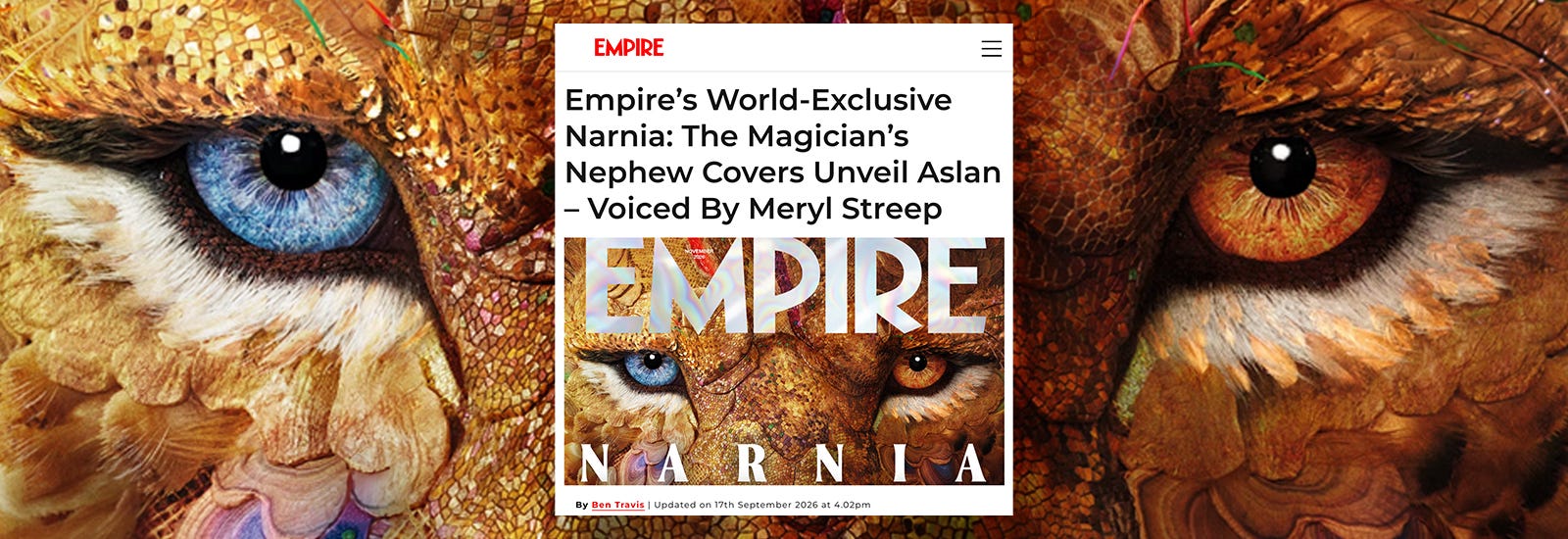
According to Empire Magazine, Greta Gerwig has confirmed that Meryl Streep will play Aslan the Great Lion in The Magician’s Nephew, the first film in her planned Narnia series.
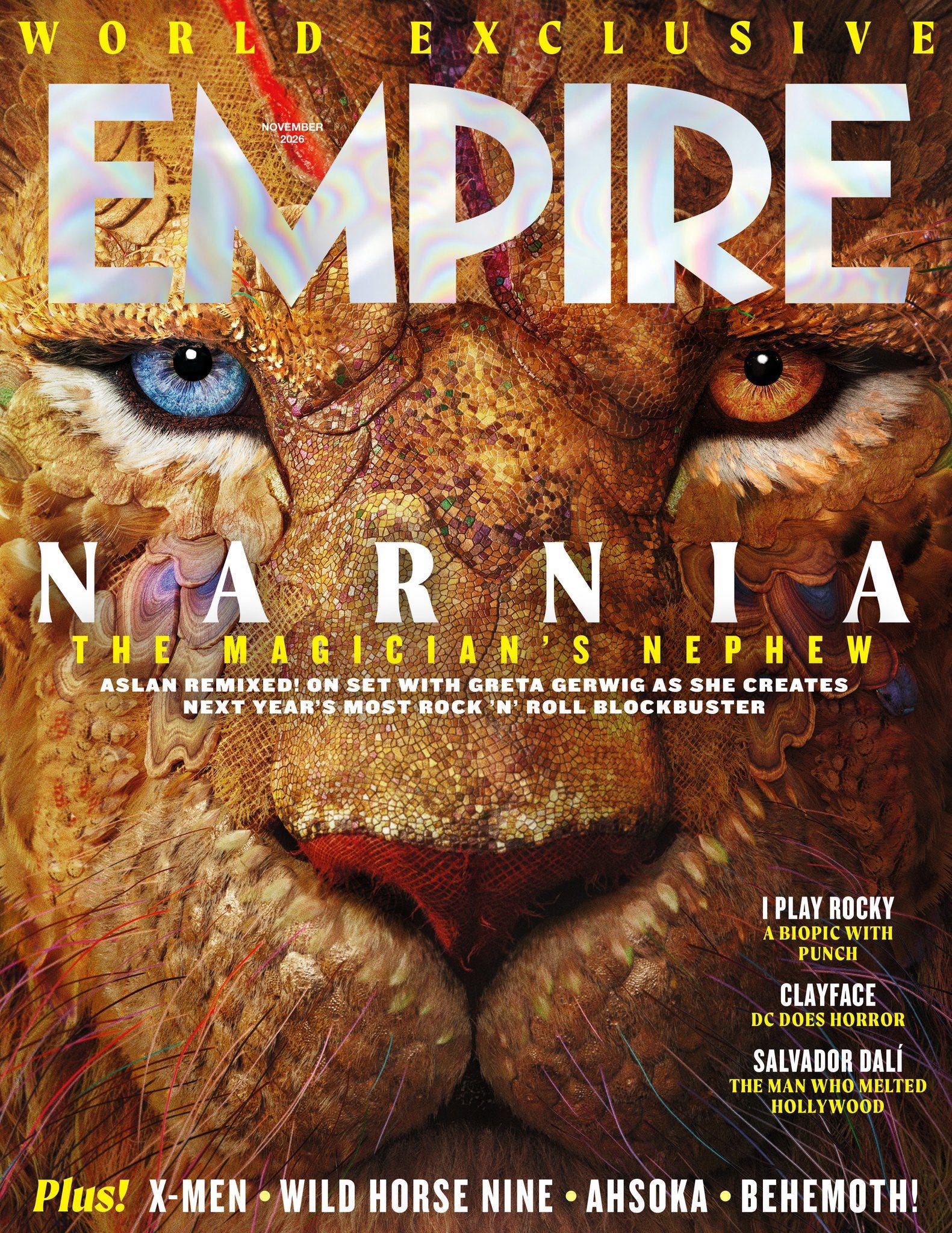
The magazine also featured a full-page cover of Gerwig’s new Aslan, depicted with David Bowie-inspired eyes and rainbow-coloured whiskers. Yes, really…
But Aslan is not merely another fantasy character. He is one of the most recognisable representations of Christ in modern children’s literature.
He is the Creator of Narnia. He is its rightful King. He is the judge who confronts evil. He willingly lays down his life in the place of another, dies upon a stone table, and rises from the dead.
Lewis deliberately constructed Aslan’s story to help children understand the person and work of Jesus Christ in the Gospels.
As such, Aslan’s identity matters.
Lewis didn’t write Aslan as an androgynous symbol onto which every generation could project whatever cultural meaning it preferred. He wrote him as a male lion and deliberately invested that character with masculine kingship, authority and Christological significance.
It’s not simply a debate about ideal casting. It’s a question about what happens when Hollywood gets a hold of a distinctly Christian work and decides to reshape its image around the feminist gods of the day.
Gerwig has described her Narnia as a “rock opera,” drawing inspiration from David Bowie and imagining Narnia as a world created through modern music.
But Lewis already created a specific Narnia. He already created a specific Aslan. And he created them for a specific reason.
That is precisely why the story cannot be treated as interchangeable creative material. There is a difference between adapting a classic and appropriating it.
An adaptation asks: How can we faithfully bring this story to a new medium?
An appropriation asks: How can we take this beloved story and make it serve our own artistic and cultural vision?
The former respects the author’s work. The latter defaces it.
And Gerwig’s Narnia looks like defacement.
We can’t help but wonder who, exactly, they are creating this “adaptation” for. Narnia fans? Lewis fans? Christians?
No one is asking for Aslan to be reinvented in the image of today’s transgender culture. Yet that appears to be precisely what Hollywood is determined to do to one of the greatest Christian storybooks ever written.
We don’t need Narnia stripped of its Christian identity and repackaged as another piece of contemporary Hollywood woke fantasy. Lewis fans do not need his characters reconstructed to fit the feminist sensibilities of the moment.
The world already loves the Narnia Lewis wrote. And perhaps that’s their problem. If they could, we know they would cancel Narnia and its Christological message altogether.
But Hollywood has also spent years proving that it doesn’t need to cancel a classic to destroy what made it special.
It can simply take the characters, alter their identities, impose a new ideological and aesthetic framework, and then insist that the result is an improvement.
It’s literary vandalism, and perhaps that is precisely the point. Take something beloved, reshape it until it reflects the new cultural norms, and eventually the original becomes inseparable from the controversy surrounding its remake.
What comes to mind now when you hear the words “Snow White”? The timeless fairy tale, or the cultural wreckage left behind by Hollywood’s latest reinvention?
That is what Hollywood does to the stories it retells: it takes what was beautiful, Christian and beloved, strips away what made it distinctive and admirable, and remakes it in the image of its own ugly gods.
Hollywood does not create beauty from these stories. It inherits what others have created, strips away what made it beautiful, and twists it into something else entirely.
To quote Lewis’ good friend and contemporary J.R.R. Tolkien, “The Shadow that bred them can only mock; it cannot make: not real new things of its own.” Or, as it’s often paraphrased, “Evil is not able to create anything new; it can only distort and destroy what has been invented or made by the forces of good.”