



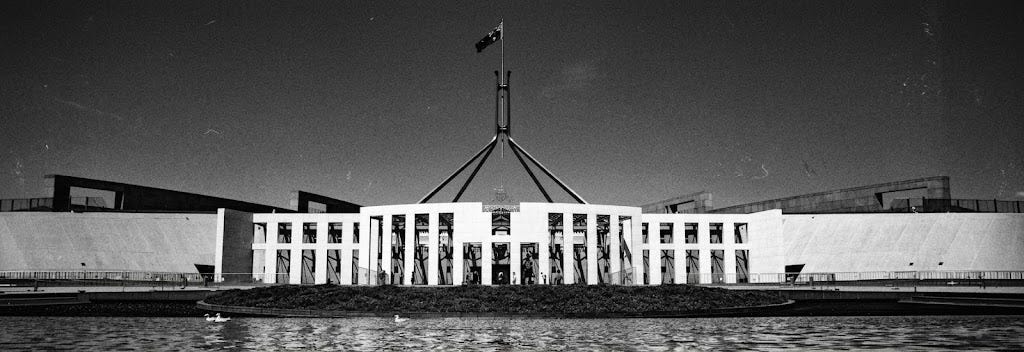
The Australian Senate passed new powers for ASIO 26-15 on Thursday.
The Australian Security Intelligence Organisation Amendment Bill (No.2) 2025 adds to the 1979 ASIO Act, raising concerns about citizen protections vis-à-vis police questioning.
Such as the broadening of ASIO’s power to include “sabotage, promotion of communal violence, attacks on Australia’s defence system and any serious threat to Australia’s territorial and border integrity.”
Under current law, this is regardless of “whether these [words or actions] were directed from, or committed within, Australia or not.”
The biggest concerns centre on the “promotion of communal violence” and threats to national integrity.
Under existing laws on adult questioning, anyone who fails to comply with ASIO when they demand information can be imprisoned for five years.
Put simply, in these cases you do not have the right to remain silent.
Ramping up those concerns is the fact that neither inciting “communal violence” nor “threats to national integrity” are properly defined.
According to section 4 of the ASIO Act, foreign interference is defined as: “activities relating to Australia that are carried on by or on behalf of a foreign power.”
Activities included anything that is “detrimental to the interests of Australia “ or involves “a threat to any person.”
Promoting communal violence is defined as: “activities that are directed to promoting violence between different groups of persons in the Australian community.”
Added here is any activity that “endangers the peace, order or good government of the Commonwealth.”
In effect, publicly questioning COVID vaccines, lockdowns, mass immigration, and multiculturalism could be considered incitement and a threat to national stability (integrity).
As could critiquing Islam, or even criticising Albonomics that is currently edging Australia’s economy irreversibly towards’ Labor’s “we’re saving the world from climate change,” Net Zero Nanny State black hole.
By far one of the bill’s most prominent opponents, Senator Alex Antic, said on X that he’s disappointed it passed.
Antic also stated that he voted against the amendment because “extraordinary powers should never become ordinary.”
The South Australian Liberal Senator then declared the law an expansion of the surveillance state.
Antic told the Senate that the bill “doesn’t merely fine-tune existing arrangements.”
“It breaks in new powers and makes permanent extraordinary intrusions on the liberty of Australians.
“Compulsory questioning warrants,” Antic argued, “allow ASIO to compel a person who may never have been charged with an offence or may never be charged with an offence to appear and answer questions under threat of criminal penalty.”
Even telling anyone about being questioned or detained is now an offence.
“These are not ordinary investigative tools,” he stated. “They sit well outside the framework of the traditional criminal justice system.”
Since 9/11, the government has repeatedly extended what were meant to be temporary powers.
That’s because they were the exception, not a permanent rule.
“As it currently stands, the bill removes that sunset clause entirely.”
Making them permanent is a problem, Antic added.
“History shows that temporary emergency powers have a long and chequered history and habit of becoming permanent features.
“Worse still, the bill actually expands the reach of adult questioning warrants.
“The definition of an adult questioning matter will now be broadened under this bill to include sabotage and, most alarmingly, the promotion of communal violence.”
Criticising the loose language, Antic rightly pointed out that “Promotion of communal violence’ is particularly elastic.
“Vague drafting is the enemy of the rule of law.”
To this he added, “What does it actually mean? What does it capture?”
“Does it capture passionate political speech, advocacy that offends certain groups, legitimate protest or religious expression that crosses an often-ill-defined line?”
Antic then asserted, “In a free society, the state shouldn’t be handed an open-ended power to compel citizens to answer questions about speech or association that falls short of actual criminality.”
Blurring lines when it comes to criminality and rights, he further argued, removes certainty about where that line is drawn.
The even greater concern here is whether or not the law could be used to detain and question people against their will.
“The bill also retains the capacity to subject children as young as 14 to these processes. On its surface, that alone should give this chamber reason to pause.
“Security which is purchased at the price of permanent, expanded and coercive powers is a false bargain.”
Extraordinary laws require use-by dates.
“The rule of law requires that the state’s most intrusive rules remain exceptional, tightly confined, regularly scrutinised and subject to genuine sunset clauses.”
They should not, Antic protested, be “quietly normalised” and “quietly allowed to creep into the norm.”
Notably, Antic joined One Nation and The Greens in opposing the expansion of ASIO’s powers.