


In his 1630 sermon A Model of Christian Charity, delivered aboard the Arbella, John Winthrop urged the settlers of the Massachusetts Bay Colony to build a Christian commonwealth that would stand as a “city upon a hill,” with the eyes of the world upon them.
Social distinctions—rich and poor, strong and weak—were not accidents of history, he argued, but instruments of divine providence: meant to display God’s wisdom, cultivate virtue, and bind a people together in mutual dependence. Wealth and authority were to serve the common good, not private ambition. If the colony remained faithful to God’s covenant, it would shine as a beacon; if it abandoned that calling, it would become a cautionary tale.
For much of the past century, America has seemed uncertain of that inheritance. Yet recent moments suggest that the language of public faith, once commonplace in American life, may be re-emerging.
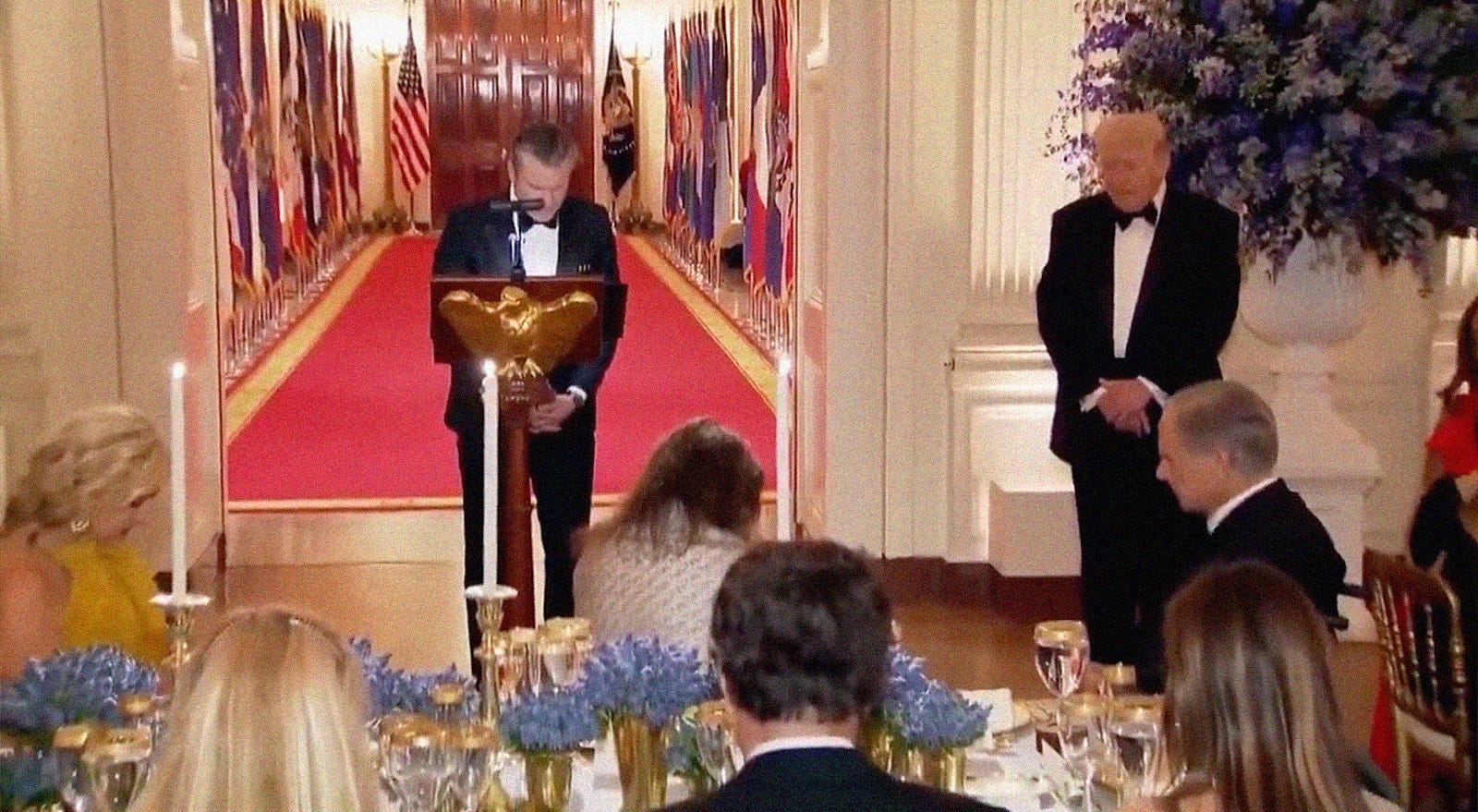
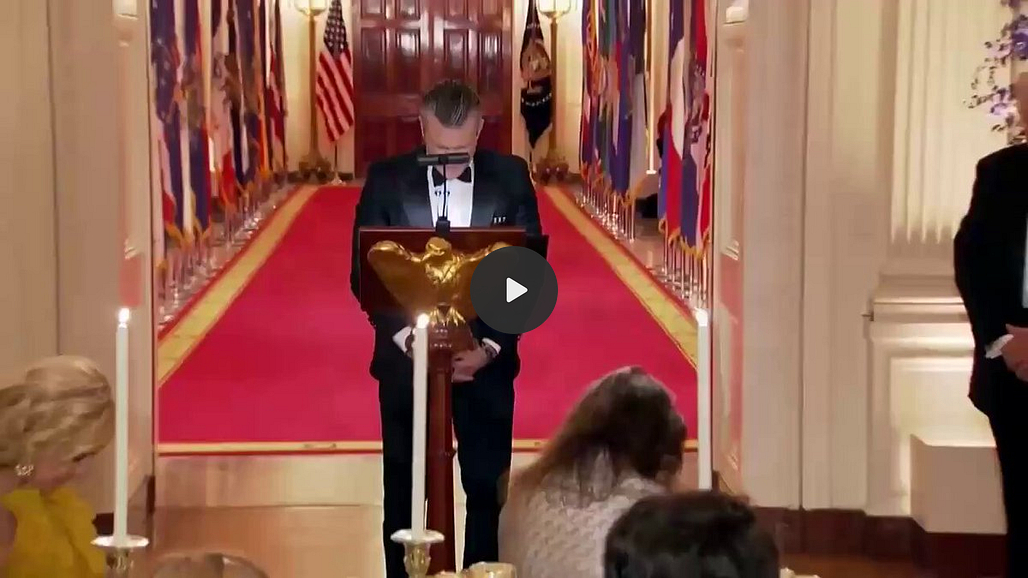
Last week, at the National Religious Broadcasters Convention, Secretary of War, Pete Hegseth, declared unapologetically, “Christ is King” over the United States, noting the nation's abandonment of secular, “woke,” and godless ideologies. A few days later, at the National Governors Association dinner held at the White House, Hegseth was invited to open the evening in prayer at the request of President Donald Trump.
“Wisdom, defined as the fear of the Lord—the fear of the Lord being the source of all knowledge and wisdom—Lord God, your eternal truths, may they rule.”
In that prayer, Hegseth thanked God for His providence over the nation’s 250-year history, invoked George Washington kneeling at Valley Forge, and asked for wisdom and protection for the President, the governors, and American service members stationed around the world. He closed in explicitly Christological terms, praying “in the holy name of the Lord Jesus Christ, the King of Kings and Lord of Lords.”
Hegseth prayed:
Dear Heavenly Father, King Jesus, we come humbly before your throne. Praising you for all the providence you’ve bestowed upon this nation. For over 250 years, from George Washington to President Trump, we have dedicated this nation to one nation under God and certainly, in God we trust. And as we think of 250 years ago to George Washington on bended knee in Valley Forge, appealing to Heaven on behalf of his troops in this young nation, we’ve appealed to you from the beginning and may we continue to appeal to you.
And tonight, we pray for our President, President Trump. Give him safety, give him wisdom. Lord, we pray for our Vice President, our First Lady, our Second Lady, the Cabinet members here, all the governors assembled here as well, our civil magistrates, Lord God. I ask that you give them the wisdom to see what is right and the courage to do it. Wisdom, defined as the fear of the Lord—the fear of the Lord being the source of all knowledge and wisdom—Lord God, your eternal truths, may they rule.
So this evening, also, I would be remiss if I did not pray for our great troops. Our men and women all around the globe are defending our great nation, as they have for 250 years. Lord God, watch over them and protect them.
It is in your holy name, the Lord Jesus Christ, the King of Kings and Lord of Lords, that we pray, and we bless this food too. Amen.

Hegseth’s unapologetic proclamation of Christianity is, for many, a refreshing reminder that the nation, and indeed the broader Western tradition, was shaped by the conviction that Christ, not the state, stands as the highest authority.
The moment itself was remarkable. Hegseth’s prayer reflected a forgotten understanding of government not as ultimate, but as accountable to a higher authority. In that view, rulers are not autonomous architects of morality, free to redefine good and evil according to political fashion. Rather, they are ministers under God, bound by transcendent standards and restrained by God’s moral law.
Of course, critics of such overt displays of “Christian Nationalism” often absurdly warn that such overt Christian language in public life edges toward “fascism” and “authoritarianism.” Yet proponents argue the exact opposite, namely, that acknowledging a moral authority above the state is precisely what limits the state.
If no power stands above government, then government becomes the highest moral reference point in society, free to expand its authority and redefine rights at will. A public confession that Christ, not Caesar, is supreme will function not as a threat to liberty, but as a boundary around political power.
The question is, is the nation grounded in a transcendent moral order, or is morality ultimately constructed by shifting political majorities? Is authority delegated and limited, or self-defining and expansive?
A public confession that Christ, not Caesar, is supreme will function not as a threat to liberty, but as a boundary around political power.
Winthrop’s warning still echoes. A people who receive covenantal blessings from God must also accept covenantal accountability to God. Nations, like individuals, cannot indefinitely sever moral inheritance from political life without devastating consequences. The pressing question for Americans, and heirs of the Western world, is not simply which team will win the next election, but which moral vision will shape the next generation.
Will our children inherit a society that understands itself as bound together by shared heritage, faith, and moral obligation? Or one shaped chiefly by the shifting moral preferences of those in power and the political expediencies of global elites? The answer will determine whether the “city upon a hill” remains a real attainable goal, or a relic of a forgotten sermon illustration, now lost in the open sea.