


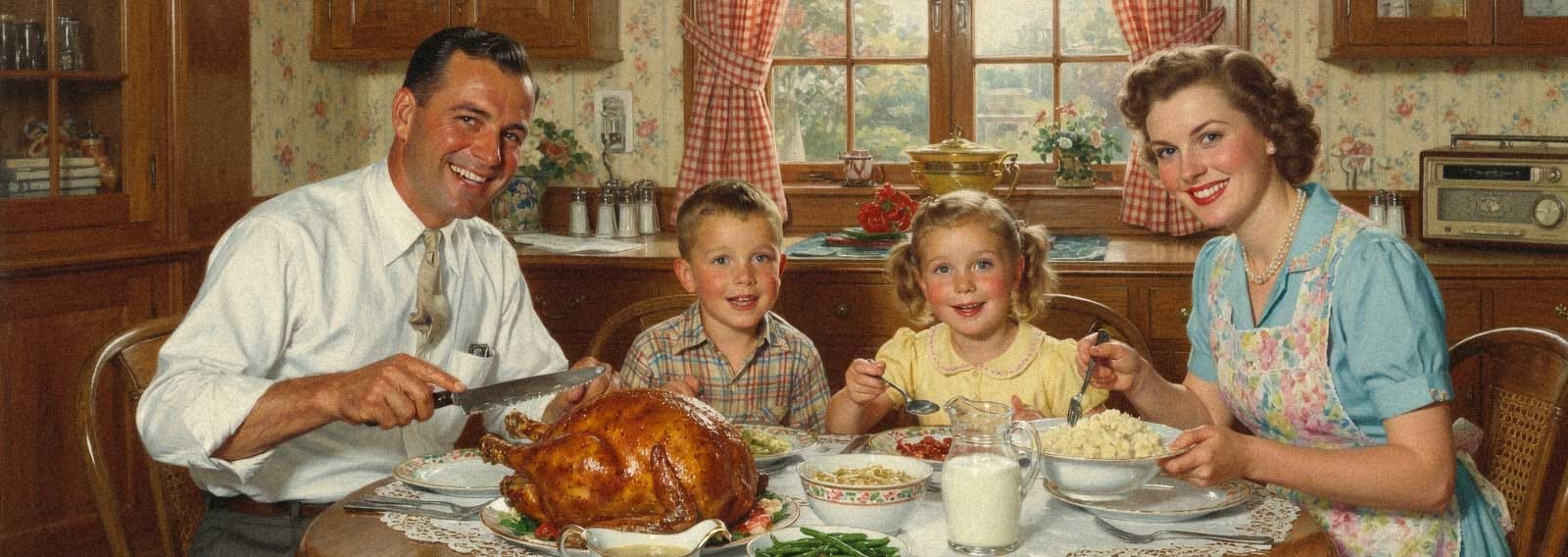
The family is the oldest and most resilient institution in human history. For millennia, it has served as the primary unit of social organisation. As such, the family unit has been described as the nursery of civilisation, the transmitter of culture, the first school, the first economy, and the first community of faith and formation.
Yet today, this fundamental institution faces a sustained and largely unacknowledged assault. Not only through open hostility, but also through a convergence of economic pressures, fiscal structures, and cultural narratives that, taken together, render traditional family life increasingly difficult to sustain.
In previous generations, a single income, earned by a father working as a tradesman, labourer, or professional, was often sufficient to support a household, purchase a modest home, and enable a mother to devote herself to raising children and managing the domestic sphere.
Today, that dream has become, for many, economically unviable. Housing costs have surged, driven in part by regulatory constraints, demand pressures, and immigration. Taxation has increased severely. The general cost of living, including food, utilities, education, and healthcare, swallows income at a rate that leaves little room for a non-earning spouse.
The result isn’t just a shift in lifestyle preference, but a form of compulsion. Dual incomes are no longer a choice for many families, but a necessity. Women, in large numbers, are not simply entering the workforce as an expression of “liberated choice”; they are doing so because the world today leaves them little alternative.
Obviously, a household with two working adults generates significantly more tax revenue than one sustained by a single income. By contrast, the labour of a mother in the home, though foundational to the raising of children, the stability of society, and the future of a nation, remains economically invisible in formal terms. It is not taxed, but neither is it meaningfully recognised or supported. The incentive structure thus leans heavily against the single-income household.
As both parents are drawn into full-time work, the functions once carried out within the family are displaced. Children are placed into daycare and educational institutions at earlier ages and for longer durations. Care, formation, and supervision, once the domain of parents, are increasingly outsourced. Families, in effect, fund through taxation and fees the very systems that replace their own role. A cycle emerges in which economic pressure necessitates external care, and external care reinforces the economic conditions that made it necessary in the first place.
Alongside these pressures runs a powerful cultural current. Modern ideological frameworks, particularly those influenced by feminism, have often recast domestic life, especially full-time motherhood, as limiting or regressive. While opportunities for women have expanded, the accompanying narrative has frequently diminished the perceived value of homemaking and child-rearing. Career achievement is elevated as the primary measure of feminine fulfilment, while the work of the home is treated as secondary or even outdated and unnecessary.
The consequence is not the elimination of choice, but its narrowing in practice. The domestic path remains available in theory, yet is often discouraged in culture and rendered difficult by economics. Women who prioritise the home may find themselves moving against both financial pressures and social expectations. What is presented as freedom can, in effect, become a one-track norm from which any deviation is considered the exception.
It goes without saying that these cultural shifts carry profound consequences for the internal life of the family. When both parents are committed to demanding work schedules, time together is significantly reduced, and family life is disrupted. Husbands and wives can become “co-managers” of what amounts to little more than a Bed and Breakfast rather than partners in a deeply integrated life. Fatigue and fragmentation strain relationships. Children, meanwhile, spend much of their formative years under institutional supervision or immersed in peer and digital environments, rather than shaped primarily by their parents.
Over time, this system weakens the bonds that give the family its coherence and strength. The parent-child relationship, once marked by presence, discipline, and authority, becomes attenuated. The household shifts from being the centre of life to a point of coordination between various external commitments.
From these changes inevitably emerges a broader social and cultural transformation. Society itself comes to be conceived less as a network of families and more as a collection of atomised individuals. The family, which once performed a wide range of essential functions—education, care, moral formation, spiritual discipline, economic cooperation, and welfare—finds those roles increasingly externalised and commodified.
An atomised society follows naturally from this arrangement. Individuals, detached from strong familial structures, are more likely to experience isolation, instability, and a diminished sense of belonging. Without the formative influence of a cohesive family, identity becomes more fragile, and social bonds more transient. True to form, the state and the market expand to fill the void—providing services, structures, and even meaning where the family once did so organically.
The economic implications are equally significant. Every function the family once fulfilled internally, including childcare, elder care, meal preparation, and education, becomes a service to be purchased. This benefits both governments through taxation and markets through consumption. By contrast, a strong family performs these functions within a framework of love, duty, and mutual obligation, and that, without monetisation, and often without external dependence.
All of this is the cumulative outcome of policies, incentives, and cultural developments that, while may be pursued for a range of reasons, converge in their damning effects. The result is visible in declining birth rates, delayed family formation, increased family instability, and a weakening of intergenerational continuity.
This is a civilisational question for every Western nation. Societies are not ultimately built by isolated individuals, but by families, by mothers and fathers who invest their time, energy, and identity into the raising of the next generation. When that work is devalued, rendered invisible, or made economically unsustainable, the consequences extend far beyond the household.
What is at stake is not merely a preference for one lifestyle over another, but the preservation of the very institution that undergirds social stability, continuity, and human flourishing. A society that loses the family does not simply change. It fragments, reducing itself to a collection of disconnected individuals, no longer rooted in the enduring bonds that make civilisation possible.
If the economic, cultural, and institutional forces of modern life continue to erode the family in this way, what, if anything, will remain to hold society together when its most fundamental unit has been quietly dismantled?