


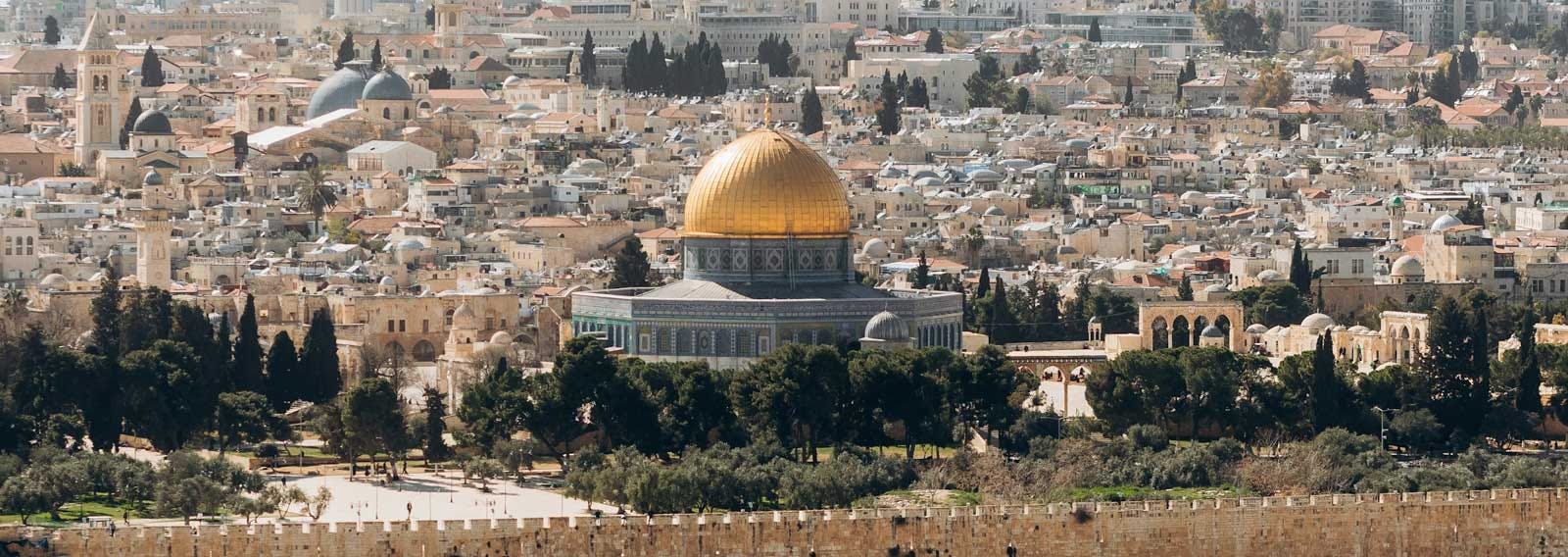
For years, Israeli leaders have warned of what’s been dubbed the “Curse of the Eighth Decade.” In essence, it is the recognition that, historically, Jewish sovereignty in the land of Israel has tended to unravel roughly seventy to eighty years after its establishment.
With the modern state of Israel founded in 1948, that supposed danger period falls between roughly 2018 and 2028. As the country approaches its eightieth anniversary, several Israeli prime ministers and senior leaders have reflected on the possibility of history repeating itself.
Commentators who raise the “eighth decade” theme usually point to two precedents in Jewish history.
The united monarchy under David and Solomon, often dated roughly around 1000 BC, achieved political unity and peak territorial strength. Yet within a few decades after Solomon’s reign, the kingdom was severely fractured into two rival states: the northern kingdom of Israel, consisting of ten of the twelve tribes of Israel, and the southern kingdom, consisting of Judah and Benjamin. Ultimately, the division weakened Israel significantly and left it vulnerable to foreign domination and conquest.
The second example is the Hasmonean Kingdom, which emerged from the Maccabean revolt in the second century BC. The Hasmoneans established an independent Jewish state after throwing off Seleucid rule. But roughly seven to eight decades later, internal power struggles and factional conflict weakened the state to such an extent that Rome was able to assume control. Jewish sovereignty effectively ended soon after.
Jesus’ remark to the Pharisees that a “kingdom divided against itself cannot stand” would have been a painful reminder of both Israel’s own ancient and recent history (Mark 3:24-25).
Because both examples involve internal fragmentation followed by loss of sovereignty, the parallel is often drawn with modern Israel, especially as the state draws near to its eighth decade. And it’s not merely a “conspiracy theory” peddled by the religious fringe either. It’s a view held by several prominent Israeli leaders.
Former Israeli Prime Minister Ehud Barak has spoken about it explicitly. Writing in Yedioth Ahronoth in 2022, Barak warned that Jewish history itself raises a sobering precedent for the modern state. He wrote:
“Throughout Jewish history, the Jews did not rule for more than eighty years, except in the two kingdoms of David and the Hasmonean dynasty, and in both periods, their disintegration began in the eighth decade.”
Barak’s concern was not primarily about foreign enemies but internal division. He argued that the greatest threat to Israel’s future is division within Israeli society, political polarisation, cultural conflict, and widening tensions between different factions of the population.
In other words, unity is their strength.
Israeli Prime Minister Benjamin Netanyahu has also referenced the so-called “Curse of the Eighth Decade.” In remarks cited by Israeli media, Netanyahu noted that all earlier Jewish states failed to endure beyond roughly eighty years.
For Netanyahu, this pattern isn’t so much an unavoidable fate as a challenge that the modern state of Israel must consciously overcome. The task of the modern state, he’s argued, is to ensure the modern Jewish state does what its predecessors could not—survive beyond the eighty-year threshold and ensure into the next century.
Former Prime Minister Naftali Bennett echoed similar concerns, warning that the greatest danger facing Israel is internal fragmentation.
In 2021, Bennett wrote: “The Jewish people twice had a Jewish state on the Land of Israel, and both times we did not succeed to complete the eighth decade as an independent state, because of internal wars and baseless hatred…
He continued: “At the time of the Roman siege on Jerusalem, the nation was divided, each group entrenched itself in its own position, and burned the food stores of the others, as part of the internal power struggle, so the Romans had a much easier task.”
Across the Israeli political spectrum, leaders who invoke the “eighth decade” theme tend to draw the same conclusion: that nations often fall apart from within before they are defeated from without. To repeat Jesus’ warning again, a kingdom divided is a kingdom that cannot stand. In short, divide and conquer.
Whether the so-called “curse of the eighth decade” proves consistent remains to be seen. What is striking, however, is how Israel’s approach contrasts sharply with that of most Western nations. While the West endlessly repeats the mantra, “Diversity is our strength,” Israel seems convinced that diversity has often been the source of its historical failures. Its leaders recognise that internal division, not external enemies, has repeatedly undermined Jewish sovereignty, and that the future of the state depends on a united society.
One thing is clear: Israel does not see diversity as a strength, but as a potential weakness. Perhaps there is a lesson here for the rest of us.
If the modem state did split/fail, that would poke a bit of a hole in some premillennial dispensational prophecies.