


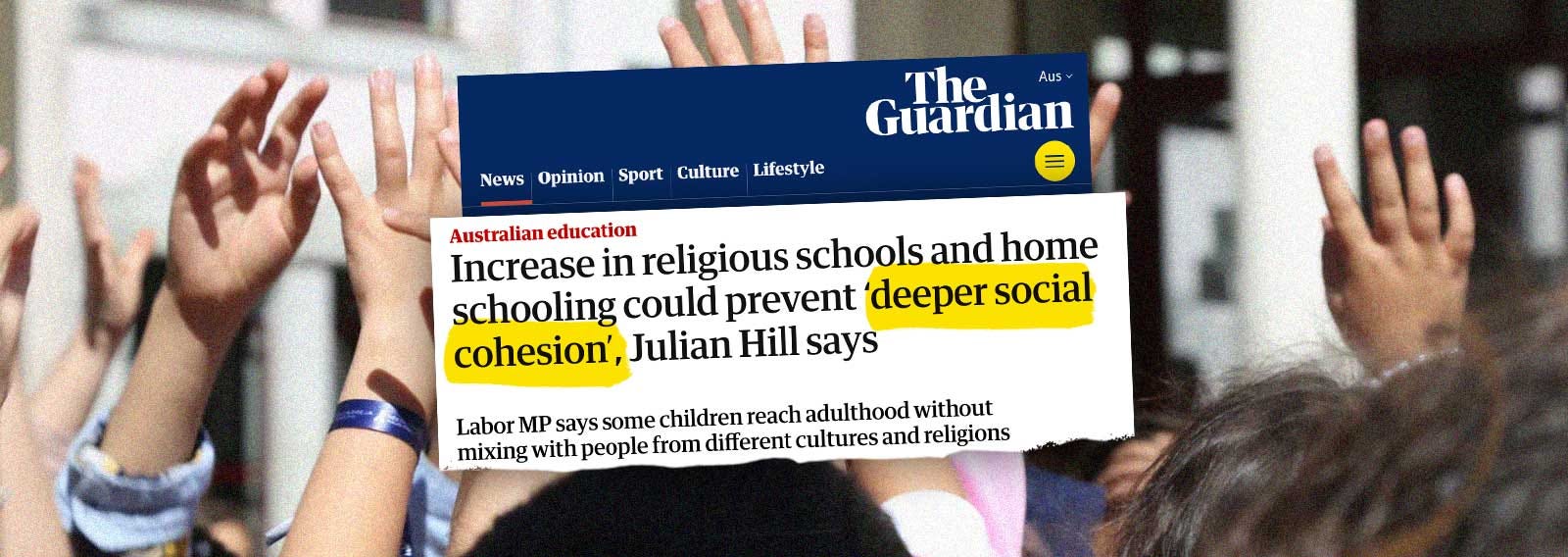
“Social cohesion.”
In modern Australian politics, few phrases are wielded more reverently, or more vaguely, than “social cohesion.”
The phrase is invoked as the ultimate moral good that no decent person could possibly object to. But increasingly, it seems to function less as a genuine social aim and more as a justification for suspending rights. If a policy is said to protect “social cohesion,” then basic human rights are dispensable.
We’re told that speech must be regulated for the sake of “social cohesion.” That the right to assemble must be limited for the sake of “social cohesion.” That certain views are now too dangerous to air because they might unsettle the delicate fabric of our multicultural society. In effect, “social cohesion” has become a pretext for shielding government policies from criticism. If you question or critique the policy, you’re not just dissenting; you’re threatening the community itself.
Anything and everything that threatens “social cohesion” must be rejected. And that’s what makes recent government comments on Christian education and homeschooling particularly concerning.
According to The Guardian, Labor MP Julian Hill has warned that the growth of religious schools and homeschooling poses a risk that Australian children may grow up without meaningful exposure to other cultures and religions, potentially undermining “deeper social cohesion.”
Speaking to the McKell Institute, he said education can “militate against intercultural connections and deeper social cohesion.” He noted that since 2015, 320 new Catholic and independent schools have opened, compared with 279 government schools, with 33.9% of students — 1.4 million children — now attending religiously affiliated institutions. Homeschooling registrations have surged: up 232% in Queensland, 116% in New South Wales, and 85% in Victoria.
“There are reports of quite extreme or conservative curricula being used, which gives cause for pause and reflection if this trend continues,” he said.
“What is being taught to these kids? Are they mixing with broader society?”
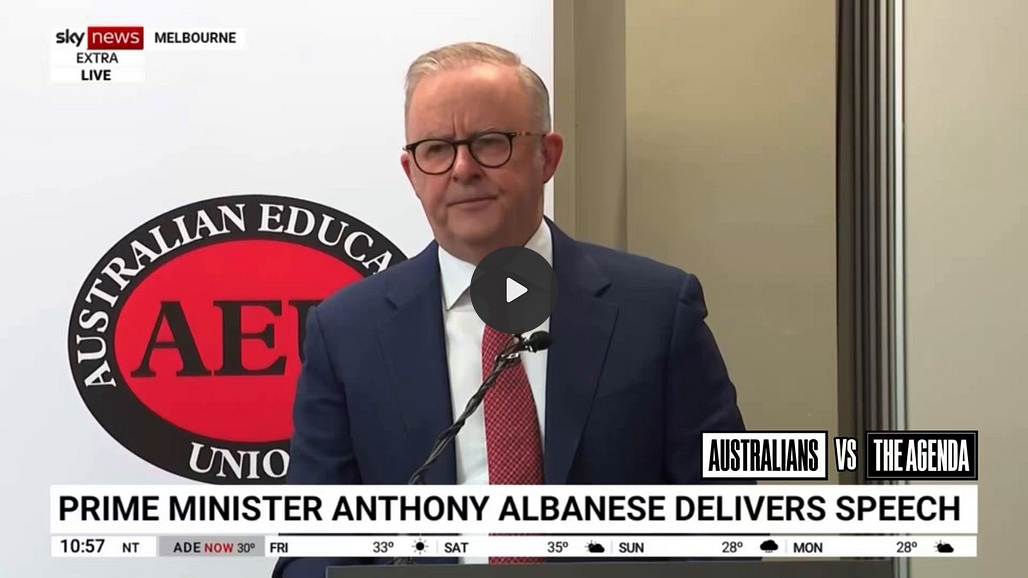
These comments come just days after Prime Minister Anthony Albanese praised public schools as safeguards against “far-right ideological positions,” arguing that “Hatred and division is something that’s learned and so public schooling is so important.” Though he did not directly attack private or faith-based schools, the implication was clear: state education forms citizens properly; alternatives risk fostering division.

So, if the Australian government officially deems Christian education and homeschooling a risk to “social cohesion,” are they going to do to private education what they did to “free speech”? We’ve already seen State Premiers curtail free speech on the grounds that it poses a threat to “social cohesion.” If speech can be limited to maintain social harmony, why not independent religious education? Why not homeschooling? Once “cohesion” becomes the highest social pursuit, then any institution not fully shaped or controlled by the state—family, church, school—can be cast as suspect or outright dangerous.
This is why we bang on so much about the importance of the state recognising Christianity. What we’re witnessing here is just one of the inevitable consequences of making the state the absolute arbiter of good. In other words, it’s a violent conflation of church and state—not the church becoming the state, as they told us to fear, but the state becoming the church. The state alone now defines truth, justice, morality, and rights.
And here’s the problem: God-given rights are contingent on a God giving those rights in the first place. In fact, we can’t even speak of them as “rights” at all. Without God, “rights” are merely permissions and privileges that are granted by the state as long as they’re convenient to the state, and withdrawn the moment they’re not.
But if rights exist prior to, and apart from the government, then the state’s role is to protect those rights, not redefine them as threats to be regulated—or outright suspended.
This is the irony of the whole thing: We’re constantly told diversity is our strength, yet warned that our multicultural society is so fragile that cohesion must be enforced by the state. But coerced harmony is not “cohesion.” It’s compliance manufactured through fear. So, in the end, it’s not diversity that holds us together; it’s the threat of punishment. In that sense, diversity is the strength of the state, not the people.

But it goes without saying that a society consisting of profound cultural, ideological, and moral differences will inevitably experience tensions. But we have a government at war with the negative consequences of its own policies. They’re maximising diversity and then criminalising the social friction that follows.
Australians must think long and hard before accepting this trade-off. If governments can suspend freedoms whenever it invokes “social cohesion,” what rights are actually beyond their reach?