


Genocide doesn’t always begin with guns and gas chambers. Sometimes it begins with the denial that a people group has any legitimate right to remain distinct.
We rightly condemn the attempt to destroy an ethnic group through murder and bloodshed. But the destruction of a people group can take other forms. A people can be displaced, assimilated, culturally dismantled, politically dispossessed, and ultimately replaced.
The question isn’t simply how a people disappears, but whether there is an intentional effort to destroy that people as a distinct group, and whether the acts being pursued are deliberately directed towards that end.
Physical extermination is one method, but it’s not the only conceivable form of destruction.
The reason why this matters is that the entire logic of “protecting ethnic minorities” rests on the principle that their continued existence is paramount. We protect them so they can continue to exist as peoples—not memories—with their own distinct communities, institutions, traditions, culture and connection to their historic people and homelands.
And yet, for some reason, that principle disappears when the people in question are “European” or “White”—people who account for 8% of the global population, or less.
Let’s put that into perspective for a moment:
When it comes to ethnic or genetic minority groups, it’s worth keeping the global distribution of ethnic traits in perspective.
For natural hair colour, roughly 1% of the world’s population has red hair, 2% blonde hair, 11% brown hair, and around 80% black hair.
Eye colour is similarly distributed: approximately 2% have green eyes, 5% hazel, 8% blue, and around 70% brown eyes.
Skin pigmentation is also unevenly distributed globally, with people of predominantly light skin representing a minority of the world’s population, while the majority have darker skin tones.
So when we talk about “ethnic minority” groups, we should remember that minority status is relative to a particular location, and not a description of humanity as a whole.

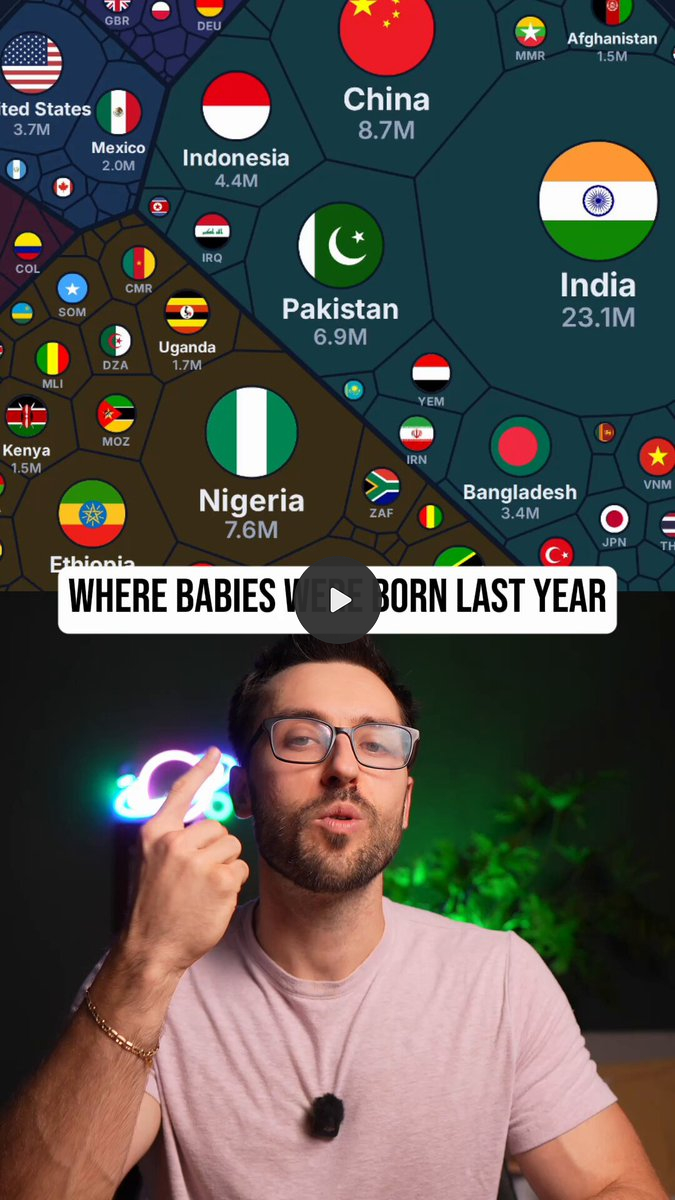
If an ethnic people is steadily displaced from its homeland while another population becomes the demographic majority and assumes increasing political, economic, and cultural power, calling the process merely “migration” or “diversity” only cloaks the issue.
But what happens to the original people? If the foreseeable result is the dissolution of their distinct identity and their displacement from meaningful control of their historic homeland, that is ethnic erasure.
And where such acts are accompanied by specific intent and conduct required by international law, they may constitute genocide in the legal sense.
The fact is, a people can be erased without a single person being killed.
The Bible gives us no basis for treating people groups as interchangeable populations to be dissolved and rearranged at the will of those in power. God “made from one man every nation of mankind” (Acts 17:26). Scripture consistently recognises nations, tribes, peoples, and tongues as meaningful realities, not embarrassing and archaic remnants of a primitive past.
Revelation doesn’t picture redemption as the abolition of various people groups, but their preservation before the throne of God: “from every nation, from all tribes, and peoples, and languages” (Rev. 7:9).
God doesn’t redeem humanity by erasing the nations. So, we should reject the assumption that ethnic destruction only counts when there are guns, mass graves, and gas chambers involved.
Sometimes a people is killed. Sometimes it is driven out. Sometimes it is assimilated. Sometimes it is replaced until there is no longer a distinct people left to defend.
The absence of corpses doesn’t prove the absence of ethnic destruction.
The question, therefore, is not simply whether people are being killed. It is whether a people is being deliberately destroyed as a people.
Because a people can survive individual deaths while still being destroyed collectively. Its language can disappear. Its institutions can be dismantled. Its communities can be displaced. Its connection to its homeland can be severed. Its descendants can be assimilated until the people itself exists only as a memory.
That is why ethnic erasure cannot be dismissed simply because there are no bodies in the streets.
A people does not have to be exterminated to be destroyed.
And where the deliberate objective is to ensure that a distinct people will no longer exist, the absence of mass graves does not make the destruction less real.