


There’s something incredibly unsettling about the growing public sympathy for Lindsay Clancy, the Massachusetts mother accused of murdering her three young children.
Clancy is currently on trial for the deaths of Cora, 5, Dawson, 3, and Callan, 8 months. According to her defence, she was suffering from severe postpartum psychosis and was not criminally responsible for her actions.
Yet the bizarre reaction online has gone far beyond sympathy for a woman suffering a mere psychiatric crisis.
Women have actually begun publicly identifying with Clancy. Some have posted tearful videos with their own kids, accompanied by captions like “Same, Lindsay.”


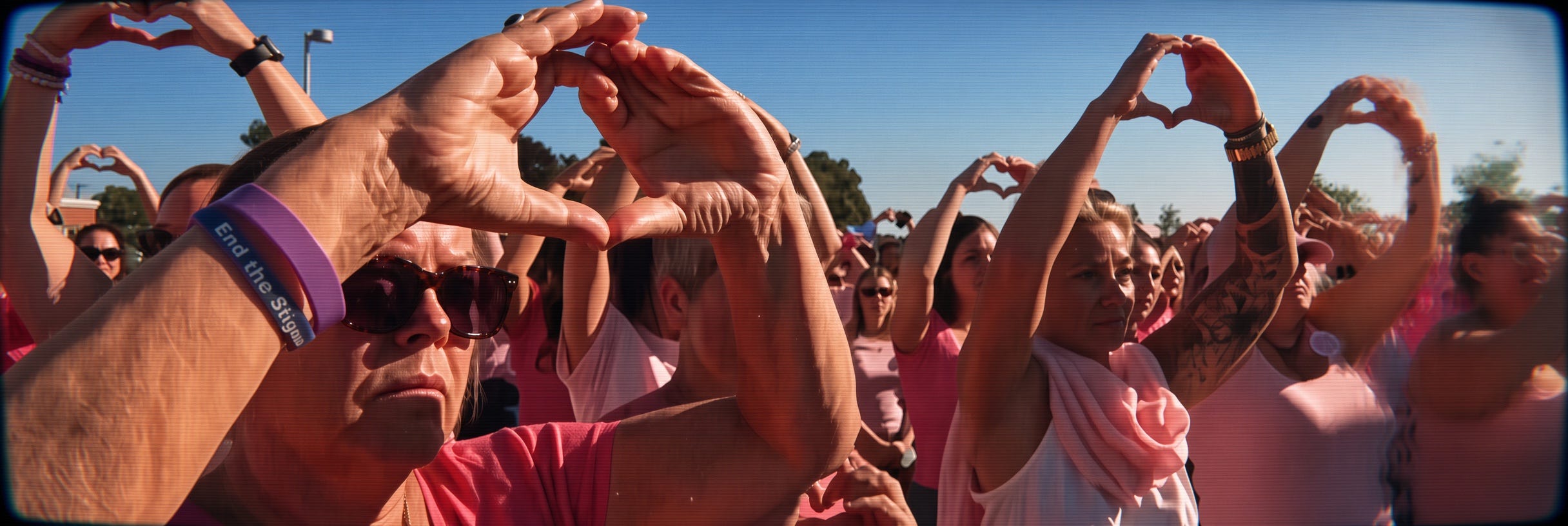
What’s more, hundreds of women have also rallied outside the courthouse in support of Clancy, wearing pink and carrying messages such as “She Needs Help” and “End the Stigma.”
And the internet has rightly responded with indignation that a woman accused of killing her own children has become, for some women, an object of identification and solidarity.
But as murderously insane as it is, perhaps there’s some grim logic to it.
For more than a century, feminists and the women’s rights movement have fought to establish that a woman has an absolute right to decide whether her child lives or dies. Abortion has been elevated into a defining symbol of female autonomy and liberation.
And once that has been normalised—once abortion has been accepted as one of the most fundamental rights a woman can exercise—an obvious question arises: What, exactly, makes the child inside the womb fundamentally different from the child outside it?
Human life is continuous from conception until natural death. As such, there is no magical moment during pregnancy when non-human life suddenly becomes human life. The child does not become a different kind of being when he or she passes through the birth canal.
Location doesn’t determine human worth. Size doesn’t determine human worth. Degree of dependency doesn’t determine human worth. The environment in which a child exists does not determine human worth.
A child does not become more human because he or she moves from the womb to the crib. That’s why abortion and infanticide are morally distinct in law but not in the underlying question of human value.
If an unborn child is a human being, then deliberately killing that child is the intentional killing of an innocent human life. Birth changes a human being’s location, not nature.
If Clancy had aborted her children in the womb, she would be celebrated for exercising her “right” as a woman to choose whether her children live or die.
Perhaps that’s why the “Same, Lindsay” trend is so disturbingly revealing. The Western world has spent decades teaching women that killing an unwanted child can be an expression of freedom, autonomy, and empowerment.
Today, there are social media and cultural campaigns, such as “Shout Your Abortion,” which exist to “normalize abortion,” as though killing an unborn baby is something to boast about.
So, should we really be surprised when the culture begins to lose its ability to articulate where the boundary of human value actually lies? Should we be surprised when the culture that celebrates the killing of children inside the womb begins to sympathise with those who kill children outside of the womb?
A society that “normalises” the deliberate destruction of millions of unborn children shouldn’t expect that attitude towards human life to remain confined to the womb. It should be obvious that when killing becomes routine, people become desensitised to killing.
This is the tragedy of the culture of death. It not only kills the children, but it also changes the society that watches.