


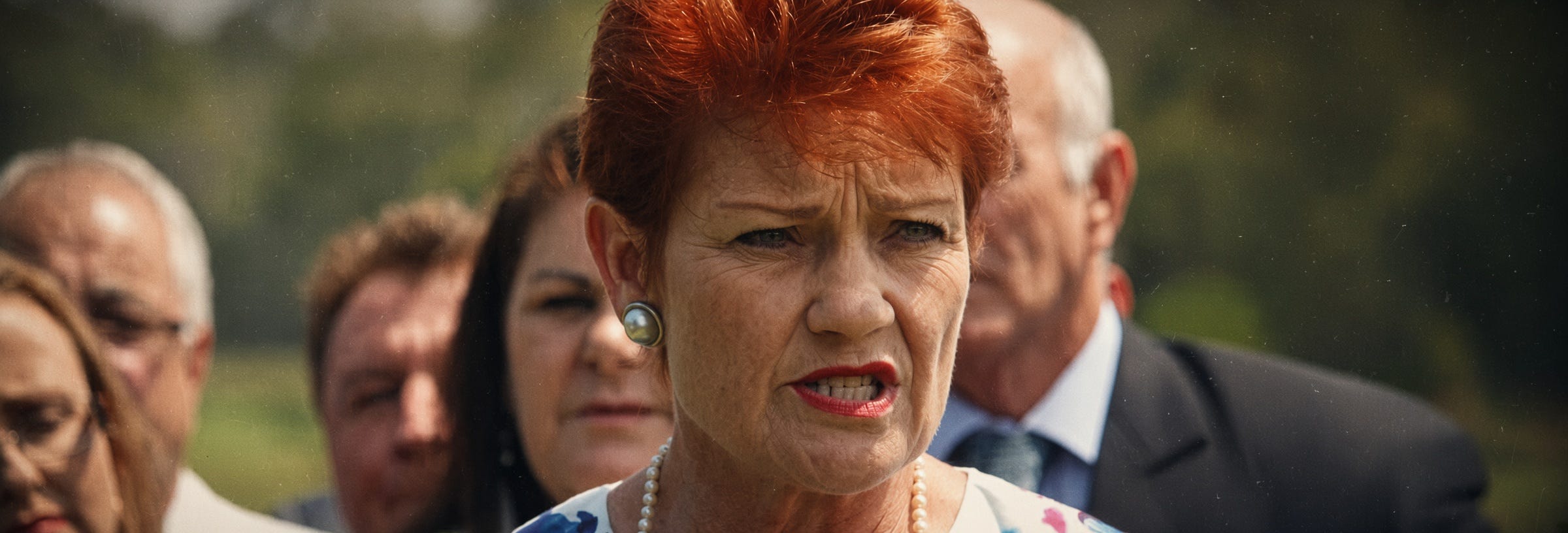
One Nation leader Pauline Hanson has filed an application with the High Court for leave to appeal a Full Federal Court ruling that upheld a finding she unlawfully racially discriminated against Greens Senator Mehreen Faruqi under Section 18C of the Racial Discrimination Act.
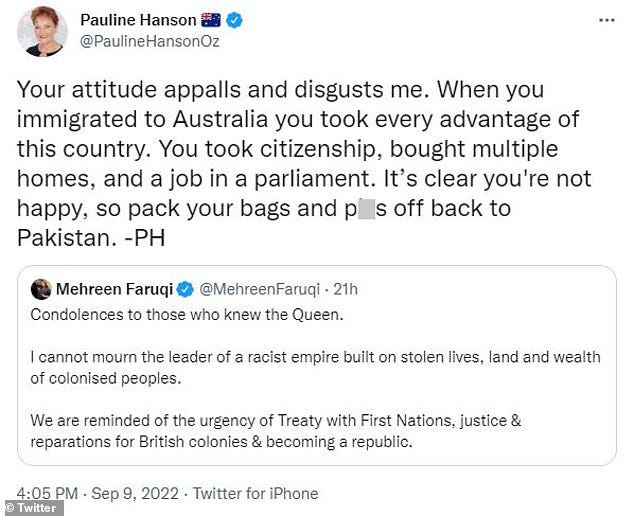
The case stems from a September 2022 post on X, then Twitter, in which Hanson told Faruqi to “piss off back to Pakistan” after Faruqi criticised Queen Elizabeth II and the British Empire following the Queen’s death. The Full Federal Court dismissed Hanson’s appeal on 27 July 2026.

Hanson is now asking the High Court to consider whether Section 18C, as applied to political communication, is constitutionally valid and whether its operation impermissibly burdens the Constitution’s implied freedom of political communication.
The case matters because Section 18C does not require a statement to threaten violence or incite criminal conduct. It prohibits conduct reasonably likely to “offend, insult, humiliate or intimidate” another person because of race, colour or national or ethnic origin.
The Full Federal Court confirmed in July that Section 18C is constitutionally valid and does not impermissibly burden the implied freedom of political communication. It also found that Hanson’s post was not protected by the Act’s Section 18D exemption for conduct done reasonably and in good faith.
The court found that the post fell within conduct prohibited by Section 18C, but Senator Hanson has vowed not to forfeit the fight.


“I’m taking this fight to the High Court for every Australian who feels they are being silenced and to keep their opinions to themselves,” Senator Hanson said on Saturday in a media release.
“Too many Australians are afraid to speak honestly about immigration, race, religion, Indigenous policy and other important issues because they worry they will be called racist, dragged through a complaints process or taken to court.
“That is not how a free country should work. Australians choose their government. The government should never get to choose what Australians are allowed to say.”
Justice Angus Stewart, who heard the original case, acknowledged that Australian political debate can involve deliberately offensive, exaggerated and angry speech, and that restrictions on such communication can burden political freedom.
Australia has no entrenched constitutional Bill of Rights guaranteeing broad freedom of speech. Instead, the Constitution protects political communication through an implied freedom that operates as a limitation on government power rather than as a personal right to free speech. That makes judicial scrutiny of laws such as Section 18C particularly important.
“I don’t mince my words,” Senator Hanson said. “I never have. People know exactly where I stand. But speaking plainly about political issues should not put you in court. The Full Federal Court accepted that my comments were close to the core of political communication protected by our Constitution.
“It also accepted section 18C casts a wide net, sets a relatively low bar and places a significant burden on political communication. Yet the law was still upheld. This is why I am asking the High Court to hear this case.”
Senator Hanson said she believes all Australians should be able to disagree, argue, and say things other people don’t like.
“Freedom of speech means nothing if it only protects words everyone agrees with.”
She said it’s not about giving politicians special rights, but rather, it’s about the right of everyday Australians to take part in the political debates that shape their own country without being frightened into silence.
A healthy “democracy” does not require citizens to agree with one another—or even to speak politely at all times. It requires sufficient freedom for citizens to argue, criticise, offend and challenge one another without the government becoming the final arbiter of permissible political expression.
“Millions of Australians feel like they have been told there are things they are simply not allowed to say anymore,” she added. “I hear from them all the time. I will not be silenced, and I will take this fight as far as I can for Australians who feel they no longer have a voice.”