



British MP Rupert Lowe has tabled a parliamentary motion calling for the formal recognition and protection of English, Scottish, Welsh and Northern Irish ethnic identities, amid growing efforts to redefine the meaning of Englishness and challenge the historical identity of Britain’s native peoples.
The Restore Britain leader announced on Thursday that he had invited MPs from across Parliament to support the motion, which calls on the Government to recognise the four peoples as distinct historic ethnic populations, rooted in generations of shared ancestry, culture and heritage.
“We should never be ashamed to defend who we are,” Lowe declared.
The motion, titled Recognition and Preservation of English, Scottish, Welsh and Northern Irish Ethnic Identities, insists that citizenship and ethnicity are not interchangeable concepts.


It argues that while citizenship establishes legal membership of a state, it cannot manufacture ancestral continuity or erase the distinction between historic populations and the wider national community.
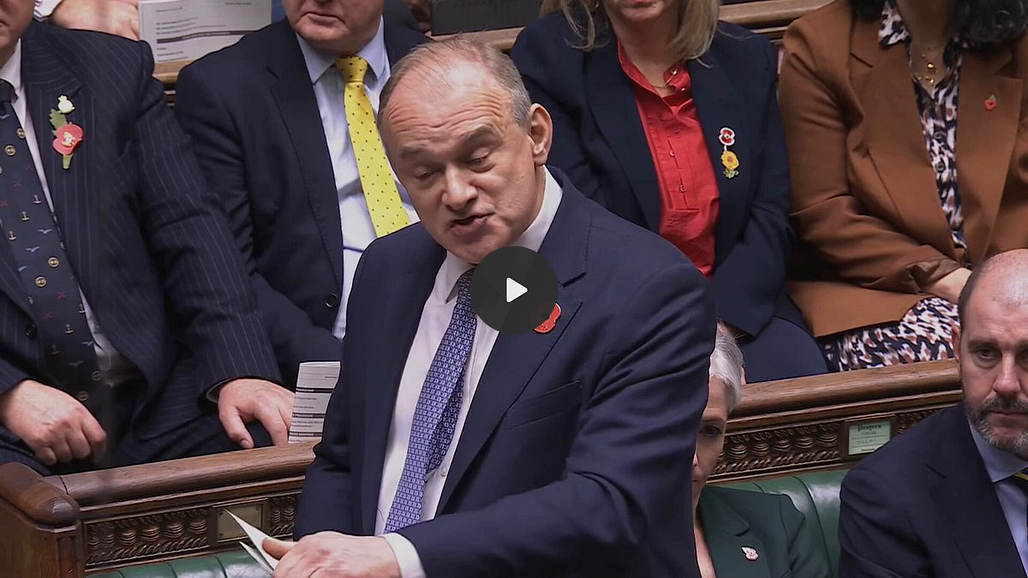
The proposal comes at a particularly significant moment, just days after Liberal Democrat MP Josh Babarinde introduced legislation seeking to expand the definition of English ethnicity in the national census.
Babarinde’s proposal would introduce categories including Black English, Asian English and Mixed English, arguing that Englishness must not be defined by ancestry or skin colour.


During his parliamentary address on Tuesday, Babarinde acknowledged that English ethnicity exists, but rejected the suggestion that it is determined by a common ancestral lineage.
His argument reflects a broader ideological shift in which the distinction between a historic people and a modern national population is increasingly being challenged.
The English, it seems, are permitted to exist as a political or cultural identity, but their existence as a distinct ancestral people is becoming an increasingly controversial proposition.

Even the Anglo-Saxons, whose settlement and development helped shape the foundations of the English nation, have become the subject of efforts to reconsider their historical identity.
In recent years, historians and academic institutions have questioned the appropriateness of the term Anglo-Saxon, arguing that it can falsely suggest a single, homogeneous people.
The International Society of Anglo-Saxonists changed its name in 2019, while Cambridge University’s journal Anglo-Saxon England was subsequently renamed Early Medieval England and its Neighbours.
Yet, as historian Rory Naismith acknowledges in his examination of the term, Anglo-Saxon terminology has genuine medieval origins, even if its meaning has changed over the centuries.
Historical terminology can certainly be debated. But to suggest that the complexity of early English ethnogenesis renders the existence of historic English ancestry meaningless is another matter entirely.
The Angles, Saxons and other peoples who contributed to the formation of England were real. Their descendants developed a common language, inherited institutions, established kingdoms and ultimately formed a recognisable English national identity.
That history does not cease to exist because modern political preferences find certain aspects of it inconvenient.
Indeed, Britain’s historic peoples have undergone centuries of migration, intermarriage and cultural development. None of this means their ethnic identities are imaginary, any more than centuries of historical change invalidate the identity of any other people.
There is also a considerable difference between welcoming newcomers into a national community and insisting that doing so requires the historic population to relinquish its own ancestral identity.
The former has occurred throughout history. The latter amounts to demanding that a people abandon an inheritance that others are routinely encouraged to celebrate.
The English, Scottish, Welsh and Northern Irish have every right to cherish their ancestry, preserve their cultural inheritance and seek the continuation of their historic communities.
Their heritage is not merely an assortment of customs that can be detached from the generations who cultivated them. It is the accumulated inheritance of peoples who built institutions, established traditions, defended their homelands and helped shape Western Christian civilisation.
Lowe’s motion raises a fundamental question for Parliament. If every people has a legitimate interest in preserving its ethnic heritage, why should the English, Scottish, Welsh and Irish be expected to surrender theirs?
Their existence predates the present political establishment. Their identities were not invented by Parliament, and they should not be subject to abolition by parliamentary process.
Redefining English identity so broadly that it encompasses anyone who happens to live in England or was born there effectively strips the term of its historical and ethnic meaning. It erases the distinction between those whose ancestors spent centuries building the nation, establishing its institutions, cultivating its traditions, and shaping its civilisation, and those who arrived only yesterday.
If both are considered equally English in every sense of the word, regardless of ancestry, then what exactly does English ethnicity mean? What remains of the distinct people whose language, culture, customs, and institutions gave England its very identity?
This is more than an argument over terminology. It is a form of ethnic erasure. It reduces Englishness to little more than a geographical designation, something that can be acquired simply by crossing a border or being born within it. It implies that there is nothing inherently distinctive about the English as a historic people, nothing particular to their ancestry or inherited identity that distinguishes them from any other ethnic group.
A person might become English in a civic or cultural sense without sharing that ancestry. But to insist that civic belonging and ethnic identity are interchangeable is to deny that the English exist as a distinct ancestral people at all.
In an age when the preservation of ethnic identity is celebrated as a fundamental right for peoples around the world, the English are increasingly expected to accept a definition of their own identity so broad that their distinct existence disappears within it.