


Washington is warning that Australia’s proposed online safety regime could become a weapon for political censorship.
The Trump administration has formally warned Canberra that the Online Safety Amendment (Digital Duty of Care) Bill 2026 “risks becoming a mechanism for viewpoint-based censorship.
The bill, which was released by Communications Minister Anika Wells earlier this month, would impose a sweeping new duty on online platforms, backed by penalties of up to $109.2 million.
Proposed section 25C(1)(m) would allow the Communications Minister to declare additional material “seriously harmful” if she is satisfied it may cause serious harm. The ministerial instrument would be subject to parliamentary disallowance, but the initial power to define the new category would sit with the minister.
Then there is proposed section 25D(1)(c), which defines material harmful to children to include material that: “encourages or promotes hostile attitudes towards women or gender equality.”
So, not violence or threats—attitudes, which the bill itself doesn’t define. That leaves enormous room for interpretation on the issues that already generate fierce political and religious disagreement.
A Christian teaching on marriage. An argument that biological sex matters. A criticism of gender ideology. A debate over whether males should compete in women’s sport. Where does legitimate disagreement end and “harm” begin?
Anika Wells was asked who would decide.
Her answer:
“The test for what would constitute a new serious harm would ultimately be, I guess, made by me.”

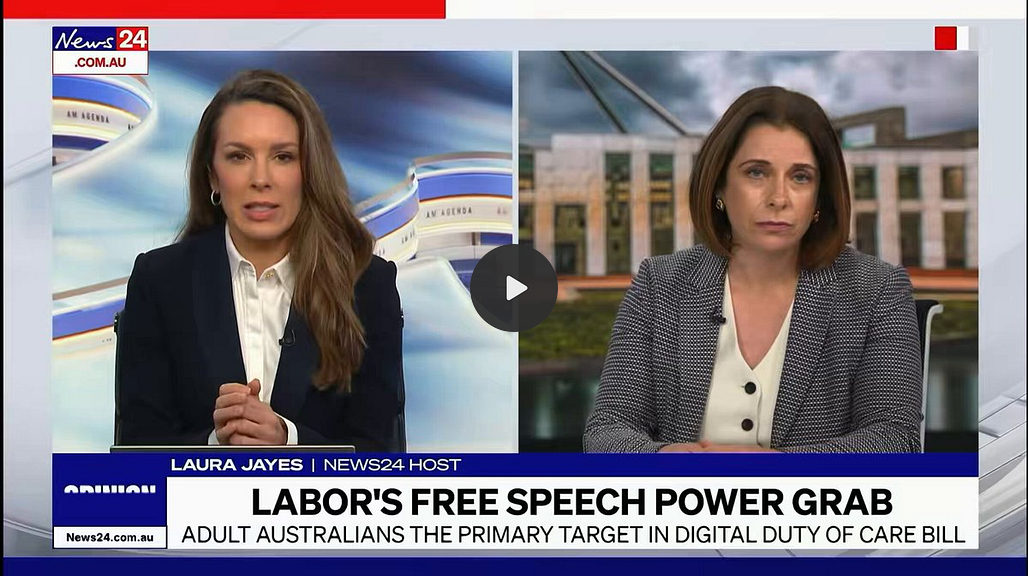
Isn’t it funny how, whenever the government acts in the name of our “health and safety,” it somehow ends up with more power, and we end up with less freedom?
But consider also the implications for platforms that host our speech. They don’t have to agree that content is “harmful.” They simply have to fear being wrong. At every demand, they’ll remove first, and maybe investigate later.
In its submission to the Australian Government, the US said the bill could encourage platforms to “pre-emptively” suppress controversial material to avoid liability and warned against “viewpoint-based censorship”.
Australia has already seen regulators intervene in speech.
Canadian activist Christopher “Billboard Chris” Elston was ordered by eSafety to remove a social-media post in 2024. The Administrative Review Tribunal overturned the order in 2025.
And the government is now proposing to put an even larger regulatory stick behind a vastly broader definition of online harm.
But perhaps the most revealing comments have come from the Greens.
Senator David Shoebridge has explicitly argued that Australia needs a Digital Duty of Care so that messages from Pauline Hanson and One Nation are not “amplified”.

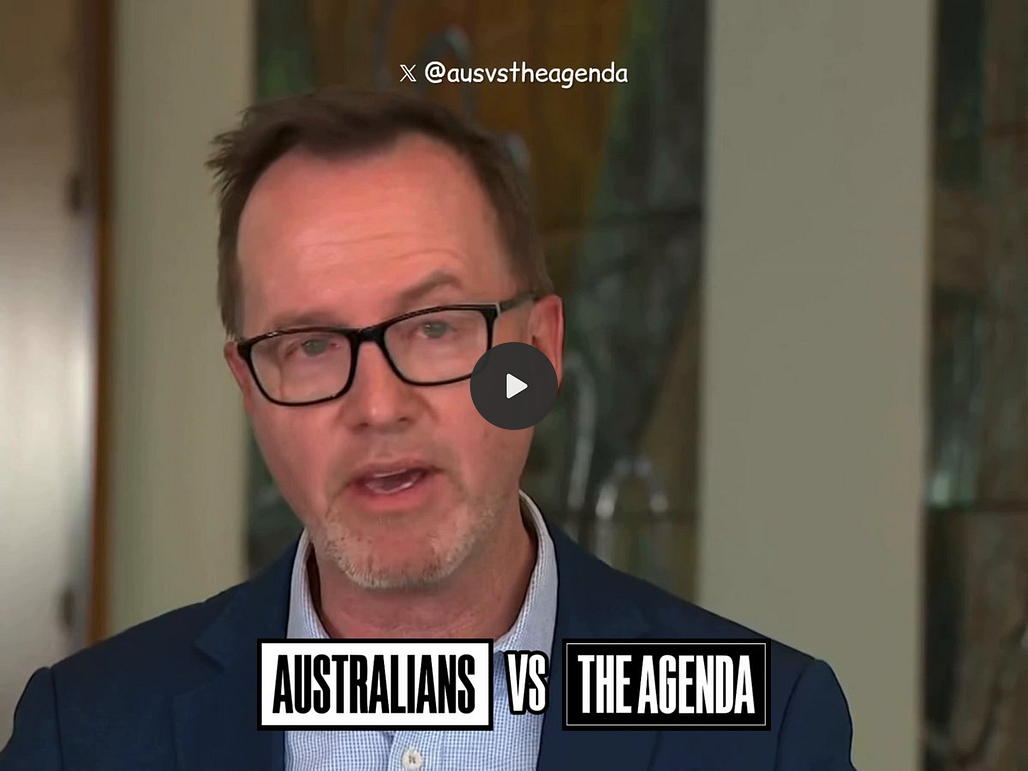
Think about that.
A bill sold to Australians as a child-safety measure is being defended by a senator who has openly identified the political speech of his opponents as part of the problem the regime is intended to address.
That is not a hypothetical concern about how this power might someday be abused. It is a glimpse of how the power is already being justified.
This is always how freedom disappears. Not with a government announcing that it intends to censor you, but with a promise to protect you from “harm.”
Give the government power to decide what is harmful, give platforms a $109 million reason to comply, and sooner or later lawful speech becomes whatever the people in power say it is.