


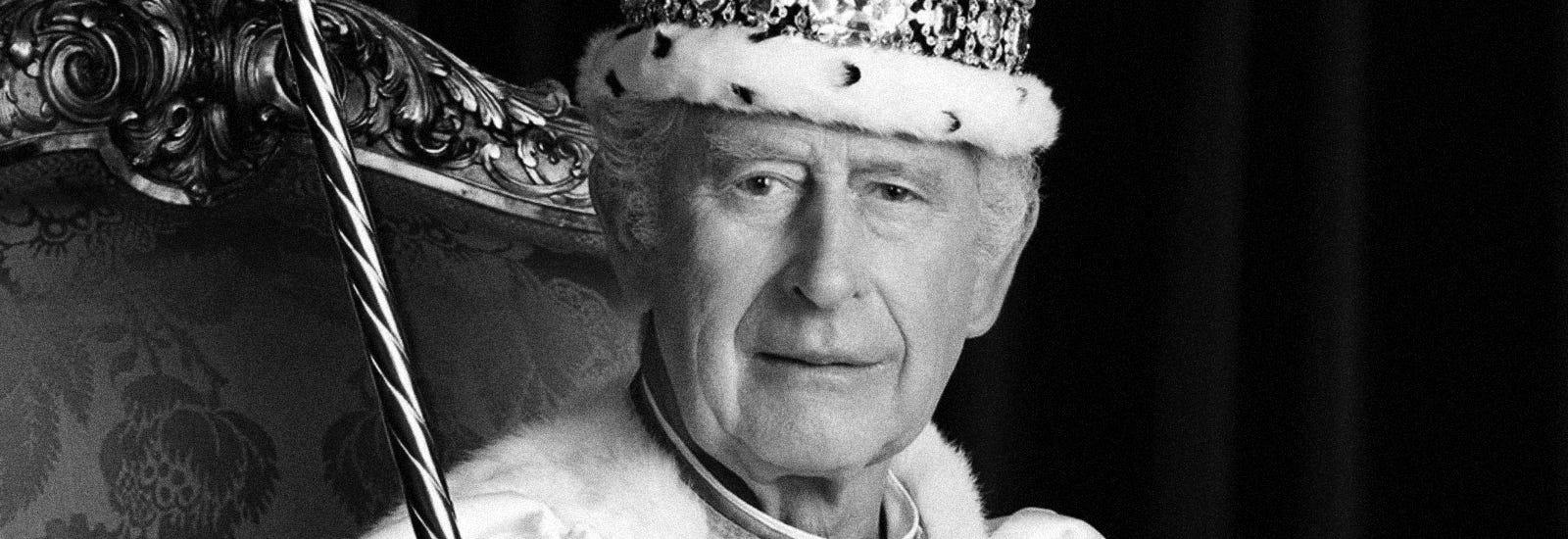
King Charles has said that the Church of England doesn’t just protect Christianity, but also the place of every religious belief in British society.
Speaking on Tuesday at the inauguration of the Church of England’s General Synod, the King said the Church protects the Christian faith, as well as the space for faith itself, regardless of belief.
Now, there’s a world of difference between protecting someone’s freedom to believe something and implying that all beliefs are equally deserving of the Church’s protection and promotion.
It reeks of religious relativism. And that’s a curious position to take for a man who swore before Almighty God to defend the Christian faith.
At his coronation in 2023, Charles was asked whether he would maintain the laws of God, the true profession of the Gospel, and the Protestant Reformed Religion established by law.
His response was unequivocal: “All this I promise to do.”
He wasn’t asked to maintain the laws of every religion. He wasn’t asked to defend every imagined pathway to God. He swore to uphold the Christian faith, as prior monarchs had done.
And for good reason, too. Jesus Christ didn’t claim to be one of many possible ways to God. He said, “I am the Way, the Truth, and the Life. No one comes to the Father except through me” (John 14:6).
That doesn’t leave a whole lot of room for contradictory religious claims, does it?
If Jesus is the only way to the Father, every other supposed way is a dead end. And if there are many ways to God, then Jesus was entirely wrong about the most fundamental claim of His entire ministry.
But if Jesus was wrong about who He was, why should we trust Him as a way to God at all? Why would anyone be a “Christian”, or a “Christ-follower”, if the Christ they are following got something so essential, so wrong?
That’s the problem with religious pluralism. It doesn’t merely add other religions alongside Christianity. It necessarily contradicts Christianity’s central claim. It undermines the very words of Jesus and casts him as mistaken, dishonest, or worse.
But all of this raises an obvious question: Charles has described himself not as the Defender of the Faith, but as the Defender of Faith in general. So, what exactly is he defending?
We’ve noted it before, but there’s something rather convenient about this modern reluctance among men in positions of power to acknowledge Christianity as the supreme moral authority.
After all, Charles is hardly a man whose personal history demonstrates an unwavering commitment to Christ. I don’t need to mention the details. We all know it.
Like King Herod, Charles will entertain Christianity while it is convenient. But like King Herod, when John the Baptist condemned the king’s unlawful behaviour, Herod had the prophet imprisoned and eventually killed (Mark 6:17-29).
It’s all too often the case that when God’s moral law confronts the conduct of rulers, it’s the authority behind that law that becomes inconvenient. And what better way to escape the judgment of Christianity than to reduce it to one of many competing moral systems?
If Christianity is merely one religious perspective among others, then why should its standards govern the conduct of the King? Why should his marriage vows be judged according to Christian teaching when other religions and moral philosophies offer different standards?
And what’s more, if all these standards are treated as equally authoritative, who gets to decide which one is right and when?
The state, of course.
So, rather than the Crown being subject to God’s law, the state increasingly becomes the arbiter of a vague, undefined concept of religion, deciding which religious principles may influence public life and which may not.
The authority that once stood above the throne is reduced to something the throne may recognise whenever convenient.
But a Christian king’s duty isn’t merely to ensure that his subjects can practice whatever absurd religion they please. It’s to govern for their good, according to the truth, recognising that he himself is subject to the King of kings.
If Christianity is true—and it is true—then leading people away from Christ isn’t an act of charity, tolerance, or compassion. It’s directing them away from the only source of eternal joy and salvation.
What good king would knowingly encourage his people down a path that leads to their own hurt and destruction?
The British monarch draws much of its meaning from the Christian worldview. Not only the laws it enforces, but the authority to enforce them, the idea of servant leadership, accountability before God, and the sacredness of royal duty.
Strip all of that away, and what are you left with? At best, mere performance. At worst, the most expensive live-action role-playing in history.
What does it mean to be crowned in the name of God if you won’t acknowledge God’s authority over the Crown? What does it mean to swear to uphold the Gospel if the Gospel is treated as merely one religious option among many?
In fact, why should such an institution even exist at all?
The monarchy was never intended to be a religiously neutral institution. Its very existence is bound to its Christian history, identity, and institutions.
The Crown is adorned with Christian symbols. The coronation is a Christian service. The monarch is anointed before God. The King swears an oath to God on the Bible.
None of this makes any sense apart from Christianity.
In the United Kingdom, as Christianity goes, so goes the monarchy. And as the faith diminishes in public life, so too does the meaning and relevance of the crown. The ceremonies may continue, but they’ll become increasingly difficult to explain, let alone justify. Especially considering the cost.
But is it any wonder that Britain’s abandonment of its Christian heritage just so happens to coincide with the deterioration of so many of its institutions?
A nation’s institutions reflect the beliefs and the convictions of the people who sustain them. And when those convictions disappear, the institutions they produce inevitably lose their meaning and purpose.
Charles might pretend to defend every religious belief imaginable, but he can’t pretend that every belief is compatible with the Gospel that he himself swore to uphold.
The king once said that “all the great religions provide a different path to the ultimate source of Truth.” Christ said, “No one comes to the Father except through me.”
So whose word are you going to take? The King of England or the King of Kings?
The whole point of a Christian coronation is that even the king answers to someone. Charles swore before God to uphold the Gospel. And when Christ says no one comes to the Father except through Him, the man who wears the crown is bound by those words as much as anyone else.
If Charles wants to point people down other paths, he’ll have to reckon with the promise he made at his coronation. Though if we’re surprised to see him break a vow he made before God, we might ask ourselves why.
Diana had his word, too.