



Spain has reportedly deployed Armed Forces personnel to its North African enclave of Ceuta after hordes of military-aged men streamed across the border from Morocco, overwhelming local authorities and resulting in at least 10 deaths.
According to reports, the Spanish government said troops would assist the Civil Guard in “maintaining security in the city of Ceuta.”
Footage of the invasion has gone viral across social media, with many users likening it to scenes from a horror film. Locals have described the situation as “absolute chaos.”
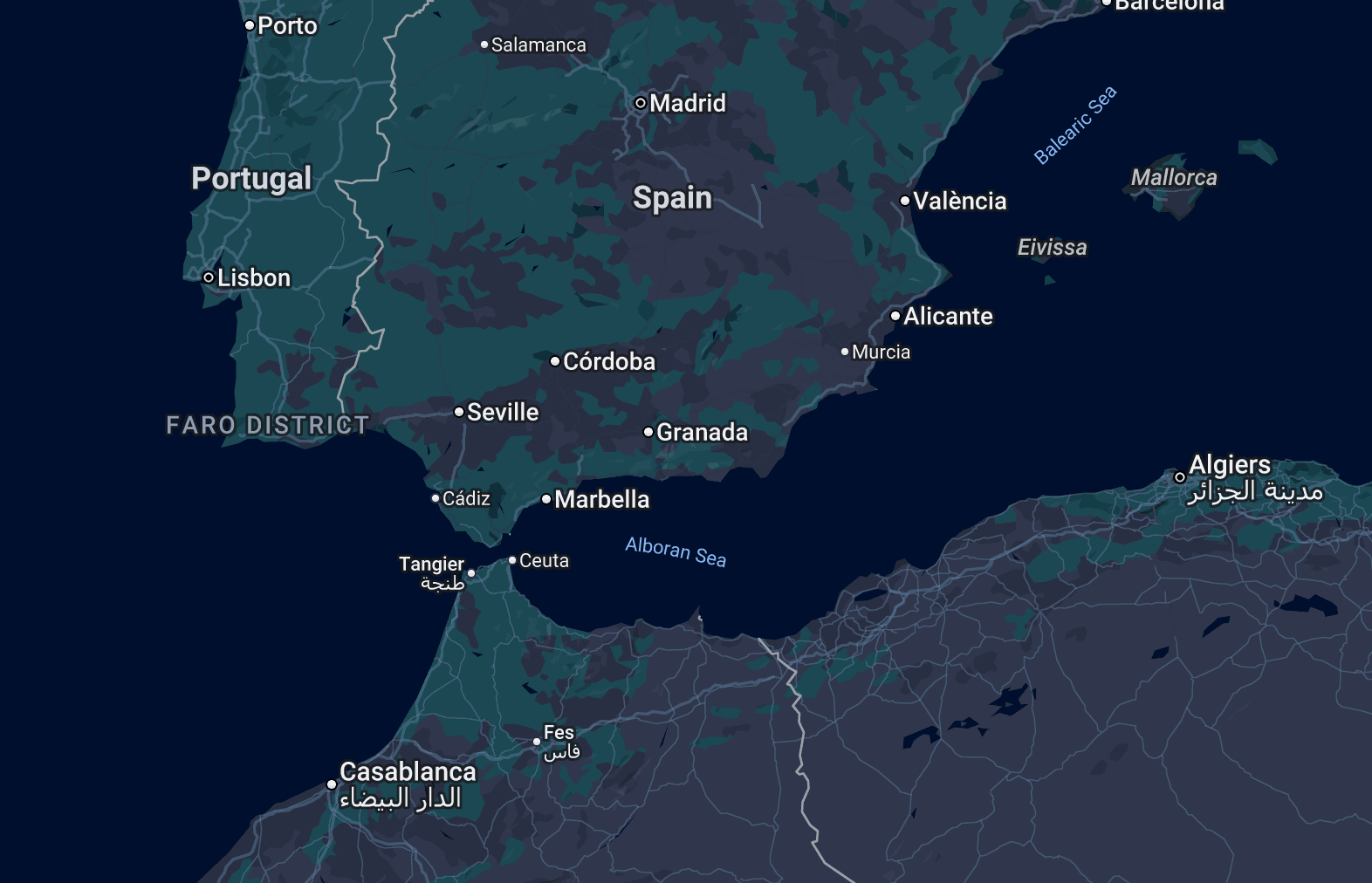
Rachid Sbihi, head of the association representing Civil Guard officers at the border, told the Associated Press that precise numbers were hard to confirm but "thousands of migrants" had crossed and the frontier had "totally collapsed."
Ceuta’s regional president, Juan Jesús Vivas, had earlier called on Madrid to declare a national emergency and send army reinforcements, citing overwhelmed reception centres where hundreds of recent arrivals were already sleeping on the streets.
More than 1,500 migrants had entered in the preceding week, with a sharp escalation overnight and throughout Thursday.
The central government declined a formal national emergency declaration (noting that migration flows do not legally qualify as a national security risk under existing rules) but moved to deploy forces and coordinate with Morocco.
Reform UK leader Nigel Farage responded to the news in a video posted to X, urging the people to “wake up” and describing the invasion as a “battle for the future of our civilisation.”
Farage reminded his followers that earlier this year, Spain began a process to grant legal status and work rights to up to half a million illegal migrants. It was a move the government described as part of its efforts to defeat the so-called “far right.”


The initiative formally started in January this year, following a last-minute agreement between the ruling Socialist Party (PSOE) and its left-wing coalition partner, Podemos, which has supported Prime Minister Sánchez’s minority government since the 2023 general election.
A government spokesman said the policy was intended to counter political trends on the right, stating: “We not only intend to remain a beacon, but I want to believe that we will be a seed and a germ to fight against the advance of this far-Right wave that is trying to gain ground, and against which we will do everything in our power to stop it.”
Under the scheme, undocumented migrants, asylum seekers, and individuals who have been living in Spain for more than five months by December 31, 2025, will be eligible to apply for legal status between early April and June 30 this year.
Podemos said the legislation would help dismantle what it described as “institutional racism that only fuels exploitation and racist hatred.” The government has also framed the move as a political challenge to the right-wing Vox party, which has gained support in recent polling.
Spain’s so-called “far-right” movement, led by Vox, is currently experiencing a significant surge in support. Under the leadership of Santiago Abascal, Vox has tapped into widespread public concern over national identity, border security, cultural cohesion, and the prioritisation of Spanish citizens.
Recent polling from January 2026 shows Vox consistently attracting between 17 and 19 per cent of the national vote. Surveys conducted by organisations such as DYM/Henneo and El País place the party at around 18 per cent or higher in some projections.
The government’s decision to grant legal status to half a million migrants to “fight the far-right” has been condemned internationally, not only because of its scale, but because of what the Spanish government has openly acknowledged in defending it.
By framing the mass introduction of migrants as an instrument to counter their political opponents, authorities have confirmed a suspicion long held by many across the Western world: that large-scale population movements are not a humanitarian necessity, but a political weapon against Nationalism.
As such, it’s become increasingly evident that migration is leveraged to reshape electorates, blunt dissent, and overwhelm opposition movements that draw support from concerns about national sovereignty, cultural continuity, and democratic accountability.
Spain isn’t unique. For decades, governments across Europe have facilitated the mass introduction of incompatible peoples. Despite the warnings, the social fragmentation, public protests, and vocal opposition from their own citizens, politicians throughout the Western world have not only effectively kept their borders open to large-scale migration but have also enticed immigrants by offering the prospect of economic opportunity, legal protections, and access to welfare systems.
It’s Spain today. And tomorrow, who knows?
Yes, this was always the case. Immigration has always been used to serve elite interests. You see this going back into ancient times. The Assyrians forcibly moved people around in their empire to seek to break the national spirit and their ability to resist. The Romans re-populated, or forcibly changed the population, of entire areas by allowing migrants to settle in them. Which almost always lead to massive tumults in the empire, and ancient versions of crime waves (often in their case this was bands of roving men who pillaged towns within the empire). In recent years politicians across the globe have openly stated that they need to suppress speech and various types of political expression because they do not match with multicultural values. They are now so brazen, because they believe their populations are either a) still complacent, or b) diverse enough that they can now openly come out and state that they serve foreign interests.
But mass immigration was always about forced social change. First they lie about what they are doing, then they brag about what they did all along.