



During a recent interview with Tucker Carlson, US Ambassador to Israel Mike Huckabee claimed that God’s 4,000-year-old promise to Abraham effectively grants the modern state of Israel a divine right to the entire Middle East, and perhaps even beyond it.


Similar arguments have been made by Senator Ted Cruz, who has said Christians are biblically obligated to support the modern state of Israel on the basis of Genesis 12:3, which states: “I will bless those who bless you, and him who dishonours you, I will curse, and in you all the families of the earth shall be blessed.”

If these arguments are going to stand, they must stand on Scripture. So we must follow the promise carefully, from Genesis through the New Testament, and allow the Bible to interpret itself.
The Land Promise Was Real—and Vast
First of all, God did promise Abraham land. In Genesis 12:7, God declared: “To your offspring I will give this land.” And in Genesis 15:18, the Promised Land’s borders are defined: “From the river of Egypt to the great river, the river Euphrates.”
At its broadest description, that territory stretches from the northeastern frontier of modern Egypt to the Euphrates River (in modern Iraq and Syria), encompassing land that today includes parts of Egypt, Jordan, Syria, Lebanon, and Iraq.
Genesis 15:18 states: “On that day the LORD made a covenant with Abram, saying, ‘To your offspring I give this land, from the river of Egypt to the great river, the river Euphrates.’”
In Genesis 17:8, it is even called “an everlasting possession.”
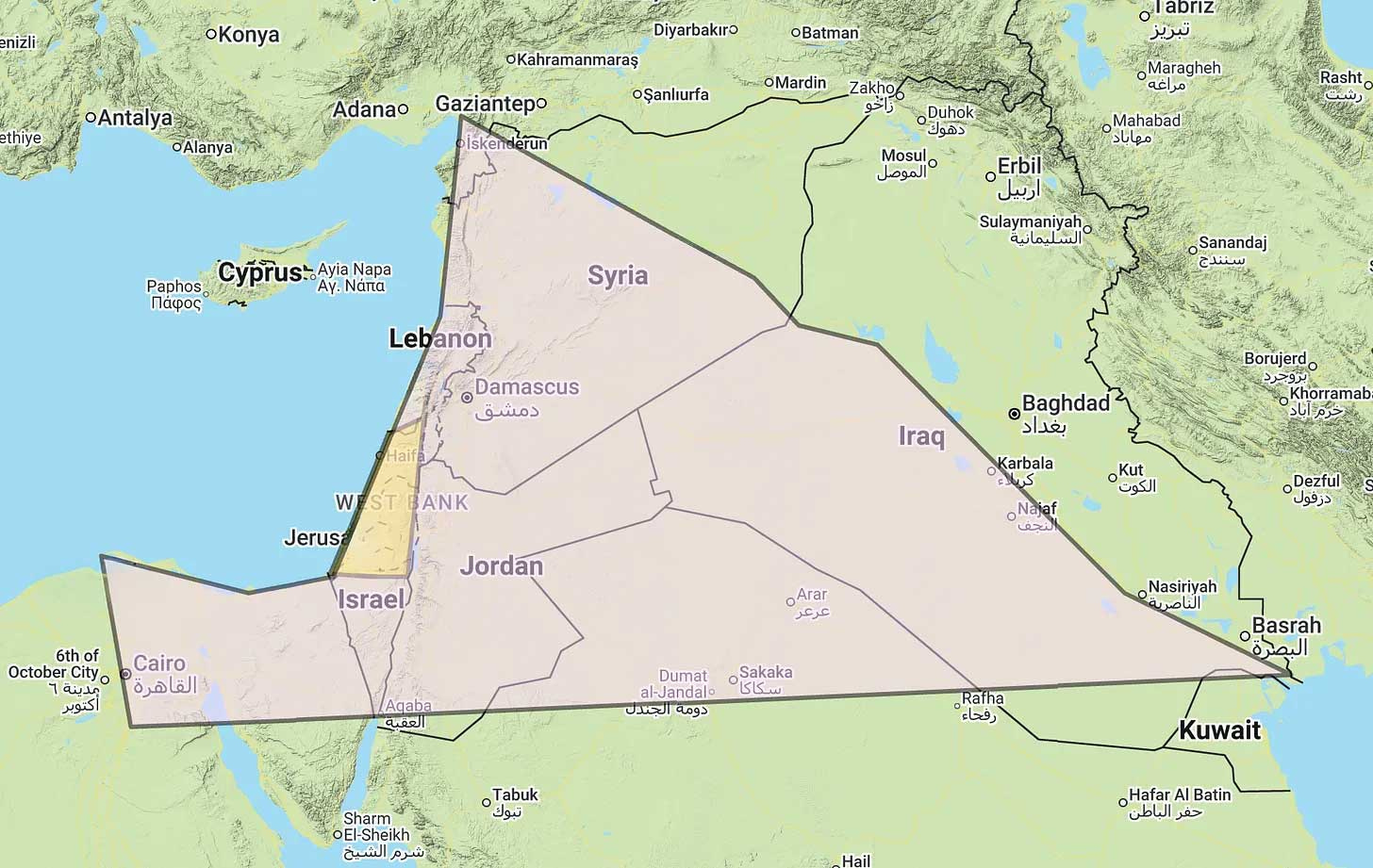
Now, if one reads these texts in isolation, the conclusion would be that God granted Abraham’s physical descendants a sweeping and enduring territorial claim.
But the Bible does not stop there.
The Physical Land
From just reading Genesis 15, we can already begin to see that God is talking about something larger than just the nation of Israel. Moses will tell us that many nations will come from Abraham (Gen. 17:4-5). We also see later on that the land God gives the Israelites does not encompass this larger region mentioned in Genesis 15.
So, do we have a biblical contradiction here? No, not at all.
The Bible actually solves this problem for us; all we need to do is keep reading. In fact, it is rather shocking how biblically illiterate Mike Huckabee is on this issue, especially as he is a minister and someone who should be very well versed in these passages.
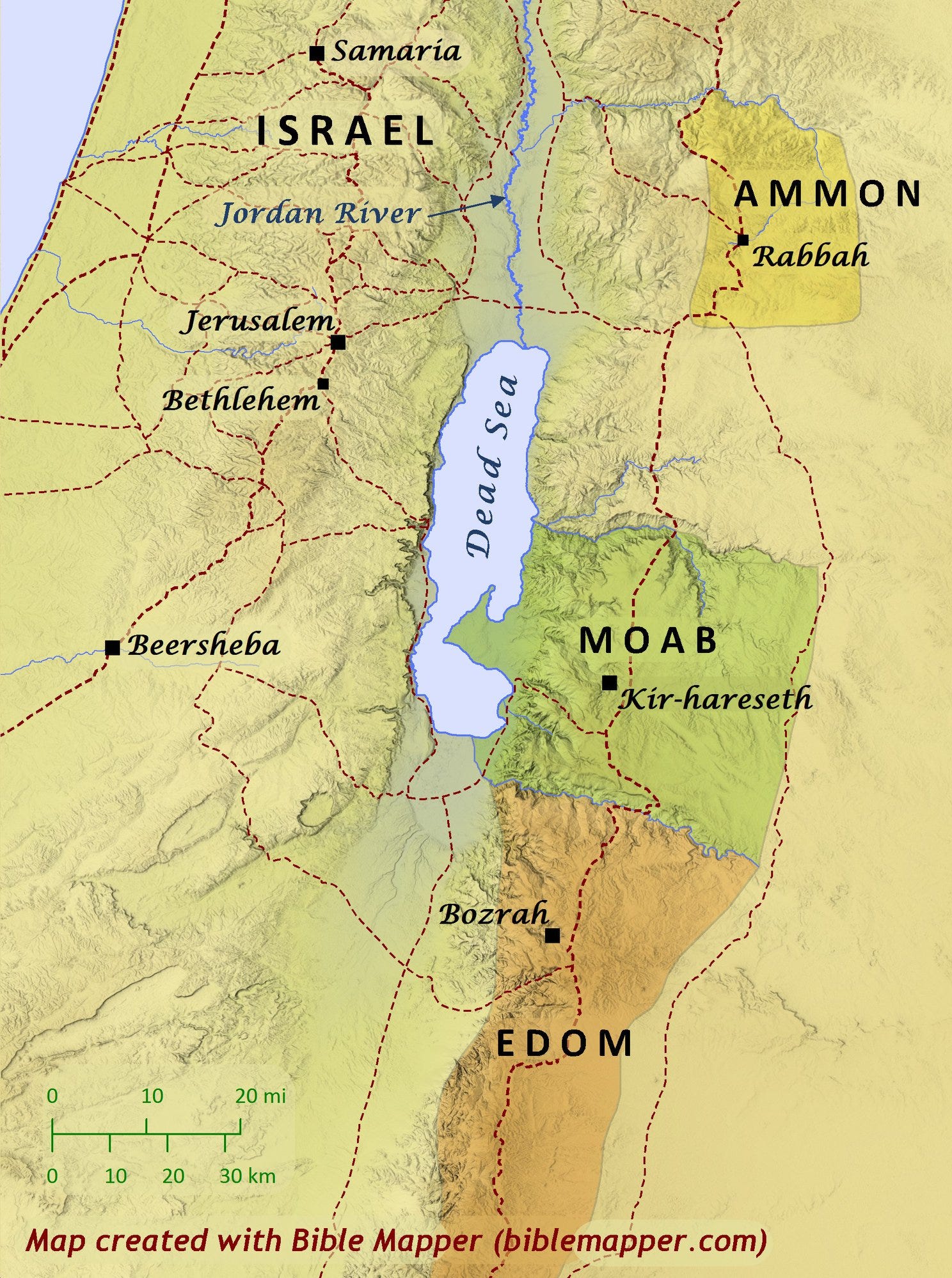
Above is a picture of the land promised to Abram’s descendants in Genesis 15. This allotment was not a promise to or for Israel alone, even though some seek to claim that it is. This promise was for Abram’s extended descendants as well as the covenant people of Israel. This is explained clearly in Deuteronomy 2-3.
We know that Esau (Edom) and Lot (Moab and Ammon) are also relatives of Abraham, though Lot was not descended from Abraham; he was still a close relative. God’s intention was for Abraham’s kin to receive parts of this land, as a physical fulfilment of his promise to Abraham’s seed, which would point to the greater fulfilment in Christ.
God’s intention was for Abraham’s kin to receive parts of this land, as a physical fulfilment of his promise to Abraham’s seed, which would point to the greater fulfilment in Christ.
About Edom, we read in Deuteronomy 2:2-5:
“Then the Lord said to me, 3 ‘You have been traveling around this mountain country long enough. Turn northward 4 and command the people, “You are about to pass through the territory of your brothers, the people of Esau, who live in Seir; and they will be afraid of you. So be very careful. 5 Do not contend with them, for I will not give you any of their land, no, not so much as for the sole of the foot to tread on, because I have given Mount Seir to Esau as a possession.”
Then, about Moab, we also read, Deuteronomy 2:8-9:
“And we turned and went in the direction of the wilderness of Moab. 9 And the Lord said to me, ‘Do not harass Moab or contend with them in battle, for I will not give you any of their land for a possession, because I have given Ar to the people of Lot for a possession.’”
And about Ammon, we again read the same message, Deuteronomy 2:16-19:
“So as soon as all the men of war had perished and were dead from among the people, 17 the Lord said to me, 18 ‘Today you are to cross the border of Moab at Ar. 19 And when you approach the territory of the people of Ammon, do not harass them or contend with them, for I will not give you any of the land of the people of Ammon as a possession, because I have given it to the sons of Lot for a possession.’”
God, through Moses, explicitly identifies large tracts of the land, promised in Genesis 15, as land that the Israelite descendants of Abraham should not touch, as he has given it to their kin and not to them. To this day, many of Abraham’s descendants and kin live in these very regions, just as God foresaw in Genesis 15.
Mike Huckabee is making a mistake many Christians make. Many read the start of the story and ignore how the rest of it goes. It is like watching the first episode of a 30-season television show and thinking you have a handle on who the characters are and how they will end up.
God, through Moses, explicitly identifies large tracts of the land, promised in Genesis 15, as land that the Israelite descendants of Abraham should not touch, as he has given it to their kin and not to them.
The promise to Abram extended beyond the land given to Israel. Many Christians do not even know this, though it is in the Bible. God gave land to many other peoples. In this passage, three descendants of Abraham are mentioned. Acts 17:26-28 mentions the rest of the ancient nations, as does Deuteronomy 32:8. Included in the Covenant of Israel was the command not to touch the lands of other people.
All of these nations in Deuteronomy 2 are within the land mentioned in Genesis 15.
This promise was fulfilled in the ancient days of the establishment of the physical nation of Israel, alongside Moab, Ammon, and Edom.
In other words, this promise was fulfilled in the ancient days of the establishment of the physical nation of Israel, alongside Moab, Ammon, and Edom. But even this is not the end of the story, as this fulfilment simply points to a greater fulfilment, one that would encompass all peoples, all nations and all of the world. For that, we turn now to the New Testament.
Beyond the Middle East
When the Apostle Paul reflects on the Abrahamic covenant and the promise of land, he does not reduce it to a tract of Middle Eastern territory, whether large or small. Writing under the inspiration of the same Spirit who first made the promise to the Patriarch, Paul declares that Abraham was not merely promised that particular region, but “the world” (Rom. 4:13). The reach of the Promised Land, in Paul’s telling, stretches far beyond Canaan; it encompasses the whole earth.
In Paul’s words: “The promise to Abraham and his offspring that he would be heir of the world…” (Rom. 4:13)
Not merely heir of Canaan. Not merely heir of the Levant. Heir of the world. According to the Apostle, Abraham and his offspring were promised China, Ethiopia, Scotland, and New Zealand.
If one insists that Genesis provides a literal geopolitical mandate that applies to the modern state of Israel, then consistency demands accepting Paul’s inspired expanded interpretation as well. The promise does not terminate at the Jordan River. It encompasses the entire world.
The promise does not terminate at the Jordan River. It encompasses the entire world.
And that creates a problem for the modern territorial reading.
If Huckabee’s logic justifies modern Israel taking Jordan or parts of Syria because of Genesis 15, then Paul’s explanation would justify taking Australia, Ireland, Ukraine, Indonesia, and Japan. The promise, if applied geopolitically, is not limited to a particular region. It is global.
Yet Paul is not advocating global military conquest. He is correctly interpreting the promise covenantally and Christologically. The inheritance is not secured by military force, else Christ might have joined himself to a warring band of Zealots. The inheritance is secured by righteousness through faith.
The Promise Was Made to One “Seed”
Furthermore, Paul makes clear that the covenant promise was ultimately made not to Abraham’s descendants collectively, but to one “seed”—Jesus Christ.
The Apostle made this abundantly clear in Galatians 3:16, writing: “The promises were made to Abraham and to his seed. It does not say, ‘And to seeds,’ referring to many, but referring to one… who is Christ.”
Paul explicitly denies that the ultimate heir is a collective ethnic entity. The promise, in its fullest sense, was made to one Seed—Jesus Christ.
In other words, the Abrahamic promise was that Jesus Christ, son of Abraham, would eternally possess the entire world—everything, everywhere was to be placed under Christ’s dominion.
Paul explicitly denies that the ultimate heir is a collective ethnic entity. The promise, in its fullest sense, was made to one Seed—Jesus Christ.
This is not a reinterpretation unique to the New Testament. It is the message and trajectory of the entire Old Testament. God declares to the Son: “Ask of me, and I will make the nations your heritage” (Psa. 2:8).
In Daniel 7:14, this Son of Man is “given dominion and glory and a kingdom, that all peoples, nations, and languages should serve him; his dominion is an everlasting dominion, which shall not pass away, and his kingdom one that shall not be destroyed.”
Hence, after His resurrection, Jesus declares: “All authority in heaven and on earth has been given to me” (Matt. 28:18).
The heir of the world is Christ.
To interpret the Abrahamic promise as belonging directly and independently to a modern nation-state or to a particular ethnic group is to contradict Paul’s inspired explanation.
Not All Israel Is Israel
As such, Paul clarifies that the Abrahamic promises are not tied to ethnic descent but to faith in Christ, the true Seed of Abraham. Claims that modern Israel or any physical descendant automatically inherits these promises apart from Christ contradict apostolic teaching.
This does not render the Old Testament nation of Israel irrelevant. Before Christ, Israel, as Abraham’s children, were the recipients of God’s promises—but these were conditional on faith in the coming Messiah. They were to look forward in faith, just as we look back today, anticipating the Seed who would fulfil the covenant and inherit the Promises.
However, when Israel rejected the Messiah, the promises were forfeited, bringing consequences including exile and loss of the land (cf. Deut. 28:15; Lev. 26:14, 31–33).
As a result, Paul explains in Romans 9:6–8: “Not all who are descended from Israel belong to Israel… It is not the children of the flesh who are the children of God, but the children of the promise are counted as offspring.”
Physical descent has never been the decisive factor. Faith is. Paul, in Galatians 3:29, makes it explicit: “If you are Christ’s, then you are Abraham’s offspring, heirs according to promise.” Jew and Gentile alike become heirs only through union with Christ, Abraham’s Seed.
Jesus affirmed this when he was confronted by those who claimed Abrahamic lineage while rejecting him: “If you were Abraham’s children, you would be doing the works Abraham did… but now you seek to kill me” (John 8:39–40).
Jew and Gentile alike become heirs only through union with Christ, Abraham’s Seed.
Clearly, faith, not bloodline, defines the true children of Abraham. Those who rejected Christ disqualified themselves from the inheritance promised to Abraham’s Seed. As Jesus foretold, in A.D. 70 Jerusalem and the Temple were destroyed by Titus, confirming the consequences of unbelief.
Seizing the Inheritance
In Matthew 21:33-46, Jesus tells the Parable of the Wicked Tenants, where the vineyard owner (God) sends his servants (the prophets) and then his son (Jesus) to collect the fruit of the vineyard (faith and obedience). The tenants (the Pharisees and Jewish leaders) reject and kill the servants and then plot and kill the owner’s son.
The tenants say: “This is the heir. Come, let us kill him and have his inheritance” (v.38).
The inheritance belongs to the Son. The tenants attempt to seize it apart from him.
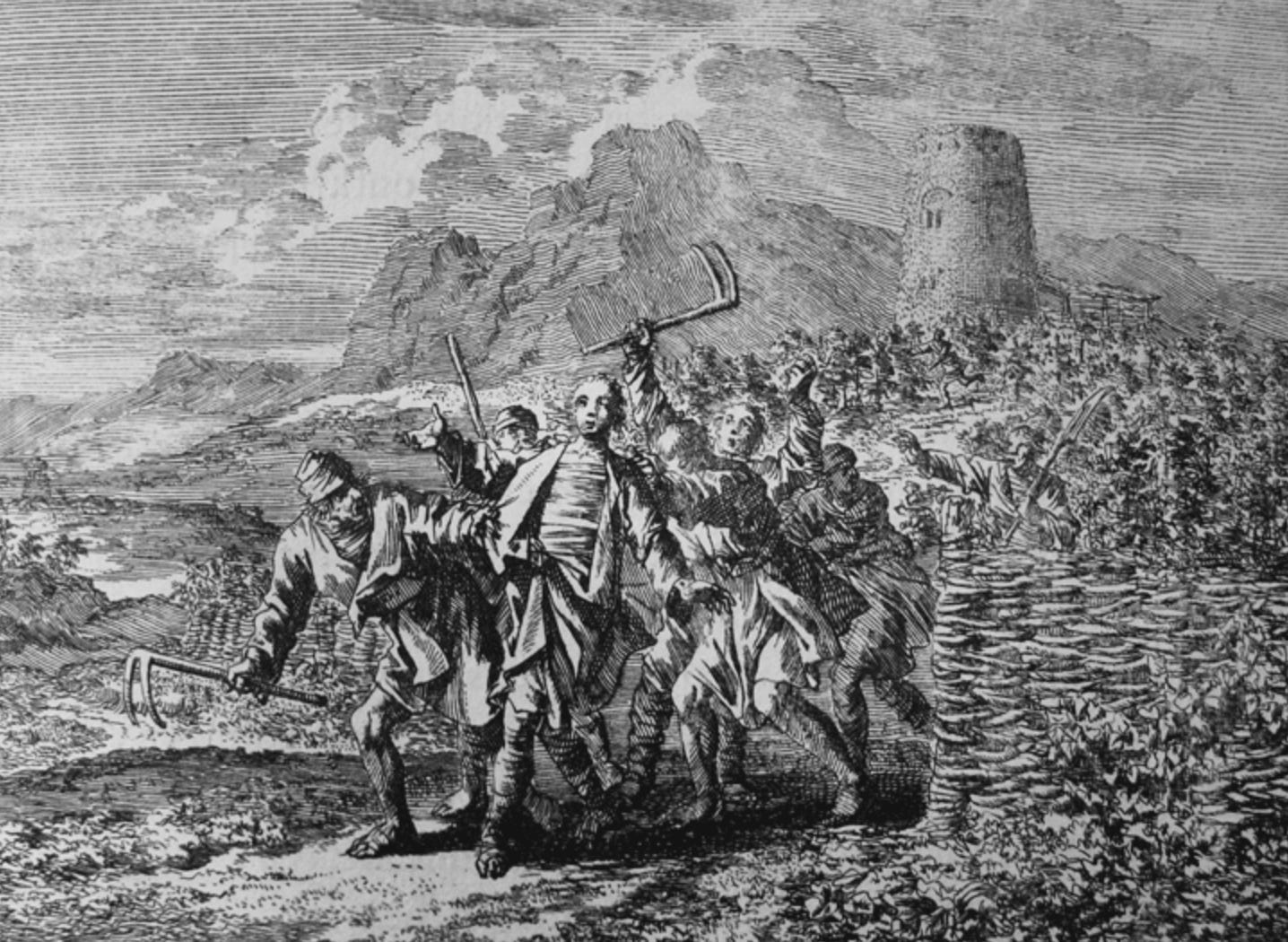
Jesus concludes: “The kingdom of God will be taken away from you and given to a people producing its fruits” (Matt. 21:43).
Jesus’ parable further illustrates that the promises of God are not inherited through bloodline, but through faith in God and the acceptance of God’s Son. The Pharisees and religious leaders were blinded by their ethnic pride, believing they had a right to the promises simply because they were descendants of Abraham. As the events of A.D. 70 would prove, they were deadly wrong.
The Pharisees and religious leaders were blinded by their ethnic pride, believing they had a right to the promises simply because they were descendants of Abraham.
As such, any attempt to claim Abraham’s inheritance while sidelining the Son echoes the logic of those tenants. The vineyard is not inherited by bypassing the heir.
The Dangerous Implication
If one argues that Genesis 15 grants modern Israel perpetual territorial rights apart from Christ, then one must either:
Ignore Paul’s expansion of the promise to the entire world, or
Accept that the logic extends far beyond the Middle East.
Both options expose the weakness of the short-sighted, geopolitical reading.
The New Testament is no less Scripture than the Old. Paul’s interpretation is not commentary; it is inspired revelation. To reinterpret the promise as belonging directly to a political, ethnic entity rather than to Christ is to contradict the apostolic witness.
“All the promises of God find their Yes in him” (2 Cor. 1:20), and that especially includes the promises given to Abraham.
To reinterpret the promise as belonging directly to a political, ethnic entity rather than to Christ is to contradict the apostolic witness.
The heir of Abraham is Jesus Christ. The inheritance is the world. And those who belong to Christ, by faith, are Abraham’s offspring and heirs according to promise.
The promise to Abraham was never a blank cheque for geopolitical ambition. It finds its fulfilment in Christ, its scope in the whole world, and its heirs in those united to him by faith.
Any claim to the inheritance that bypasses the Son dishonours the Father. To appeal to Abraham apart from the Seed is not faithfulness to Scripture or to the promise—it is a rejection of its very fulfilment.
We have a salvation saga, beginning with the fall of Adam and Eve, God’s promise to Abraham, the covenant with Israel and culminating with the birth, death and resurrection of Christ.
The claim on Israel as a Jewish homeland fails on the biblical front as St. Paul made it clear that Christians aren’t dependent on ethnicity, but belief and practice.
Ultimately, when God told Abraham that his descendants would outnumber the stars in the sky, he meant the Church. And since Jesus clearly says “No one comes to the father except through me,” that would augur against dispensationalism, which is a heresy.
What are anyone’s thoughts on Deuteronomy 1:7-8?
I ask that due to the land reaching Euphrates is also given to Israel according to scripture.
Turn and take your journey, and go to the hill country of the Amorites and to all their neighbors in the Arabah, in the hill country and in the lowland and in the Negeb and by the seacoast, the land of the Canaanites, and Lebanon, as far as the great river, the river Euphrates. See, I have set the land before you. Go in and take possession of the land that the LORD swore to your fathers, to Abraham, to Isaac, and to Jacob, to give to them and to their offspring after them.’