


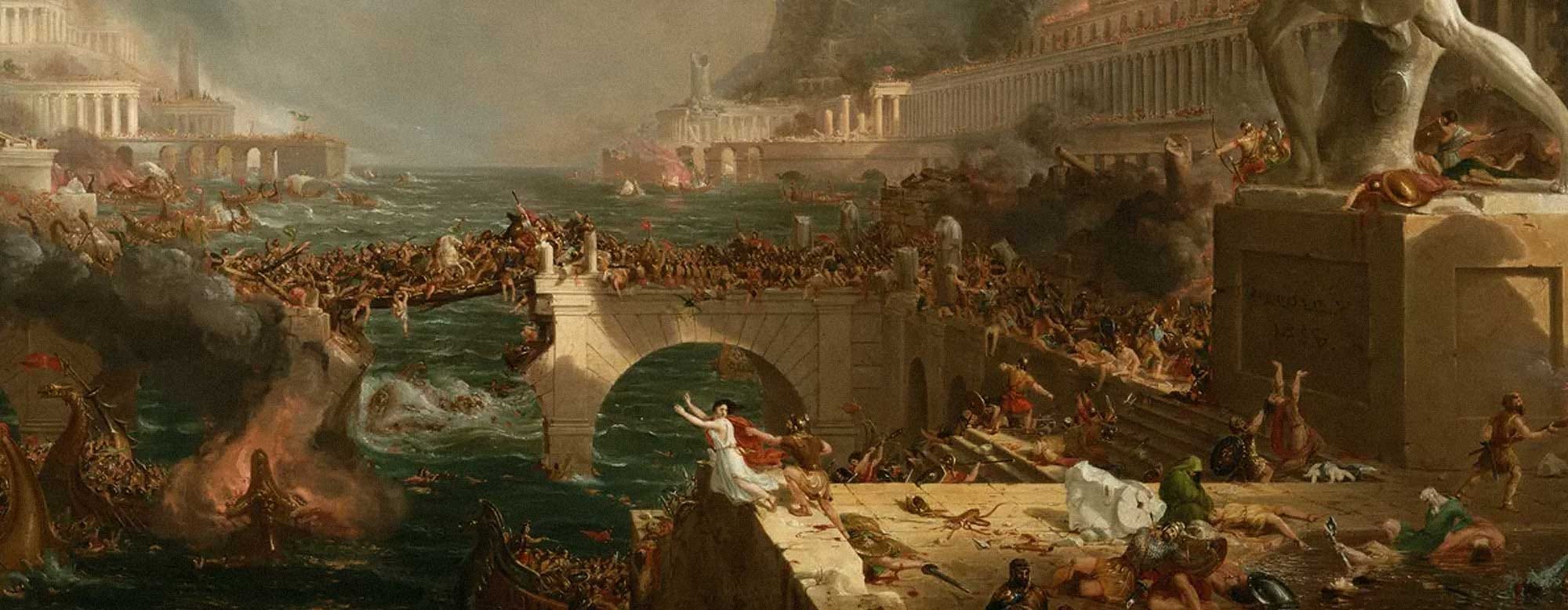
In his Ecclesiastical History, Eusebius, the bishop of Caesarea and an early church historian, recounts in harrowing detail the devastation wrought by a plague that struck Caesarea in the early fourth century.
The region, already reeling from war and famine, faced further catastrophe as the plague spread. Those with means fled to safer parts of the Roman Empire, leaving countless others to endure untold suffering and death.
Amid this calamity, one group chose to stay and minister to the sick and dying: the Christians. Their selfless service was so remarkable that “their deeds were on everyone’s lips, and they glorified the God of the Christians.”
Eusebius recalls:
“Countless numbers died in the cities and even more in the villages and countryside. Rural registers that were once full of names now were all but obliterated, since lack of food and disease destroyed almost the entire population at the same time. Some bartered their most precious possessions for the smallest scrap of food from those better supplied, while others sold their things little by little until they were reduced to desperation. Still others ruined their health and died from chewing wisps of hay and rashly eating poisonous herbs. As for the women, some ladies of the urban aristocracy were forced to beg shamelessly in the marketplaces, their embarrassment and their clothing revealed a noble upbringing.
“Some shrivelled like ghosts of the departed, staggered about… until they fell down, and as they lay in the middle of the streets they would beg for a small scrap of bread and, with their last gasp, cry out that they were hungry—anything more than this anguished cry was beyond them. The wealthier classes, astonished at the mass of beggars they were helping, changed to a hard and merciless attitude, since they assumed that before long they would be no better off. In the middle of the city squares and narrow lanes, naked bodies lay scattered about unburied for days on end—a most pitiful spectacle. Some were eaten by dogs, for which reason the living began killing dogs, for fear they might go mad and start devouring people.
“No less horrible was the plague that infected every house, especially those that had survived the famine. The affluent, rulers, governors, and numerous officials, as if intentionally left by the famine for the plague, suffered a sudden bitter death. Moaning was heard everywhere, and funeral processions were seen in every lane, square, and street, with the usual flute playing and breast-beating. Death waging war with the two weapons of plague and famine, quickly devoured whole families, so that two or three bodies might be removed for burial in a single funeral procession.
“In this awful adversity they alone [the Christian] gave practical proof of their sympathy and humanity. All day long some of them tended to the dying and to their burial, countless numbers with no one to care for them. Others gathered together from all parts of the city a multitude of those withered from famine and distributed bread to them all, so that their deeds were on everyone’s lips, and they glorified the God of the Christians. Such actions convinced them that they alone were pious and truly reverent to God.
“After all this, God, the great, heavenly Champion of the Christians, having displayed his wrath to all men in return for their brutal assaults against us, restored his providence to us again and caused the light of peace to shine on us out of black darkness, as it were, making it clear to all that God himself had constantly been overseeing our affairs. Sometimes he scourged his people and in due time corrected them through trials, but after enough chastening, he showed mercy and kindness to those who had hope in him.”
Eusebius, Ecclesiastical History
Eusebius’s account serves as a timeless reminder of what true faith looks like in the face of suffering. While the world around them succumbed to fear, selfishness, and despair, the Christians acted with courage, compassion, and unwavering devotion. Their deeds illuminated a dark world and bore witness to a God whose mercy and providence remain steadfast even amid calamity.
May the Church today emulate this same courage and selflessness, shining as a beacon of hope, faith, and love in our own hours of uncertainty and trial.