


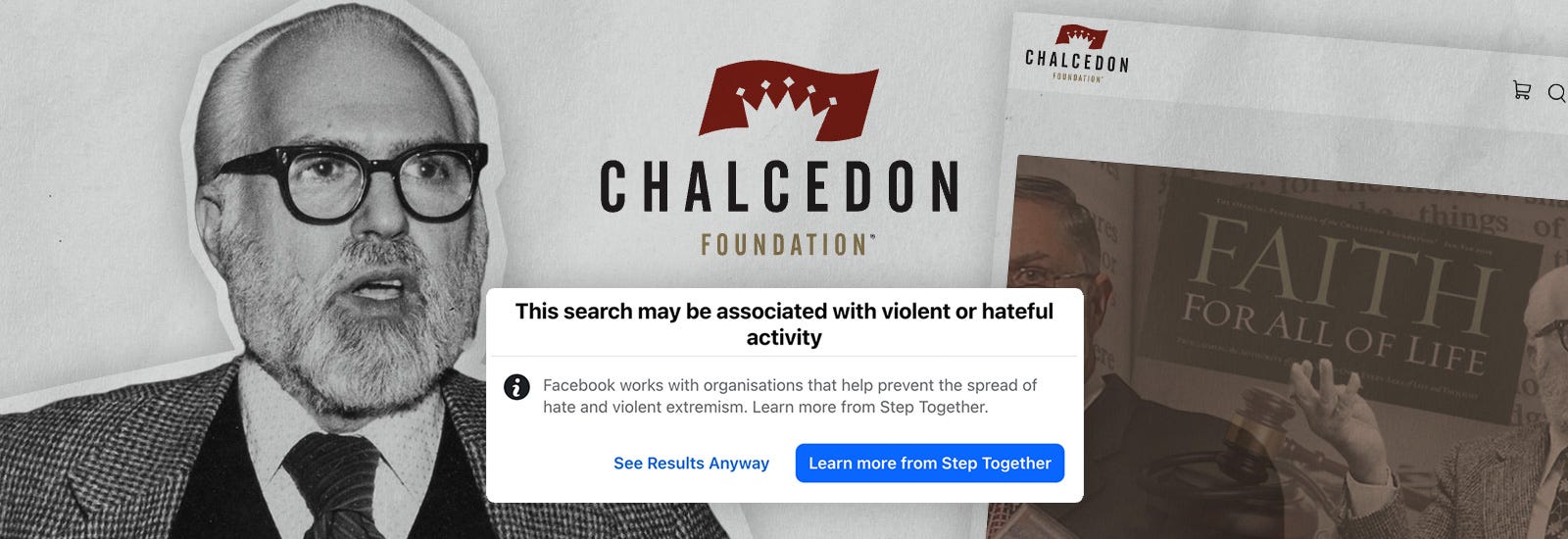
Facebook users searching for the Chalcedon Foundation, the Christian education ministry associated with Presbyterian theologian Rousas John Rushdoony, are being shown warnings that the organisation may be linked to “dangerous organisations and individuals.”
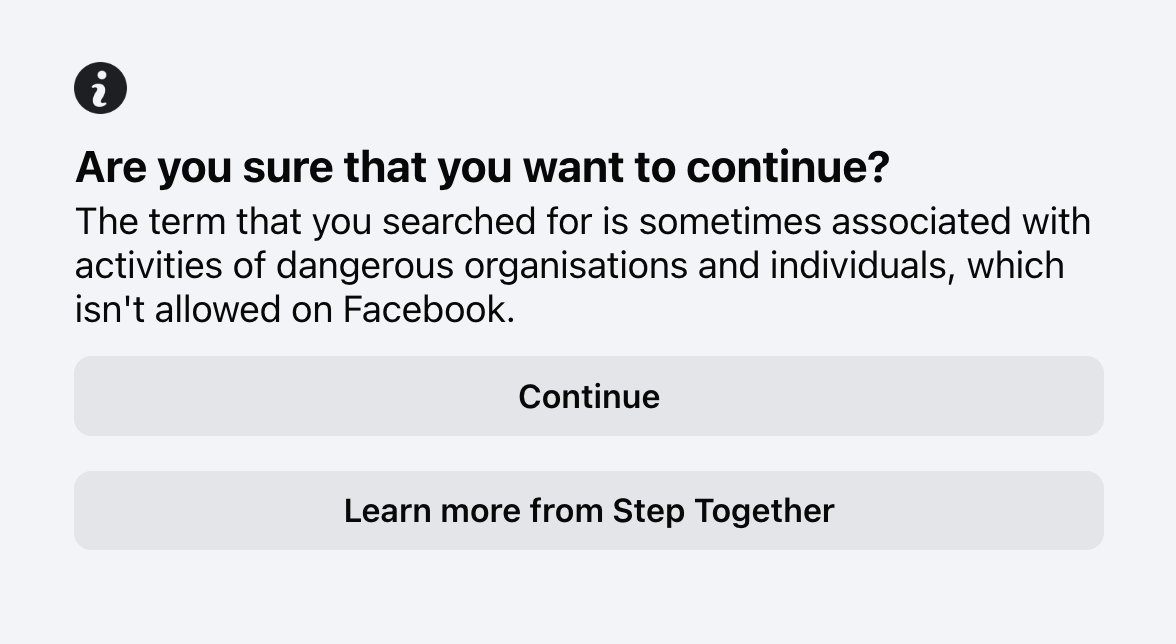
When users enter “Chalcedon Foundation” into Facebook’s search bar, a warning screen appears asking:
“Are you sure that you want to continue? The term that you searched for is sometimes associated with activities of dangerous organisations and individuals, which isn’t allowed on Facebook.”
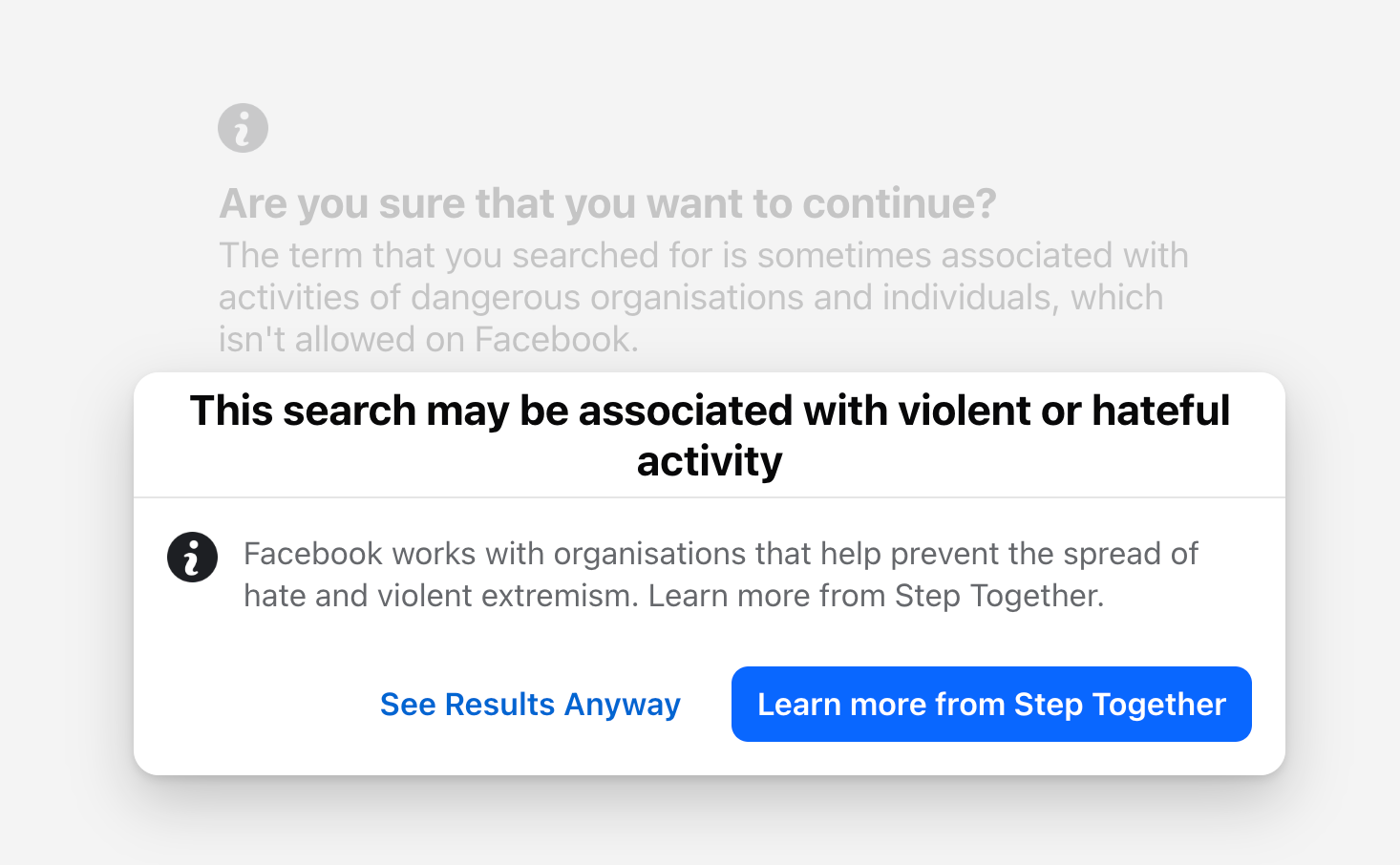
After selecting “Continue,” users are then hit with a second warning:
“This search may be associated with violent or hateful activity. Facebook works with organisations that help prevent the spread of hate and violent extremism.”
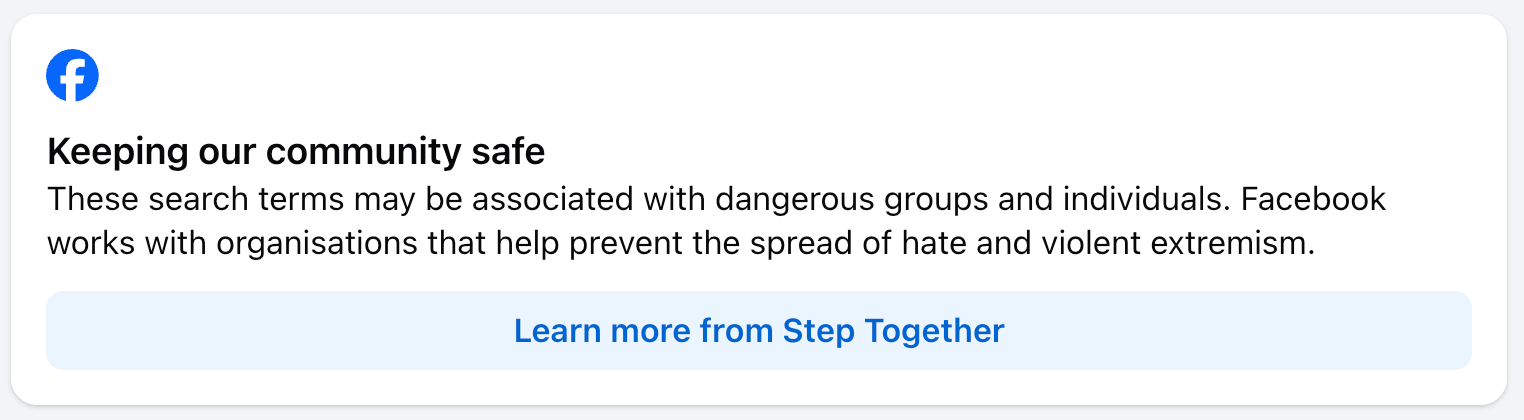
Those who proceed to view the results are then shown a third warning:
“Keeping our community safe: These search terms may be associated with dangerous groups and individuals. Facebook works with organisations that help prevent the spread of hate and violent extremism.”
The warning appears to be connected to Meta’s secret “Dangerous Individuals and Organisations” (DIO) policy, a classification system used by Facebook and Instagram to restrict content, pages, advertising, and fundraising associated with groups the company considers to promote violence or hate."
Meta does not publicly release its complete list of organisations covered under the policy.
Why has Chalcedon been flagged?
The Chalcedon Foundation describes itself as a Christian educational organisation “devoted to the research, publishing, and promotion of Christian Reconstruction,” a theological movement that argues the Christian faith should influence every area of life and society.
The organisation’s supporters say its work focuses on applying biblical principles to culture, government, education, and law through peaceful, legal, and democratic means.
However, in 2005, the Southern Poverty Law Centre (SPLC) designated Chalcedon as an “anti-gay hate group,” citing writings by Rushdoony and his views on biblical law, including his defence of Old Testament penalties for certain offences.
The SPLC has also accused Rushdoony of opposing interracial marriage and denying the Holocaust, claims that have been thoroughly disputed.
The designation has contributed to Chalcedon being grouped by some organisations and platforms alongside groups genuinely considered extremist in nature.
Meta’s broader definition of “dangerous”
Perhaps most concerning of all is that Meta’s Dangerous Individuals and Organisations policy extends beyond organisations involved in terrorism or direct criminal activity.
According to Meta AI, previous reports based on leaked internal documents have indicated that Facebook’s list includes organisations classified under broader categories such as hate groups and extremist movements.
Under the policy, organisations may face restrictions including:
Warning labels on search results
Limits on pages and advertising
Removal of content considered to praise or support designated groups
While the appearance of the warning does not necessarily mean Facebook is alleging that the Chalcedon Foundation is responsible for acts of violence, it could certainly lead users to believe there’s substance to the insinuation.
Chalcedon rejects “hate group” label
Mark Rushdoony, son of R.J. Rushdoony and former president of Chalcedon, has previously rejected the Southern Poverty Law Centre’s classification of the organisation.
In an article titled “Guilt by Association,” Rushdoony argued that the designation was based on opposition to biblical teachings rather than evidence of harmful activity.
He said, “My response to being on the SPLC list of hate groups is that, given their standard of what constitutes ‘hate,’ it would be embarrassing to not make the list!”
Rushdoony argued that SPLC and their ilk have consistently misrepresented his father’s writings and said the organisation’s beliefs were being treated as evidence of extremism.
He wrote that Chalcedon’s position was grounded in its interpretation of the Bible and that accusations of hatred amounted to “false witness.”
“False witness, my father noted in the above-mentioned book, is a form of murder, as it destroys a person with lies and innuendo,” he said.
Rushdoony concluded by saying, “Such tactics are the weapons of Satan, not of the Kingdom of God. We stand in certainty when we stand in terms of the Word of God.”
Who defines hate?
The warning raises the obvious question of who gets to define what constitutes “hate”.
If Meta classifies a Christian ministry as dangerous because it affirms the authority of God’s law, then the question follows: what moral standard is Meta appealing to when determining what is and is not hateful?
According to Meta, God’s law is hateful, and therefore, affirming God’s law is dangerous. According to Jesus, God’s law can be summarised as love for God and love for others (Matt. 22:37-40; cf. Rom. 13:10; Gal. 5:14).
At its heart, this is not simply a dispute over moderation policies. It’s a deeper theological and moral disagreement about the nature of love, goodness, and God Himself.
The two concepts are inseparable, because hate is the opposite of love. Scripture declares that “God is love” (1 Jn. 4:8, 16). Therefore, if love is to be properly understood, it must first be defined according to the character of God rather than according to the ever-shifting trends of human opinion.
As such, we cannot redefine love—or hate—without redefining God. Hence, God’s law is necessary to define what love is, and thus, who God is. God’s law is not the enemy of love, but its expression. It reveals what love for God and love for others actually requires.
And yet, it’s this very Law that Meta and SPLC have categorised as “hateful.”
This isn’t simply about whether certain ideas are socially acceptable. It’s about whose definition of love and morality will ultimately define the “god” that we are expected to serve, obey, and conform to.
Love and hate will ultimately be defined by one of two authorities: God, who reveals their meaning through His character and law, or man, who defines them according to the shifting desires, ambitions, and opinions of those in power.
If the former, we have a fixed standard that provides order and clear boundaries. If the latter, then it is Chalcedon today — and perhaps you tomorrow.
This proves yet again that these platforms are controlled by those who hate God, reject His law, and seek to recast biblical truth as dangerous. Excellent and deeply important article.
Thank you!
SOLI DEO GLORIA