


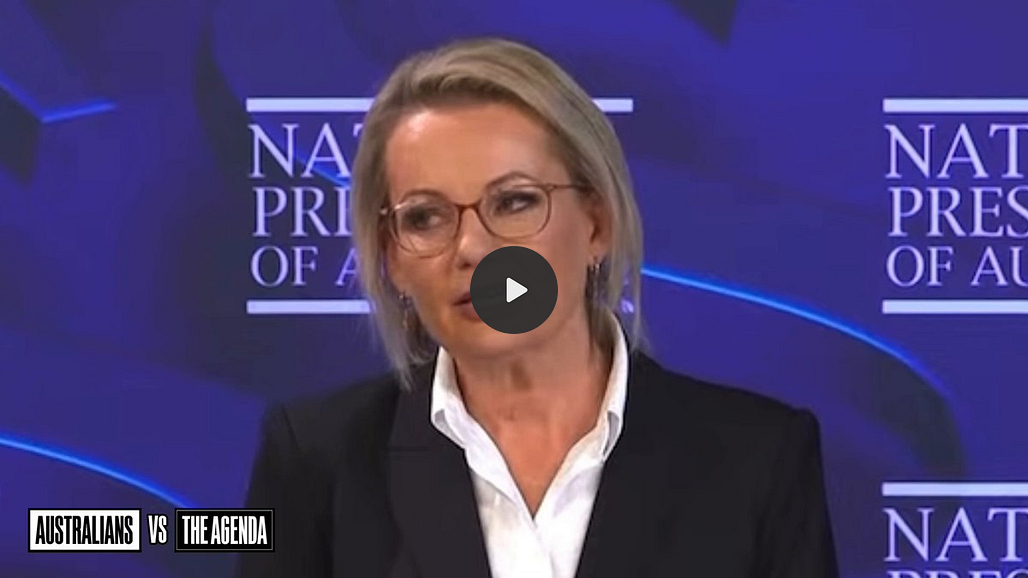
Opposition Leader Sussan Ley recently claimed that “parents need government” to protect their children from the dangers of social media. In effect, she’s just saying what so many of our politicians think: parents can’t be trusted to raise their own children.

Framed as a response to growing concerns about social media’s impact on youth mental health, political leaders across Australia are now pushing for age-based bans on social platforms for users 16 and under. The message is clear: Mum and Dad aren’t competent enough to decide what’s best for their kids. But never fear—the state is here to impose new house rules on your unruly teens.
Are Australian parents truly so negligent that raising awareness about online risks is no longer enough? Must federal and state governments now legislate family life, drafting laws that would criminalise or prohibit children and teens from using social media?
It certainly seems that way. Politicians increasingly appear unwilling to trust parents with their own responsibilities, unless there’s a legal threat looming over them.
But who asked Canberra to step in as our co-parent? Since when did it become the role of elected officials to dictate how we raise our children?
This is not a political issue—it’s a parenting issue. And parenting is the domain of parents, not the state.
Yes, raise awareness. Provide clear information about the genuine dangers that come with social media use: cyberbullying, pornography, grooming, and screen addiction. But when the government inserts itself into the home, telling us what our children can do, who they can associate with, what books they can read, what food they can eat, and now which apps they can access—that’s a danger of a different kind entirely.
Let’s not kid ourselves into thinking this is just about protecting our children. These are the same politicians, cheered on by the same media, who:
Closed schools for months, locking children in their homes under COVID mandates;
Supported experimental medical interventions like gender reassignment for teenagers;
Undermined parental authority at every turn.
And now we’re supposed to believe they’ve suddenly discovered a deep concern for the well-being of our children?
Yes, parents should protect their kids online. But the far greater threat to children isn’t memes or selfies—it’s intrusive politicians who can’t manage their own personal lives, yet somehow feel entitled to dictate the private lives of the rest of us.
Banning teenagers from social media isn’t just about “the kids.” It’s a Trojan horse to justify digital identification for all users.
How exactly do you prevent minors from creating accounts? Will kids be asked to tick a box and pinky-promise they’re 16? Of course not. The only effective enforcement method would be requiring adults to verify their identity—with legal ID—to access social media.
That means an end to online anonymity. And with it, the rise of surveillance. Big Brother will be watching.
How convenient that this newfound concern for children leads directly to a long-desired political goal: tying every user to a traceable, identifiable digital ID.
Australian Government Considered Mandatory ID for Social Media Access in 2021

In 2021, the Australian government considered a controversial proposal requiring all social media users to verify their identity using a 100-point identification system. The measure was part of a broader crackdown on online abuse and aimed to eliminate anonymity on platforms like Facebook, Instagram, and X.