


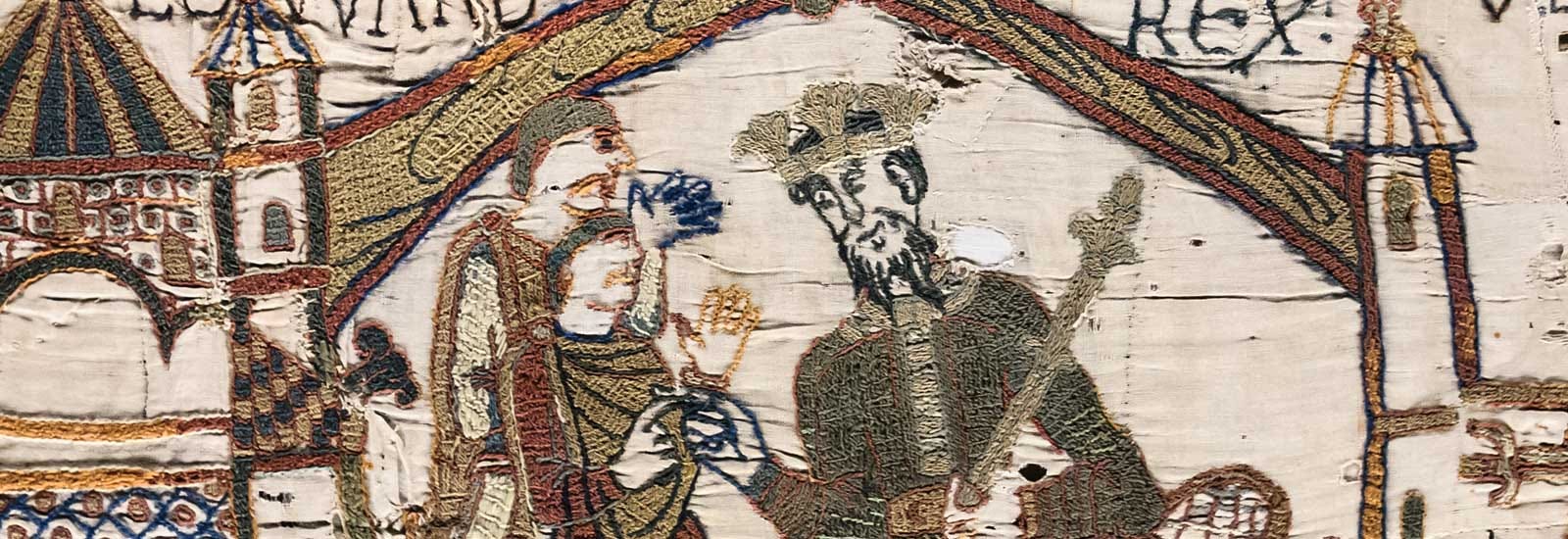
Before the arrival of the Vikings, “England,” as a unified nation, did not exist. Anglo-Saxon England was fragmented into the Heptarchy. There were seven major Anglo-Saxon kingdoms—including Wessex, Mercia, and Northumbria. All of these kingdoms were operating independently, and all of them were fighting against one another for dominance.
Any sense of unity among the Anglo-Saxons seemed impossible—that is, until the Northmen arrived. That terrifying, existential threat imposed on them from the outside made the fragmented Anglo-Saxons realise that their internal rivalries were a luxury they could no longer afford.
That common enemy forged a common brotherhood.
In the 9th century, Viking raids evolved from sporadic, quick coastal hits into a full-scale invasion. The “Great Heathen Army,” as it was dubbed, arrived not just to plunder, but to conquer, and then to settle.
One by one, the Anglo-Saxon kingdoms fell. Northumbria collapsed. East Anglia was crushed, and Mercia was severely fractured. By 878 AD, only the southern kingdom of Wessex, ruled by King Alfred, stood between the Anglo-Saxons and total Viking dominance.
Alfred understood that a fractured island stood no chance against a unified enemy. To survive the onslaught, Alfred had to unify his people. He was able to achieve this through a few calculated moves:
1. Shared Identity: First, Alfred framed the war, not just as Wessex versus the Vikings, but as Christian Anglo-Saxons against Pagan invaders. This gave the Anglo-Saxons both a spiritual and physical reason to view themselves as one unified body.
2. The “Burghal” System: Alfred understood that survival depended on cooperation. So, he built a network of fortified towns (burhs), which required cross-regional cooperation to maintain. This forced neighbouring communities to rely on each other, especially for defence. Working together was vital to the survival of every Anglo-Saxon community.
3. A New Legal and Cultural Identity: Alfred sought to bind the people together in one new identity. He compiled a code of laws that blended Anglo-Saxon traditions from different kingdoms, and championed English literacy. In so doing, he strengthened and popularised the emerging English identity. The Anglo-Saxons began to view themselves, not just as West Saxons or Mercians, but as Angelcynn (the English people).
Today, King Alfred is the only English monarch to be given the title “the Great.” An inscription on a statue commemorating King Alfred in Wantage, England, states:
“Afred found learning dead and he restored it, education neglected and he revived it, the laws powerless and he gave them force, the church debased and he raised it, the land ravaged by a fearful enemy from which he delivered it. Alfred’s name shall live as long as mankind shall respect the past.”
After Alfred’s death, his grandson, King Athelstan, capitalised on his grandfather’s efforts to unify England. In 927 AD, King Athelstan conquered the last Viking stronghold of York and united the people under one banner, becoming the first recognised King of England.
Common Enemy Effect
What happened in Anglo-Saxon England and the years following King Alfred’s death is a textbook historical example of the deeply hardwired human phenomenon of the Common Enemy Effect.
Sociologists and psychologists refer to this as the In-Group/Out-Group dynamic. Political theorists such as Carl Schmitt described a similar phenomenon through what he called the Friend/Enemy distinction.
To put it simply: When a common enemy emerges, that shared threat systematically forces rival groups to unify by:
1. Re-Prioritising the Hierarchy of Needs
When groups are at peace, they compete for status, land, and resources through internal politics. However, an existential enemy threatens the most basic level of human survival. And when your life is on the line, local grievances with a neighbour suddenly seem trivial.
The immediate need to survive outweighs the luxury of bickering about non-essential matters. This phenomenon was observed during the Covid-era, when people from diverse backgrounds, beliefs, and convictions unified in one chorus against oppressive government mandates. It was only after that threat disappeared that the factions became evident once again.
2. Shifting the Boundaries of the “In-Group”
To some extent, identity is elastic. Human beings naturally form an “in-group” of people who are most like them, which obviously results in an “out-group” for everyone else. Where that line is drawn and just who is included will vary depending on the individual, the collective, and the measure employed.
Before the Vikings arrived in the British Isles, a Mercian saw a West Saxon as the “out-group.” After the Vikings arrived, the threat was so radically different in culture, language, religion, and warfare that it forced a mental shift at a social level. The West Saxon and the Mercian suddenly realised they weren’t all that different after all. They had far more in common with each other than they did with the invading armies. As a result, the “in-group” expanded to encompass all Anglo-Saxons, regardless of what kingdom they came from.
Interestingly, in a 1987 address to the United Nations General Assembly, U.S. President Ronald Reagan remarked that he sometimes wondered how quickly global differences would disappear if humanity were confronted by an extraterrestrial threat—a threat so removed from our “out-group” that our “out-group” became our “in-group.” Reagan suggested that such an external danger would unify the nations, saying it would make people set aside their national interests and realise their shared vulnerability as inhabitants of one world.
It is the Anglo-Saxons versus the Vikings, but on a galactic scale.
3. Recognising a Shared Fate
What’s more, a common threat creates a scenario where “If you fall, I fall next.” King Alfred successfully communicated this reality to the surviving regions of Anglo-Saxon England. If Mercian fighters did not support Wessex, the Vikings would simply wipe out Wessex and then turn their sights towards Mercia. Cooperation and joint participation were necessary for the survival of all. Their fates were tied together.
Benjamin Franklin echoed this exact sentiment during the American Revolution when he famously said, “We must all hang together, or most assuredly we shall all hang separately.”
Learning From History
The story of King Alfred and the unification of Anglo-Saxon England is just one historical example of the Common Enemy Effect that offers profound lessons for modern multicultural societies today.
When a native population feels threatened by rapid demographic or cultural changes, the standard appeals to “celebrate diversity” often fall on deaf ears. This is because mindless mantras, such as “Diversity is our strength,” ignore the fundamental human psychology of the In-Group/Out-Group dynamic.
A diverse society cannot achieve unity simply by multiplying its differences, as though that were a quality in itself. Diversity itself cannot be the basis of cohesion—by definition, there is nothing inherently holding “diversity” together. Unity requires a compelling, overarching “Superordinate Identity”—who we are, where we came from, what we believe, and where we are going
Without that, a diverse society is just a collection of isolated subgroups, living side-by-side in a fragmented multiculturalism. Coupled with our very natural In-Group/Out-Group mindset, and you have a recipe for social confusion, suspicion, resentment, and chaos—especially when native populations are marginalised or disadvantaged in their own homeland.
Instead, cohesion depends on newcomers adopting the core values, language, and civic identity of the nation, such that they are no longer perceived as part of an external out-group. Where the process of integration is weak, incomplete, or impossible by virtue of volume (think mass migration), social tensions are guaranteed.
If assimilation into the in-group is to occur effectively, immigration levels must be reduced to a degree that allows integration systems, institutions, and communities to facilitate meaningful assimilation over time.
At the same time, integration cannot be a one-way process in which the host culture is diminished, diluted, or lost. A stable society depends on the preservation and respect of foundational institutions, legal traditions, historical continuity, national language, and religion. When the existing population feels culturally secure, openness tends to increase, and those in the out-group seeking inclusion are less likely to be perceived as a threat.