


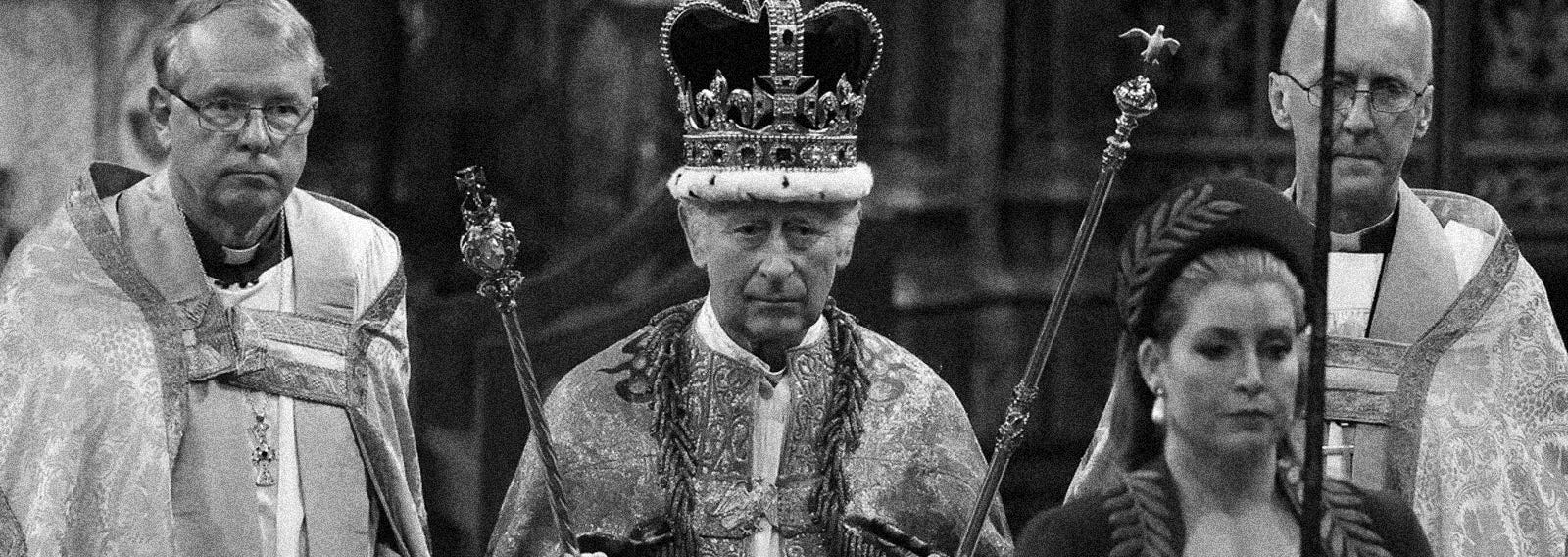
On May 14, 2023, at Westminster Abbey, the Archbishop of Canterbury administered the coronation oath. King Charles III was asked:
“Will you to the utmost of your power maintain the Laws of God and the true profession of the Gospel? Will you to the utmost of your power maintain in the United Kingdom the Protestant Reformed Religion established by law? Will you maintain and preserve inviolably the settlement of the Church of England, and the doctrine, worship, discipline, and government thereof, as by law established in England?”
King Charles III responded: “All this I promise to do.” He then placed his hand on the Bible and swore: “The things which I have here before promised, I will perform and keep. So help me God.”
The British monarch has never been merely political; it’s been profoundly theological. From the coronation oath to the title “Defender of the Faith,” the Crown is historically bound to the life and doctrine of the Christian Church.
This is why moments of silence speak loudly. King Charles III’s decision not to issue an Easter message this year may reflect a devastating cultural shift that not only threatens the “kingdom” but the monarchy itself. When Christianity is sidelined in public life, the very institution entrusted with defending its significance inevitably loses relevance.


Indeed, Queen Elizabeth II rarely issued Easter messages. What has sparked anger over Buckingham Palace’s announcement, however, is that just this February, the King and Queen sent Muslims a “blessed and peaceful Ramadan.”


The British monarchy draws much of its meaning from the Christian worldview: the idea of servant leadership, accountability before God, and the sacredness of royal duty. Strip all that away, and what remains is, at best, mere performance—at worst, the most expensive live action role playing in history. It’s all just pageantry without any spiritual anchor or significance. So, the question obviously arises: Why should such an institution even exist?
In the United Kingdom, as Christianity goes, so goes the monarchy. If Christianity diminishes in public life, so too does the intelligibility and relevance of the monarchy itself. The rituals remain, but they’re devoid of all meaning. Without the theological roots, the monarchy risks becoming a mere relic. It will be respected by some, tolerated by others, but for the most part, entirely irrelevant.
In this sense, the future of the Crown is tied to the future of Christianity in Britain. A nation that forgets the faith that shaped its institutions may eventually find those institutions difficult to justify, and incredibly easy to ignore.