


Written by Andrew Lillie
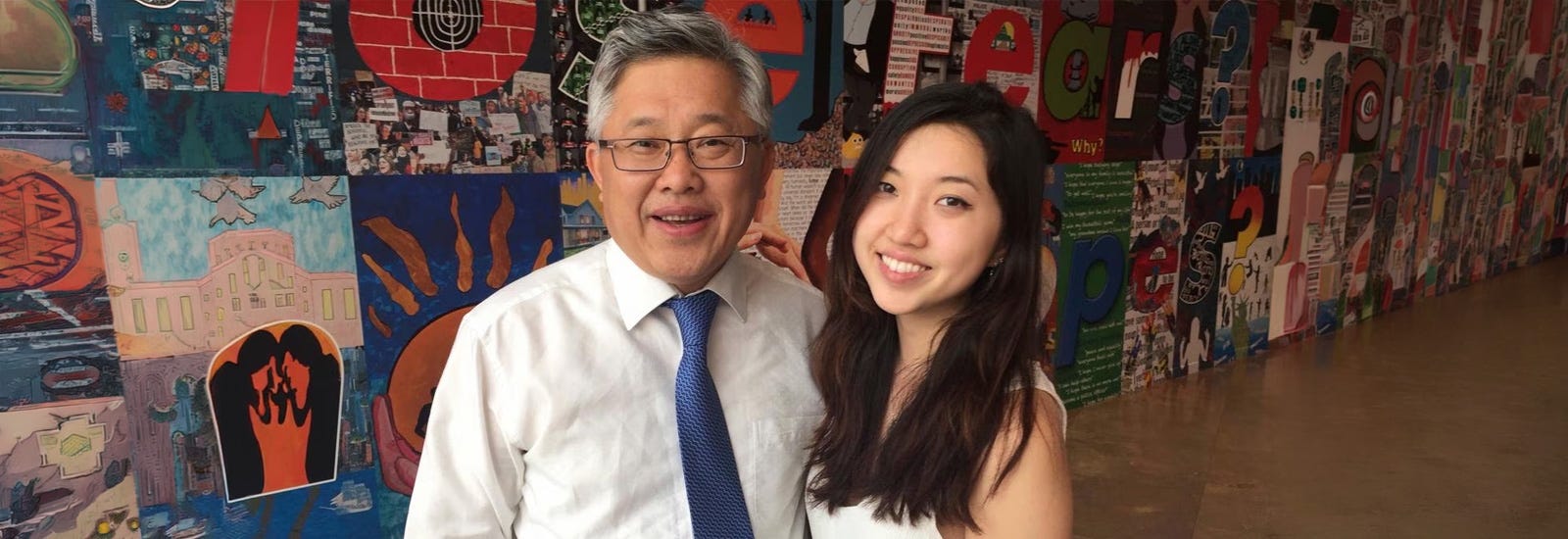
Pastor Ezra Jin Mingri touched down in Los Angeles in the early hours of July 4, reunited with his family after 266 days in Chinese detention. He’d spent the last nine months in a detention centre in Beihai, in Guangxi province, and there’s something fitting about the date he finally walked free: America’s Independence Day.
Jin founded Zion Church in Beijing in 2007, and over the years it grew into one of the largest unregistered Protestant congregations in China. Even after authorities shut down its physical building in 2018, the church didn’t disappear. It adapted, moving underground and online, eventually reaching thousands of believers across dozens of cities through livestreamed services. That resilience is precisely what put it on the Communist Party’s radar.
The dispute was never simply about Christian doctrine. It was about whether the state would exercise ultimate authority over the church. Zion Church refused to install government surveillance cameras inside its sanctuary, and it refused to join the state-controlled registration system that requires churches to answer to the Communist Party before they answer to God.
That defiance eventually caught up with Jin. Last October, Chinese authorities launched one of the largest crackdowns on a single church in decades, detaining Jin along with 17 other Zion Church leaders across several cities. A month later, all 18 were formally arrested on charges of “illegally using information networks,” with some later facing charges of “illegal business operations” instead. Supporters say the case ultimately centred on ordinary church finances — offerings and seminary tuition — being treated as criminal conduct.
Nine members of the group were released on bail in June. Jin and eight others were sent forward for prosecution.
Then, in May, President Trump raised Jin’s case directly with Xi Jinping during a state visit to Beijing, alongside the case of jailed Hong Kong publisher Jimmy Lai. Trump later told reporters that Xi appeared to be “seriously considering” releasing the pastor, although he was less optimistic about Lai. Seven weeks later, Jin was on a flight to Los Angeles. According to Christian advocacy groups, Chinese officials presented the release as a goodwill gesture ahead of the American holiday.
His wife, Anna Liu, said he’d lost around 15 kilograms in custody and that most of his hair had turned grey. But what struck her even more was what hadn’t changed. According to the family, Jin never denied what he’d done. He admitted to preaching online, planting churches and discipling believers. What he refused to admit was that any of those things were crimes. That isn’t the response of someone trying to bargain his way to freedom. It’s the response of someone convinced the state has no authority over what belongs to God.
There is every reason to give thanks for Jin’s release, and that shouldn’t be overshadowed by the politics surrounding it. But neither should the diplomacy obscure the larger picture. Eight of his co-workers remain in Chinese custody, facing fraud and business-related charges over activities that supporters say amounted to ordinary church administration. Human rights organisations have argued that these prosecutions lack any legitimate legal basis. And the fact that Jin’s freedom appears to have depended on a direct appeal from a foreign head of state says a great deal about how much still rests on the discretion of a one-party government that views independent religious conviction with deep suspicion.
Beijing wasn’t targeting Zion Church because it preached false doctrine or threatened public safety. It targeted a church that insisted Christ, not the Communist Party, is its highest authority. The activities at the centre of the case — operating an independent church, receiving offerings, training pastors and preaching online — would not ordinarily be treated as criminal offences in the Western world.
Christians in the West shouldn’t read this as a story about a distant authoritarian regime and then turn the page. Open Doors’ latest World Watch List estimates that around 388 million Christians worldwide now live under high or extreme levels of persecution, and that number continues to grow. China ranks among the fifty worst countries on the list. The instinct behind its treatment of Zion Church is one seen repeatedly throughout history: governments that demand ultimate loyalty inevitably become uneasy when people acknowledge an authority higher than the state.
That instinct isn’t confined to openly authoritarian systems. In free societies, it often presents itself more politely. It can look like a hospital pressured to abandon its religious identity, a faith-based charity told its beliefs disqualify it from public support, or parents finding that the state increasingly claims authority over decisions that once belonged to families. These situations are plainly not equivalent to imprisonment in China, but they can reflect a similar underlying question: where should the limits of state power lie?
Jin is home. His co-workers are not. Until they are, the Church, and everyone who still enjoys the freedoms Jin was denied, has good reason to keep speaking their names and praying that they, too, will one day walk free.