



Historic Christian teachings on Judaism, the crucifixion of Jesus, and the New Covenant are increasingly being misrepresented as “antisemitic,” a prominent Catholic bishop has warned.
In a statement published Wednesday on Life Site News, Bishop Joseph E. Strickland said many Christians feel “unsettled—some even shaken” by what he described as growing hostility toward those who remain committed to the Church’s traditional doctrine.
“If you feel that the ground beneath you is shaking, it is not because the truth has changed,” Strickland wrote, “it is because many have unknowingly anchored themselves to things that cannot hold.”
While the Catholic Church has consistently condemned hatred and violence against innocent people, including Jews, many Christians now fear that rejecting modern political or theological movements—such as “Christian Zionism”—risks being unfairly branded as “antisemites” or “Jew-haters.”
Bishop Strickland cautioned that faithful Catholics are increasingly being subject to false accusations simply for upholding long-standing doctrines:
“Faithful Christians are being labelled as ‘anti-Semitic’ simply for refusing to adopt certain theological or political positions—particularly tied to forms of modern Christian Zionism.”
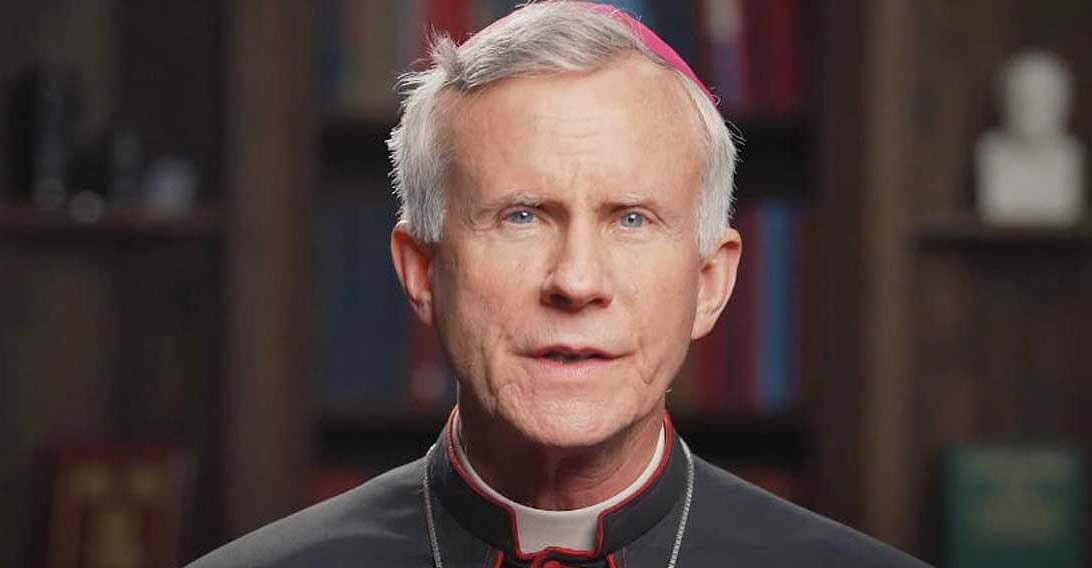
He outlined the Church’s clear stance on antisemitism: “The Catholic Church rejects hatred of any people, including the Jewish people. Anti-Semitism is a sin. It is unjust. It is contrary to the Gospel.”
For two millennia, the Church has taught that Jesus Christ was crucified under the authority of Pontius Pilate, prompted by opposition from Jewish religious leaders who rejected His messianic claims. In response, advocacy groups such as the European Jewish Congress have called for Bibles to include introductory notes and glossaries warning readers of “antisemitism.”
Doctrines such as “supersessionism”—the belief that the New Covenant in Christ fulfils and surpasses the Old—have long been central to Church theology, alongside the conviction that access to God is not limited to Jews, but is equally available to all people through Christ. The teaching that the Church now comprises all believers equally, regardless of ethnicity, has sometimes been labelled antisemitic, as it conflicts with Christian Zionism—the view that God’s promises to Abraham are not fully realised in Christ but instead continue with the modern state of Israel.
In recent decades, Jewish advocacy groups such as the Anti-Defamation League (ADL) have criticised certain Christian doctrines and practices, raising concerns about the interpretation of particular New Testament texts and their historical use. They have also objected to elements of the pre–Second Vatican Council liturgy, including the Roman Missal, first promulgated in 1570 by Pope Pius V following the Council of Trent.
The ADL described aspects of the liturgy as “deeply troubling,” citing the Good Friday prayer in the older Roman Missal, which calls for Jews to "acknowledge Jesus Christ as the saviour of all men."
In response to pressure, the Church revised the Good Friday prayer for the Jewish people to remove language that could be seen as offensive. In pre–Vatican II versions, the prayer asked God to “lift the veil” from Jewish hearts so they might acknowledge Christ as Saviour.
Following the Second Vatican Council, the prayer was reworded to remove language that might be perceived as hostile or offensive. Later revisions of the 1962 Missal under Pope Benedict XVI retained the focus on praying for conversion.
However, the ADL said that changes to the wording of the Good Friday prayer were “cosmetic” and still reflected a conversion‑oriented intent that many in the Jewish community found offensive.
“We are deeply troubled and disappointed that the framework and intention to petition God for Jews to accept Jesus as Lord was kept intact,” said Abraham H. Foxman, ADL National Director.
Meanwhile, phrases central to Christian faith, such as “Christ is King,” have, in recent years, been labelled “antisemitic” when used politically or polemically. Church leaders and theologians largely reject these characterisations as misunderstandings or distortions of doctrine.
In February, Carrie Prejean Boller, a Catholic conservative activist and former Miss California USA, was removed from President Donald Trump’s White House Religious Liberty Commission following a hearing on antisemitism in America.
During the session, Boller disputed the idea that anti-Zionism equates to antisemitism, asserting that her Catholic faith precluded support for Zionism while emphasising that criticism of Israel or its policies was not inherently antisemitic.
Commission chair Texas Lt. Gov. Dan Patrick accused her of pushing a personal anti-Israel agenda during the hearing, resulting in her removal.
Bishop Strickland framed the debate as part of a broader spiritual and cultural crisis, urging Catholics not to let political pressure redefine their faith.
“Political parties cannot save us. Governments cannot define truth. And no earthly movement… can replace the Kingship of Jesus Christ,” he said.
The bishop also warned against attempts to silence conscience: “A Catholic conscience must never be silenced by political pressure or fear of accusation.”
At the same time, he stressed that speaking about suffering or calling for justice—especially in areas of conflict—is not hatred: “To speak of suffering… to call for justice – this is not hatred. It is the Gospel.”
In closing, Bishop Strickland urged Christians not to be intimidated by cultural or political pressure: “This is not a time for fear. This is a time for clarity. We must reject hatred. We must reject false accusations.
“Jesus Christ is Lord,” he stressed. “Not Caesar. Not any party. Not any movement. Christ alone.”
While the Church has consistently condemned hatred and violence, faithful Christians increasingly face the risk of being mischaracterised as antisemitic simply for adhering to long-standing doctrines.
Bishop Strickland called on Christians to remain steadfast in truth, rejecting both false accusations and political coercion, and to place Christ alone at the centre of their faith: “Do not be shaken, do not be silenced, and do not be led astray. Remain faithful, remain rooted, and hold fast to the truth—no matter the cost.”