


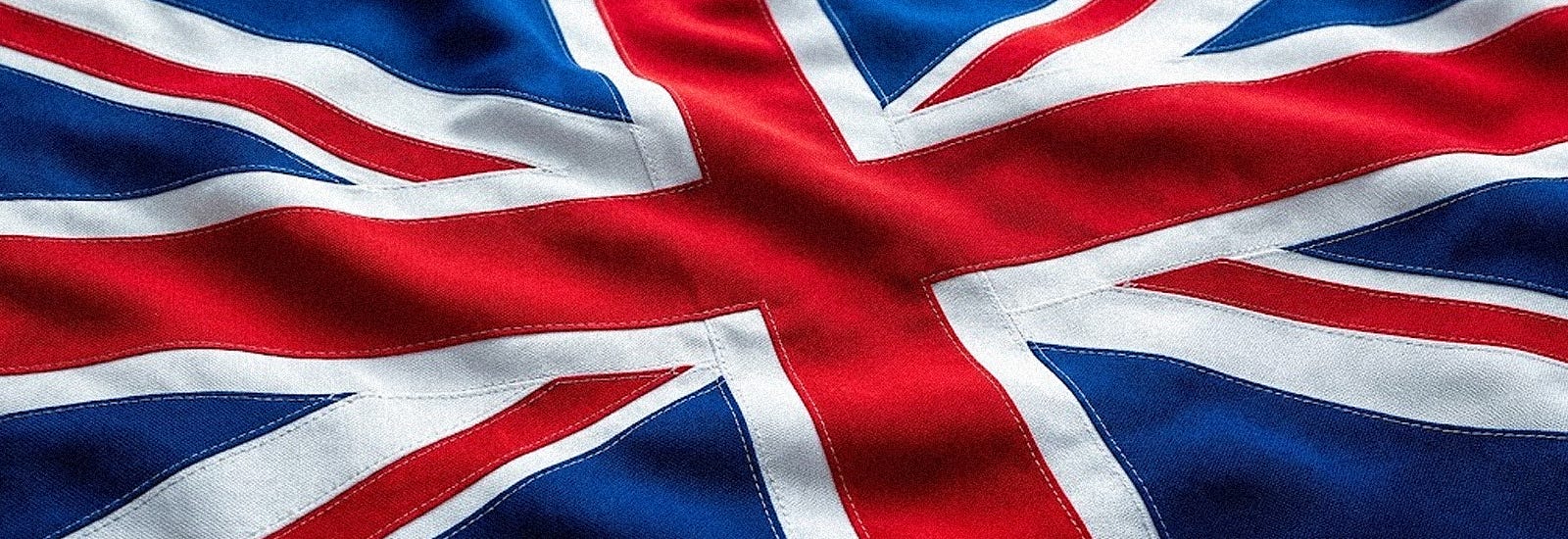
Birmingham City Council, Britain’s largest local authority, has gone to the High Court to stop residents putting the Union Jack and the St George Cross on lamp posts without its say-so.
If a judge grants the injunction, breaching it could mean up to two years in prison or an unlimited fine. Yeah, you can be imprisoned for the unauthorised raising of your own nation’s flag.
The application, which was filed on August 26, names eight people directly, including Ryan Bridge, who co-founded the grassroots Operation Raise the Colours campaign that’s put English and British flags on street furniture across the country over the past year, plus a catch-all “persons unknown” clause that leaves the net open to anyone who does the same thing.


The council insists this isn’t really about the flag. Green councillor Jane Baston, Birmingham’s cabinet member for equalities and communities, called it a lawful, proportionate, and evidence-led approach to unauthorised attachments on the highway. She cited public safety and staff welfare as the actual concerns.
Birmingham isn’t the first. Oxfordshire County Council won a similar High Court order back in April, the first council to do so.
But nobody’s buying the “neutral policy” framing. Multiple outlets have noted that this enforcement push applies to English and British flags specifically, while flags from other countries flown elsewhere in the city haven’t drawn the same court action.
And yet, if the English and British flags are problematic, what do foreign flags flown in Britain communicate? Nobody plants a flag as mere decoration. It’s a claim of belonging: this is ours, we’re here, we stand under this, this represents who we are.
Take a flag down and put nothing up in its place, and you’ve made a slightly different, quieter claim that whatever it stood for doesn’t get to be visible here anymore. At the very least, the land no longer exclusively belongs to those that the flag represents.
That’s true whether it’s a war memorial, a town centre, a local council, or a lamppost.
The St George’s Cross has flown over England for the better part of a thousand years. A red cross on white, adopted from the banner of England’s patron saint and tied to the Crusades before it ever became a national symbol.
The Union Jack layers three Christian crosses on top of one another: St George’s cross for England, the blue-and-white saltire of St Andrew for Scotland, and the red saltire of St Patrick for Ireland.
It’s not an abstract or arbitrary pattern. It’s the patron saints of the home kingdoms stitched into a single piece of cloth. It’s a literal union forged from shared ancestry, homelands, and Christian inheritance.
Of course, none of that is what Birmingham’s injunction talks about. They use the rhetoric of “unauthorised attachments” and “community cohesion.” But it is curious how all of these multicultural efforts result in the same thing: no native Britons, no English imagery, and no Christian symbolism.
But let’s suppose, for a moment, that Birmingham’s neutral framing here is entirely accurate, and that the council is genuinely concerned about “unauthorised attachments” undermining social cohesion and fracturing the community.
If that’s the case, then we should be asking another obvious question: What does it say about the state of those communities if displaying the national symbols of the country is supposedly enough to threaten social cohesion?
If newcomers and immigrant communities regard St George’s Cross and the Union Jack as so provocative and offensive that their mere presence on a lamppost is deemed a threat to community cohesion, what does that suggest about their relationship and commitment to the nation those symbols represent?
In that case, the problem isn’t the flag or what it represents. The problem is a failure to integrate people into a shared national identity. The problem is the importation of attitudes that are so hostile to that identity that even its most basic symbolism has become something to be suppressed rather than celebrated.