


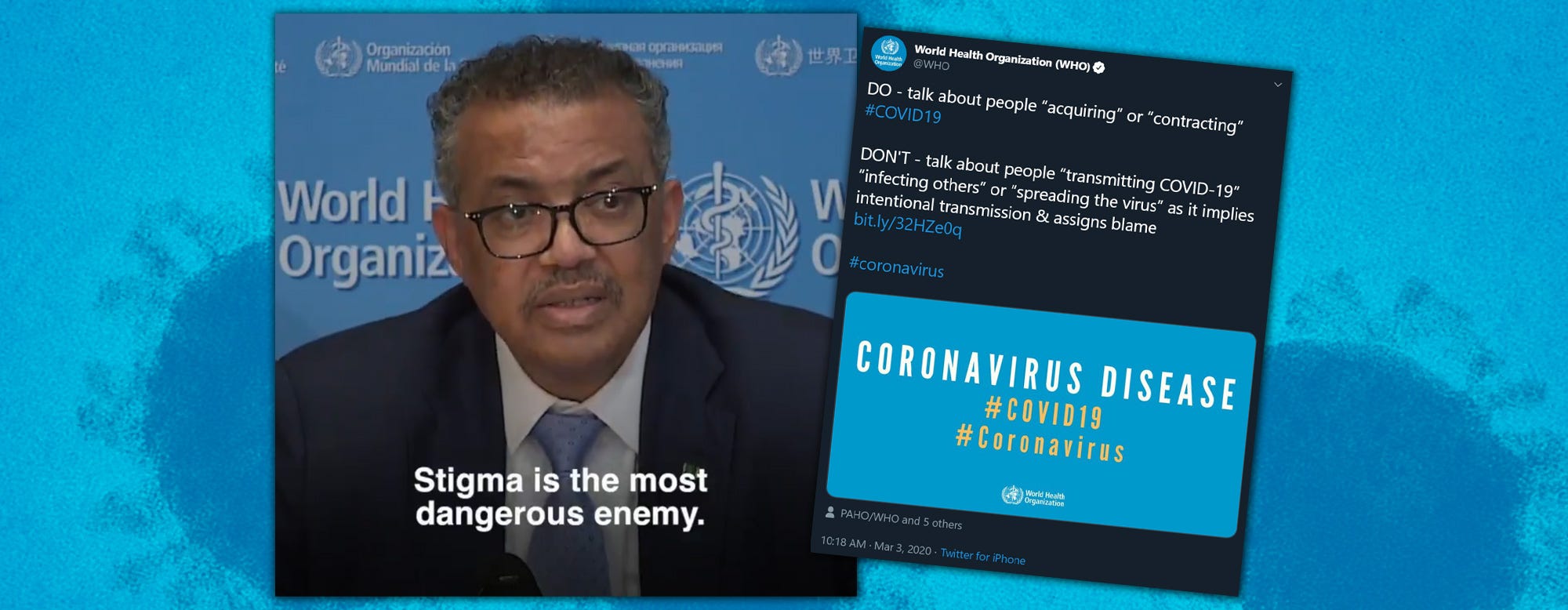
In the midst of a “near-global pandemic,” the World Health Organisation (WHO) has warned that negative words which fuel stigmatisation and perpetuate stereotypes are more dangerous than the Coronavirus itself.
As the global death toll surges past 3,000, the WHO on Tuesday published a series of tweets, lecturing its 5.6 million Twitter followers about the “dos and don’ts” when speaking of the virus.
“When talking about COVID19 (Coronavirus), certain words and language may have a negative meaning for people and fuel stigmatising attitudes,” WHO tweeted.
“These words and language can perpetuate negative stereotypes or assumptions, strengthen false associations between COVID19 and other factors, create widespread fear, or dehumanise those who have the disease.”
Attached to the tweets was a short video in which Dr Tedros Adhanom Ghebreyesus, Director-General of WHO, explained that the stigma attached to the virus is worse than the virus itself.
“Stigma, to be honest, is more dangerous than the virus itself,” he said. “And let’s really underline that: Stigma is the most dangerous enemy.”


WHO went on to tweet a list of “dos and don’ts” when speaking of the virus.
“DO – talk about the new coronavirus disease. DON’T – attached locations or ethnicity to the disease, this is not a ‘Wuhan Virus’, ‘Chinese Virus’ or ‘Asian Virus’. The official name for the disease was deliberately chosen to avoid stigmatisation.”
“DO – talk about ‘acquiring’ or ‘contracting’ COVID19. DON’T – talk about people ‘transmitting COVID-19’ ‘infecting others’ or ‘spreading the virus’ as it implies intentional transmission and assigns blame.”
“DO – speak accurately about the risk from COVID19, based on scientific data and the latest official health advice. DON’T – repeat or share unconfirmed rumours and avoid using hyperbolic language designed to generate fear like ‘plague’ or ‘apocalypse.’”
According to the WHO, more than 92,000 cases have been confirmed worldwide, and the number of deaths from the virus has reached 3,110 globally.