Anti-Racism Just Means Anti-White
“History offers little reason for optimism whenever societies begin sorting citizens into categories of collective guilt and collective innocence.”

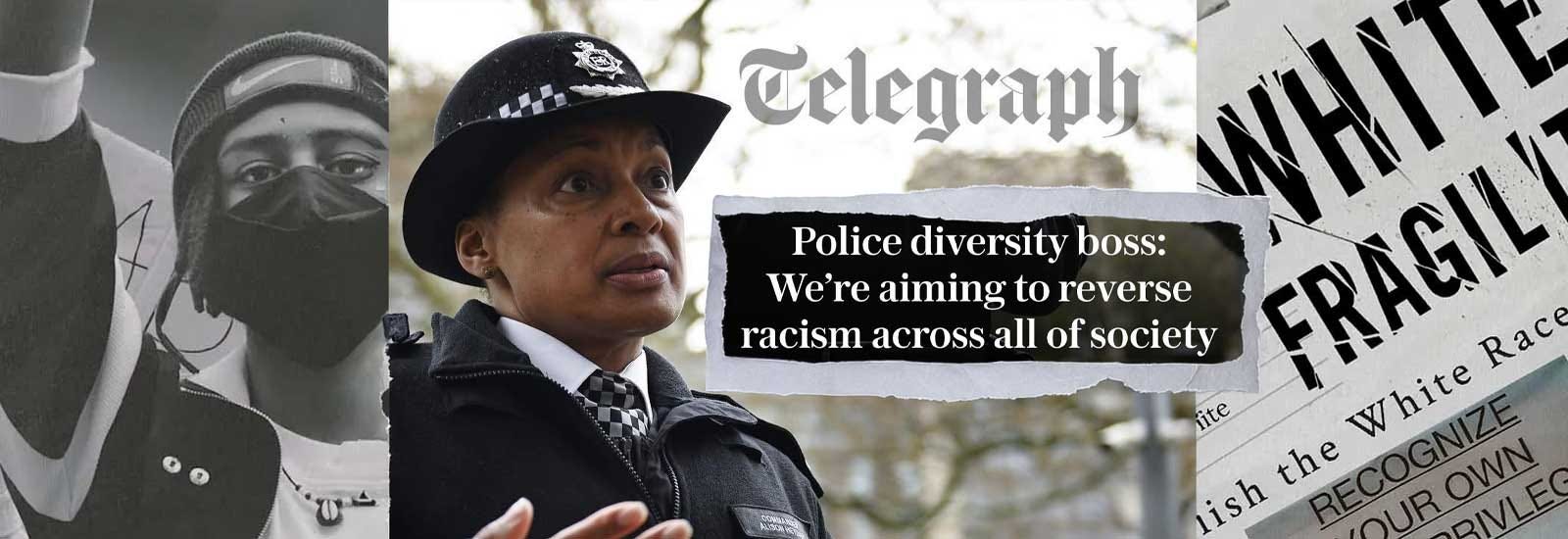
Have you noticed that so-called “anti-racism” campaigns, supposedly designed to end racism, sound admirable in theory, but almost always function the same way in practice?
While cloaked in the euphemistic language of diversity, equity, and inclusion, these sorts of things often smuggle in assumptions drawn from the failed and fraudulent ideologies of Marxism and Critical Race Theory.
Rather than treating “racism” as an individual issue, they reframe society as the struggle between the oppressor and the oppressed, and that, largely defined by race. As a result, “anti-racism” initiatives often appear less concerned with eliminating racial discrimination than with redistributing it.
This is because, at the heart of their worldview, racism is not primarily understood as an individual vice but as a systemic condition. Beneath this lies an implicitly Lockean view of human nature: that people are fundamentally the same, and that the differences we observe between individuals and groups are ultimately the product of environment, upbringing, and social circumstances rather than any deeper distinctions.
As such, because Western institutions were historically built and governed by White-majority populations, those institutions are presumed to be inherently racist, as it is argued, every institution disproportionately favours its founding group—especially if that founding group is White.
Thus, any and all disparity in outcomes between racial groups is often treated as evidence of discrimination and racial inequality. And yet, if unequal representation is automatically assumed proof of prejudice, then the same logic could be applied to virtually any visible characteristic—not just racial heritage.
If people with brown hair occupied a disproportionate number of leadership positions, would that prove society systematically favoured brunettes? Most people would reject this as absurd. And yet, whenever race is involved, many are expected to accept precisely the same argument.
That’s why so many of these “anti-racist” initiatives appear less interested in raising people up than cutting successful people down.
The influence of this worldview can also be seen throughout our public institutions. Policymakers, bureaucrats, academics, and senior officials frequently argue that disparities between racial groups are evidence of systemic injustice and that institutions must actively work to correct those imbalances.
In recent decades, concepts such as “institutional racism,” “intergenerational trauma,” “White privilege,” and “systemic discrimination” have become embedded in the language of government agencies, police forces, universities, and large corporations. The assumption underlying these initiatives is that historical injustices continue to shape present-day outcomes and that race-conscious policies are therefore necessary to achieve equity.
Concepts such as “White privilege,” “White fragility,” and “systemic racism” are often deployed within an anti-White framework that interprets social and political life through the relationship between dominant and subordinate groups. As such, their practical effect is to encourage institutions to judge people less as individuals and more as members of racial categories that can be reduced to two: White and non-White.
What this approach does, however, is shift society away from equal treatment under the law and towards differential treatment based on group identity. Once institutions begin viewing individuals primarily through the lens of “oppressed” and “oppressing” race, the Christian principle of impartiality becomes impossible to maintain.
As such, so-called “anti-racism” campaigns often resemble efforts to impose equal misery rather than eliminate imagined discrimination. Instead of judging individuals according to their own merit, they assign collective guilt and collective innocence, and seek to treat people based on law and policy.
While it is sold as an effort to “level the playing field,” in practice, it does the opposite. It doesn’t balance the scales; it disproportionately disadvantages White men under the guise of racial equality—its propagators admit as much when they use terms like “reverse racism.”
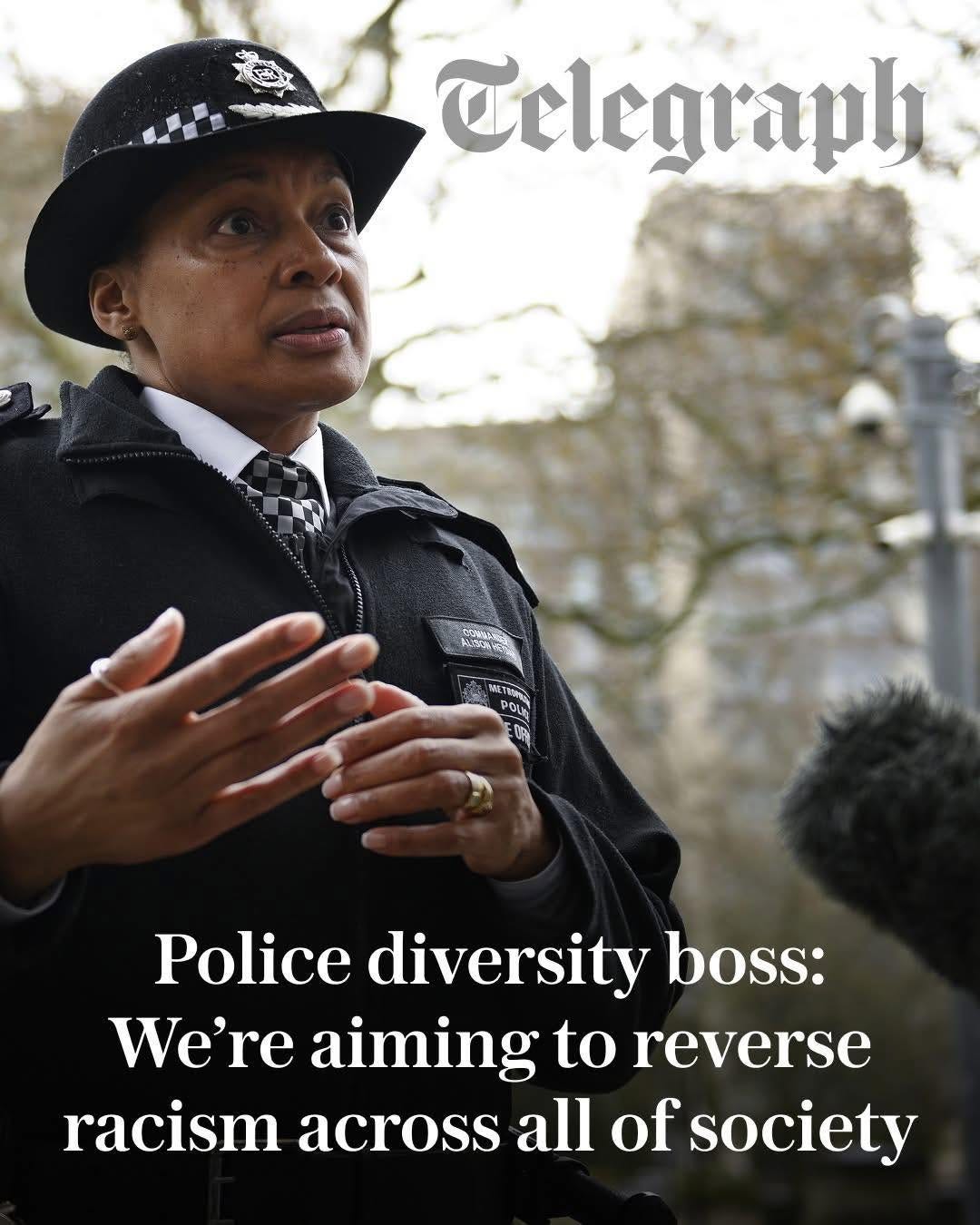
Reversing racism is not synonymous with ending racism. To reverse racism is to discriminate against those deemed responsible for racism, or against those said to benefit from it. And of course, under the dominant anti-White narrative of our age, that category consists exclusively of White people.
For decades, we’ve been told that society is built around systems that favour Whites. We’ve heard endless warnings about White privilege, White supremacy, White fragility, White power, and every other variation of the same.
So, if the problem is a system that allegedly benefits White people, then “reversing” that system necessarily means disadvantaging White people. It’s just legitimising and legalising the mistreatment of White people in their own homelands.
That is what many anti-racist policies increasingly amount to—not equality before the law, but race-conscious discrimination justified in the name of historical correction.
History offers little reason for optimism whenever societies begin sorting citizens into categories of collective guilt and collective innocence. These systems do not reduce division—they deepen it.
And this is what we are seeing across the Western world today. Across Britain, Europe, North America, Australia, and New Zealand, anti-White policies are becoming increasingly common in public institutions, corporations, and educational systems.
But it’s not only that these policies are unjust, many have also warned they’re creating the very conditions for future conflict. The irony here is that what is introduced in the name of racial harmony may very well end up producing the opposite effect. When institutions openly favour some groups and disadvantage others on the basis of their race, resentment will inevitably accumulate. When that bleeds into law enforcement, the resentment is intensified.
People will tolerate many things, but they rarely put up with unequal treatment indefinitely. History offers us little reason to believe these arrangements end peacefully. In fact, we know that societies become profoundly unstable when citizens are divided into categories of collective guilt and collective innocence, privileged and oppressor. So, far from healing supposed racial tensions, “anti-racism” policies risk intensifying resentment.
Once collective guilt and collective victimhood become the organising principles of public life, racial division becomes a certainty. The path being pursued across much of the Western world is therefore not one of reconciliation but of increasing racial division, suspicion, grievance, and resentment—on all parts.
It is a dangerous experiment, and it’s one that risks turning Western nations into powder kegs and leaving future generations just one spark away from the devastating consequences—if it holds out that long.