


When we talk about inheritance today, we usually only think of the house our parents leave us when they die. Perhaps it’s the car they no longer need, or the hundred grand sitting in their bank account.
But inheritance is far more than what your parents or even your grandparents leave you. It’s what generation after generation of faithful ancestors have built, preserved, improved, and handed down to those who come after them.
It’s the accumulated labour, sacrifice, wisdom, and faithfulness of people who understood that they weren’t simply living for themselves.
They were building something for their children, their children’s children, and beyond. And it’s why one of the blessings we hear often in Scripture is that God will bless a faithful man to a thousand generations. The blessed inheritance continues long after he’s dead and gone (Deut. 7:9; Exod. 20:6; Ps. 103:17–18; Ps. 112:1–2).
The Bible says, “A good man leaves an inheritance to his children’s children” (Pro. 13:22).
Notice that he’s not merely thinking about his own immediate kids. He’s thinking about a generation he may never meet, and the world he will leave behind.
He’s thinking about his legacy. And that’s precisely what we’ve forgotten in the West today.
We’ve inherited a civilisation that wasn’t built in a day, a generation, or even a century. It was built over hundreds, indeed thousands, of years. Our forefathers bled and died for our freedoms, cultivated the lands, established our laws, founded our institutions, built our churches, and created the communities we now take for granted.
They inherited something from their fathers, built upon that inheritnace, and passed that inheritance onto their children after them.
Much of the prosperity, freedom, stability, and opportunity we enjoy today is the fruit of their labour and the Christian principles that shaped everything they did.
We didn’t build the nation we were born into. We inherited it. And yet, rather than receiving it with gratitude, protecting it with care, and improving it for the next generation, we’ve begun to treat it as though it is the shared property of every person on earth who wants it.
Today, it’s as though anyone can arrive from anywhere, declare that they subscribe to our values—whatever they are—and thereby acquire an equal claim to an inheritance that generations of our forefathers laboured to secure for their descendants.
But since when did agreeing with someone’s values, or at the very least, wanting a claim to their inheritance, make you an heir to their estate?
Imagine your parents spent their entire lives working to purchase a home. They made sacrifices, went without, paid their debts, maintained their property, and eventually left it to you and your children.
Now imagine that, upon their death, everyone on the street came forward to claim an equal share. After all, they admired your parents, too. They share similar values. They agree with the principles which they lived by.
Would that be enough to give them an equal claim? Of course not. You might welcome those neighbours into your home, share a meal with them, help them when they’re struggling, or even give generously out of what you’ve received. But none of that gives them an equal claim to what your parents specifically left you.
Yet that’s effectively how we’re being told to think about our national inheritance.
The descendants of those who built and preserved a civilisation are expected to surrender any particular claim to it, while anyone who professes allegiance to its values is treated as equally entitled to its benefits.
But an inheritance isn’t simply a collection of ideas to which anyone can subscribe. It’s something received through a particular history, from a particular people, with a particular obligation attached to it.
We’ve confused the Christian obligation to love our neighbours with an obligation to surrender what our forefathers entrusted to us, not to squander, but to pass on to successive generations.
Remember the story of Naboth’s vineyard in 1 Kings 21:3. King Ahab wanted to purchase Naboth’s property, but Naboth said to the king, “The LORD forbid that I should give you the inheritance of my fathers.”
Naboth understood that his inheritance wasn’t merely a possession to be traded away whenever someone else wanted it. It had been entrusted to him by his fathers, under God’s law, and he had an obligation to preserve it for his children’s children.
Of course, Israel’s specific land laws can’t simply be transferred onto modern nations, but the principle of intergenerational stewardship remains. And that’s the point.
A national inheritance isn’t one generation’s to give away. It doesn’t belong exclusively to us, any more than it belonged exclusively to our fathers. It belongs also to generations yet unborn.
The biblical pattern is not for one generation to receive the accumulated inheritance of its forefathers and dispose of it as though it were theirs alone. Each generation receives what was entrusted to it, with the goal of improving it, preserving it, and eventually passing it on.
We’re temporary stewards of something far greater than ourselves, with obligation not only to those who secured it for us, but to those who will inherit it after us. What right does one generation have to give away what a thousand years of ancestors built for a thousand years of descendants?
It’s why the Bible ties longevity in the land to honouring one’s ancestors (Ex. 20:12). If you don’t honour your fathers and mothers, and what they’ve entrusted to you, you’ll soon find out how quickly it can become the property of those who will not honour you either.
Today, we’re expected to regard our national inheritance as the common property of the world, available on equal terms to people who had no part in building it, and may have no intention of preserving it. Meanwhile, the descendants of those who built it, those who have the blood of those builders running through their veins, are expected to regard their ancestral connection as entirely irrelevant.
How is that faithfulness? How is that gratitude? And how in the world do we imagine God regards a generation that treated the inheritance of its fathers with such ingratitude and contempt?
We can be generous to other nations. We can help them, trade with them, welcome people from them, and share with them the blessings God has given us. Indeed, the abundance of our inheritance places us in a position to do precisely that! But generosity presupposes that we have something to give. And having something to give presupposes that it isn’t already the rightful property of everyone else.
If everyone has an equal claim to your father’s house, then in what meaningful sense did he leave it to you? And if every person on earth has an equal claim to the inheritance of your forefathers, then in what meaningful sense is it your inheritance at all?
We’ve become a generation that enjoys the fruits of our ancestors’ faithfulness while increasingly despising the very idea that we owe them anything. We have little gratitude for what they built, little regard for what they sacrificed, and apparently even less concern for what we’ll leave our own descendants.
So, the question isn’t just what we’ve inherited, but what our children will inherit from us. Will they receive a civilisation strengthened by our faithfulness, enriched by our labours, and more firmly established than generations prior? Or are we handing them something worse than what we had handed to us?
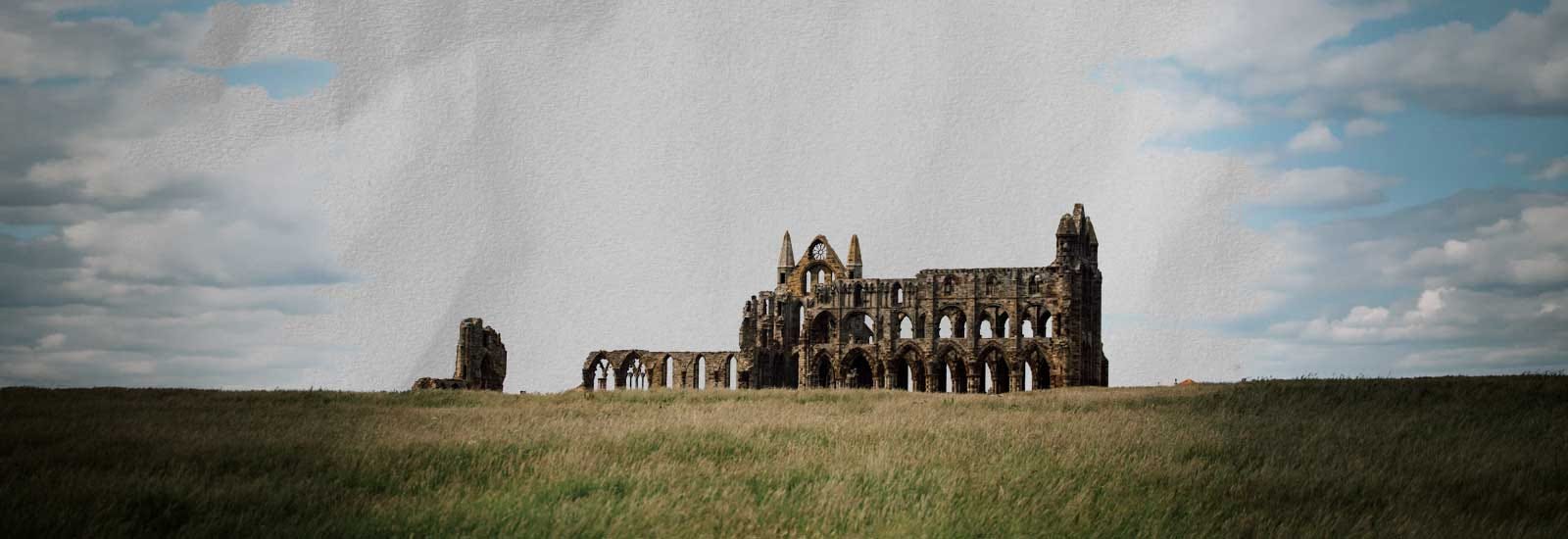
Increasingly, it looks as if the next generation may inherit the ruins of something their forefathers spent a thousand years to build, only for us to squander in a single generation.